
Russia’s sawlog production fell 18.4 per cent in January on a year-on-year basis, dropping to just 6,363.9 thousand cubic metres. That is according to Roslesinforg, Russia’s federal forestry regulator, which comes after production dropped by 15 per cent in December following a warning from Russia’s own Deputy Industry and Trade Minister, Mikhail Yurin, that the sector had entered a “downward trend,” with output potentially falling 20 to 30 per cent across 2026. January’s figure is tracking toward the worst end of that forecast.
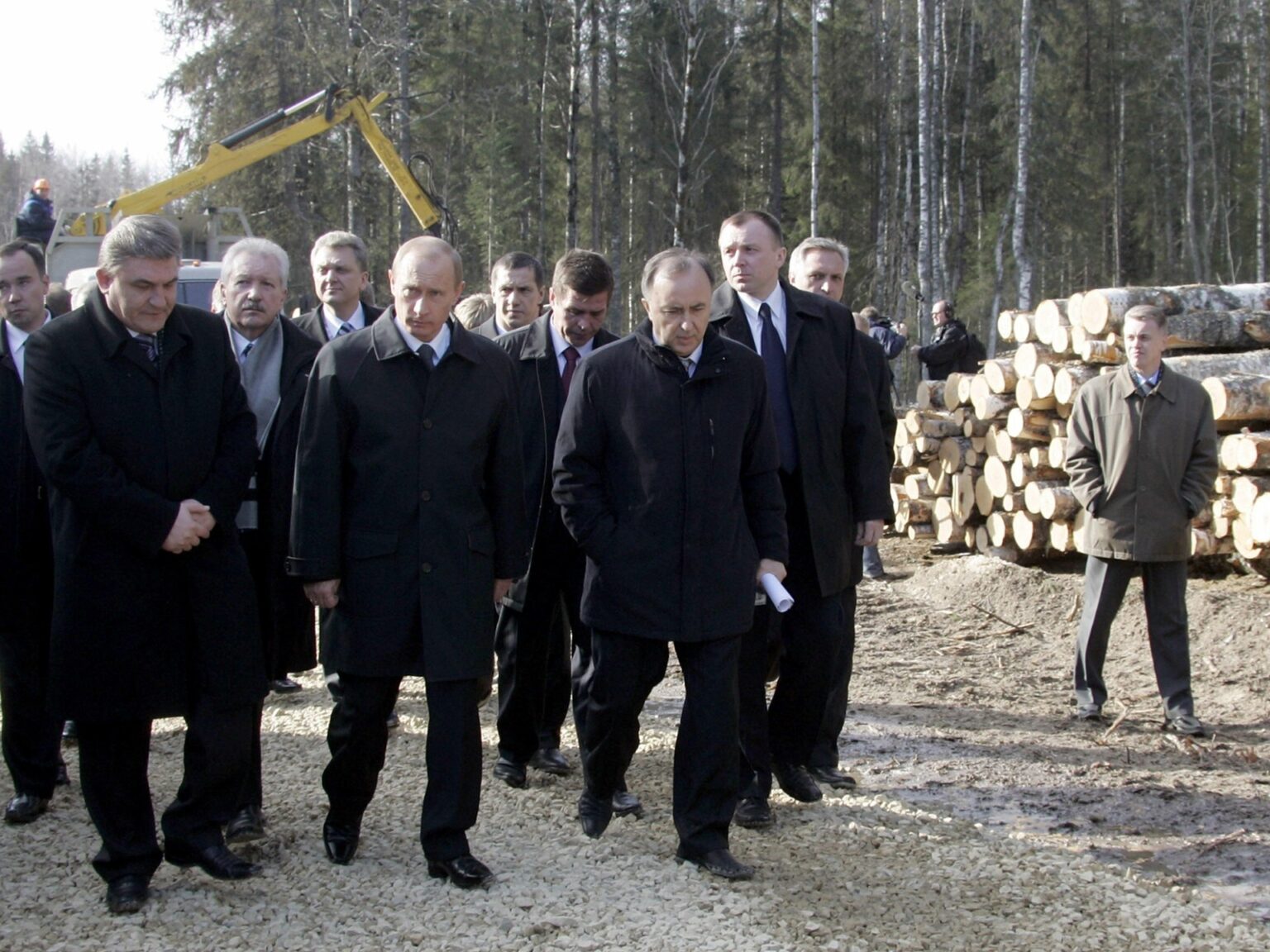
 Putin at the Ustyansky timber industry complex in Arkhangelsk — one of Russia’s most heavily forested regions — as logging volumes hit a four-year low of 182 million cubic metres and 90 per cent of the country’s imported harvesting fleet faces failure by 2028. (Photo Credit: Pavel Bednyakov / RIA Novosti)
It comes as Russia’s timber exports have dropped more than 20 per cent since the Ukraine invasion, falling from US$12.5 billion in 2021 to just US$9.8 billion last year, whilst logging volumes are now expected to hit a four-year low of 182 million cubic metres. The loss of European markets — once worth more than US$3 billion in annual exports — has not been made up for. China has absorbed volumes, but freight charges into the country rose 16 per cent last year. Domestically, Russia’s housing market has now declined for four consecutive months.
 Earlier this month, Wood Central revealed that Russia is running out of machines to cut down its forests. Ukraine’s Foreign Intelligence Service has formally declared Russia’s timber crisis systemic, with commercial harvests at their worst level since the full-scale invasion and 90 per cent of the country’s imported logging fleet set to fail by 2028. John Deere, Ponsse, and Komatsu Forest are gone. Domestic builders cannot fill the gap. And rather than prop up the industry, the Kremlin is preparing to send it a rent bill.
Segezha Group, the country’s largest forestry company, is already looking beyond Russia’s borders — announcing a manufacturing and logistics hub in Shanghai’s Lingang Special Economic Zone, with construction due to begin this year. Wood Central reported the move as the most significant expansion by a Russian timber producer since Western markets closed.
- For Wood Central’s special feature on why Russia’s timber industry is in freefall and what the Ukraine war has meant for global timber supply chains, click here.
