
The sun had set over the North Sea when U-19, ploughing on the surface through choppy waves, prepared to make its first dive. At the bell’s clang men scrambled into position and sealed hatches. Switching from diesel to electric engines, the boat descended into blackness.
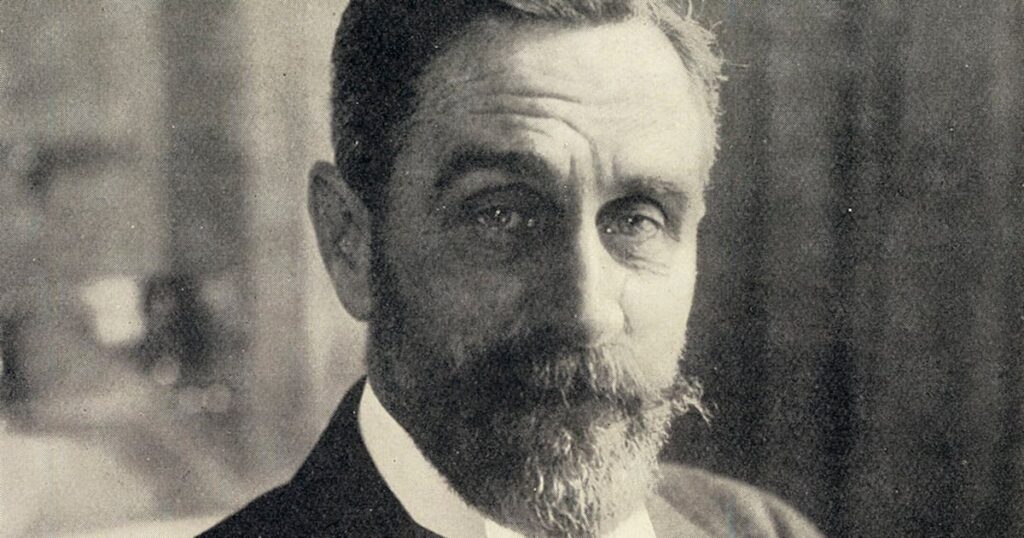
In heavy silence, the crew listened for leaks, then relaxed. They were gliding. Seated amid the bunks and torpedoes, their VIP passenger wore an expression of childlike wonder. A strange odyssey from the glens of Antrim to the forests of Congo and the salons of London had delivered him here, beneath the ocean. It was Saturday April 15th, 1916, and Roger Casement was going home.
It is a journey I recount in A Rebel and a Traitor: A Fugitive, the Manhunt and the Birth of the IRA, which chronicles a largely hidden aspect of the Easter 1916 rising: the two-year tracking and pursuit of Casement by Britain’s security services.
It started in the United States in 1914 when he raised funds for the Irish Volunteers and continued as he crossed to Norway, Germany and eventually Ireland. Casement was – spoiler alert – captured, but even after he was sentenced to death for high treason, the pursuit continued in another form, targeting his name and reputation.
Before boarding U-19, Casement had spent 18 months in Germany lobbying the kaiser’s government, locked in the titanic struggle of the first World War, to aid a planned Irish rebellion against their common British enemy.
Eventually the Germans agreed to send weapons but no soldiers – the Irish would have to do their own fighting. U-19 was to rendezvous with an arms-filled cargo ship in Tralee Bay, where Casement would join his comrades on the eve of insurrection. This meant evading the Royal Navy, which ruled the seas.
Submerged submarines travelled slower so the dive into the North Sea depths was a drill before U-19 returned to the surface. Until the periscope broke the surface there was no way to know if enemy vessels lurked above. Ascent was a moment of extreme peril that crews called the “blind moment”.
It was, at least, a shared dread. Casement had an additional, private fear. If he fell into the hands of the English they would, he had told a friend, try to humiliate him. “They will seek through some dastardly means to assail me.. I go to a show trial, to be wounded in my honour; to be defamed and degraded with no chance of defence.”
It was a presentiment. He had hidden his homosexuality from the world – not even close friends knew – but recorded his sex life in diaries and notebooks. Diaries and notebooks that lay within the enemy’s grasp, if they cared to look.
[ Roger Casement told own defence team ‘black diaries’ were a forgeryOpens in new window ]
After more than two hours submerged, U-19 climbed and at 11.20pm broke to the surface. There were no Royal Navy destroyers, only a dark sea and a three-quarter moon. U-19 headed northeast. The five-day voyage was to loop north around Britain and Ireland and land Casement, and two Irish companions, in Kerry on Good Friday, April 21st.
Amid the cramped quarters and stench of sweat and oil the VIP, when not feeling nauseous, entertained the crew with ballads. For his German escorts it was the most curious thing: this man spoke like an English gentleman yet in song his rich baritone was pure Irish rebel.
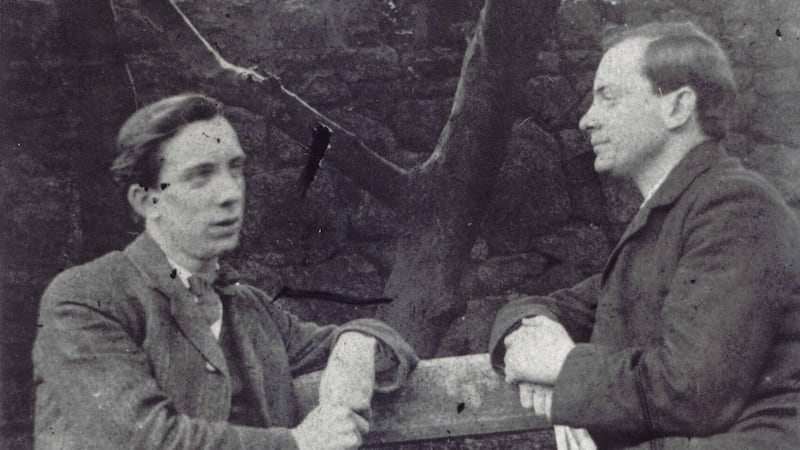
Patrick Pearse (right) with his brother, Willie, in the gardens at St Enda’s. Photograph: Pearse Museum/OPW
If there is a genesis to A Rebel and a Traitor it dates to the 1980s and a puzzle in my school history book. The main narrative of the rising was clear enough: Patrick Pearse and other leaders’ blazing defiance in the GPO, then executed at Kilmainham, their sacrifice rousing the nation. Casement however was tucked into a side panel: an Ulster Protestant who missed the fighting and met his fate in London amid a whiff of scandal. Part of the nationalist pantheon, yes, but even a teenager could see he didn’t quite fit.
I left Ireland and became a foreign correspondent for The Guardian, only to encounter Casement echoes. In the Democratic Republic of Congo human rights activists spoke with reverence about his 1904 report for the British government that exposed the depredations of Belgium’s King Leopold, who enslaved and looted his African fiefdom. It caused a sensation and unclenched Leopold’s grip.
I moved to South America and in Iquitos, Peru’s gateway to the Amazon, a Catholic missionary related chapter and verse about Casement’s 1911 exposé of rubber industry abuses of indigenous tribes, which caused another sensation. In an era not known for humanitarianism, Casement was a one-man Amnesty International.
Some years later I was in the US, covering a Pride rally in San Francisco, when a poster amid a sea of rainbow banners caught my eye: it had no name, just the familiar bearded face. Returning to Dublin as The Guardian’s Ireland correspondent in 2018 I made my home in Dún Laoghaire and did not dwell on this being Casement’s birthplace until 2021, when a 3m bronze statue appeared over a new jetty.
For all these prompts I had no intention of adding to the vast bibliography on Casement until stumbling across what was, to me, an unfamiliar part of the story: from 1914 until his capture, trial and execution he was hunted.
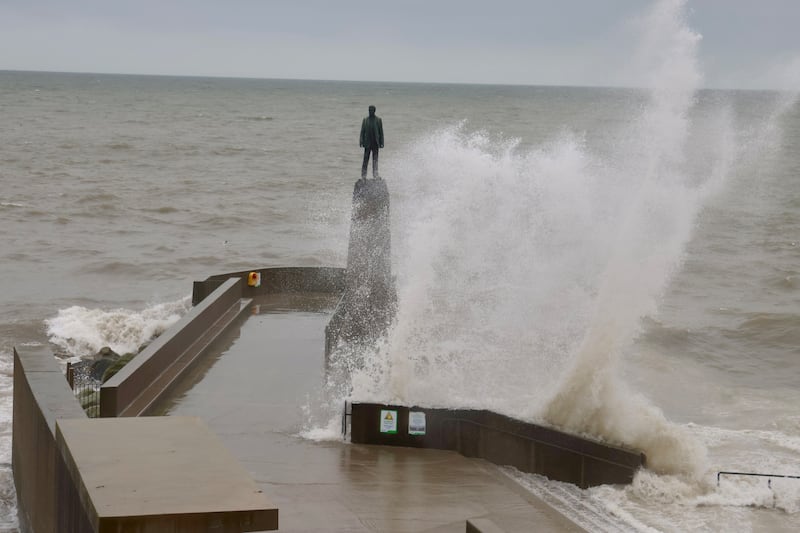
Waves around the statue of Roger Casement in Dún Laoghaire
Capt Reginald “Blinker” Hall, the head of admiralty intelligence in Whitehall, employed codebreakers, spies, Scotland Yard detectives and all manner of ruses to try to intercept the renegade knight. The pursuit was ruthless, at times farcical, and a tale worth telling.
Repeating the research method of my previous book, Killing Thatcher, about the IRA plot to assassinate the Iron Lady at Brighton in 1984, I combed government archives, memoirs, letters, police reports, court records, biographies, history texts and, of course, diaries. I visited Casement’s childhood home in Antrim, his haunts in Germany and locales in Kerry and London.
The goal was to reconstruct this game of cat-and-mouse that played out amid the countdown to Easter 1916, a duel between two very different men that imprinted itself on the history of these islands and still resonates today.
The narrative is not black and white and does not romanticise Casement, a complex, contradictory figure. The Victorian superman who had trekked into Congo’s jungles was, by 1914, a prematurely aged 50-year-old wracked by ill-health. He was so blinkered by anglophobia he idealised Prussian militarists as agents of enlightenment. His efforts to raise an Irish brigade from German POW camps was a debacle and he was sidelined by the Dublin-based plotters of the rising.
Yet nobility and courage did not desert Casement. Despite isolation and foreboding he persevered. While he sailed in U-19, a cargo ship disguised as a neutral Norwegian steamer brought 10 machine guns, 20,000 rifles and millions of bullets for Ireland’s revolution.
Hall, a battleship commander turned spy chief, is a striking antagonist. Eccentric, implacable, at times brilliant, he dazzled friends and foes and made extraordinary efforts to catch Casement, including dispatching a ship with a fake Teutonic tycoon and British sailors disguised as gum-chewing Yanks.
Hall fused modern intelligence methods, such as signal stations to intercept wireless messages, with an Old Testament sense of vengeance. Britain was fighting for its life and owed no mercy, in his view, to a traitor who sought to turn Irish soldiers into turncoats and to stab the empire in the back. In this dawn of total war, of soldiers gassed in trenches, civilians bombed from the air and passenger liners sunk without warning, Hall felt justified in using any means against his exalted quarry.
When hunter and hunted finally meet the encounter is freighted with ironic twists. Hall thinks he will douse Irish nationalism but in fact fuels it; Casement seeks independence at all costs, making partition more likely. A century later we live with the consequences.
An ensemble cast rounds out the story. In New York the grizzled Fenian John Devoy frets that his envoy to Berlin is having a nervous breakdown. In Dublin Tom Clarke outmanoeuvres rivals in the Irish Republican Brotherhood, infiltrates the Irish Volunteers militia and sends Joe Plunkett, a dying poet, on perilous overseas missions. In Dublin Castle Augustine Birrell, the chief secretary for Ireland, weighs conflicting reports about a brewing rebellion.
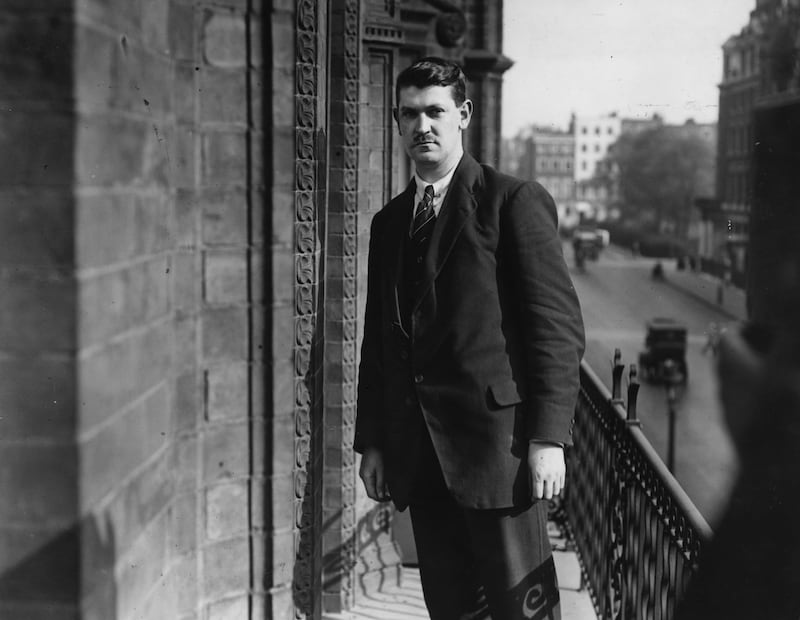
Michael Collins in London for the treaty negotiations between representatives of Sinn Féin and the British government which resulted in the Anglo-Irish Treaty of December 1921. Photograph: Topical Press Agency/Getty Images
There are cameos from Michael Collins, Winston Churchill and Woodrow Wilson, and the action switches from Washington to Wilhelmshaven and the GPO, where colloquial usage coins a term for the rebel garrison: the Irish Republican Army, or IRA. What drives the narrative is Hall’s pursuit of Casement as the clock ticks towards rebellion and some of the great what ifs of Irish history.
After dodging Royal Navy patrols in a great arc around Scotland and Ireland, U-19 glided into Tralee Bay on the sea’s surface at 12.15am on April 21st, 1916 – Good Friday. It cut its motors and slowed to a stop. Clouds dimmed the stars.
From the conning tower Casement and his companions peered into the darkness. A pilot boat was to guide them – and the cargo ship, if it had arrived – to shore. Painstaking communications between Berlin and the rebel leaders in Dublin, sent via letters across the Atlantic and then pinged from a German-operated radio tower in Long Island, New York, had chosen this spot, and this night, for the rendezvous.

Rory Carroll. Photograph: Kevin Kheffache
From the gloom, nothing. No signal lamp glow, no moonlit silhouette of a waiting vessel. The only sound was the slap of water against the hull. The visitors again scanned the estuary with their binoculars. Nothing. U-19’s captain, Raimund Weisbach, grew uneasy. Was it a British trap? At any moment searchlights could light up his sub for hidden British gunners.
The Irish passengers, Weisbach decided, could row ashore in a dinghy. One protested this plan as folly but Casement quietened him. “Hush, it will be a greater adventure going ashore in this cockle shell.” Under a rising moon the crew helped the three men stow maps, revolvers and other kit, then lowered the dinghy into the sea. Shivering in the chill, the trio clambered in and murmured farewell. U-19 restarted its motors and slipped away, a grey ghost.
The little boat bobbed in its wake. Just over three kilometres away, invisible in the blackness, lay Kerry. There was symbolism about landing here, an extremity of Ireland associated with saints and scholars and a folklore prophecy about a mystical liberator who would one day land on its shores.
The two younger men rowed while Casement, at the stern, navigated with a steering oar. Through the gloom he spied a line of white foam and heard a thunder of breaking waves. The boat began to rock. “Only two hundred yards more,” he said.
A Rebel and a Traitor: A Fugitive, the Manhunt and the Birth of the IRA, is published on Thursday, March 26th by HarperCollins.
Rory Carroll will be in conversation with Ronan McGreevy about his book at Dublin Book Festival, DLR Lexicon, on Monday, March 23rd – booking details at dublinbookfestival.com