
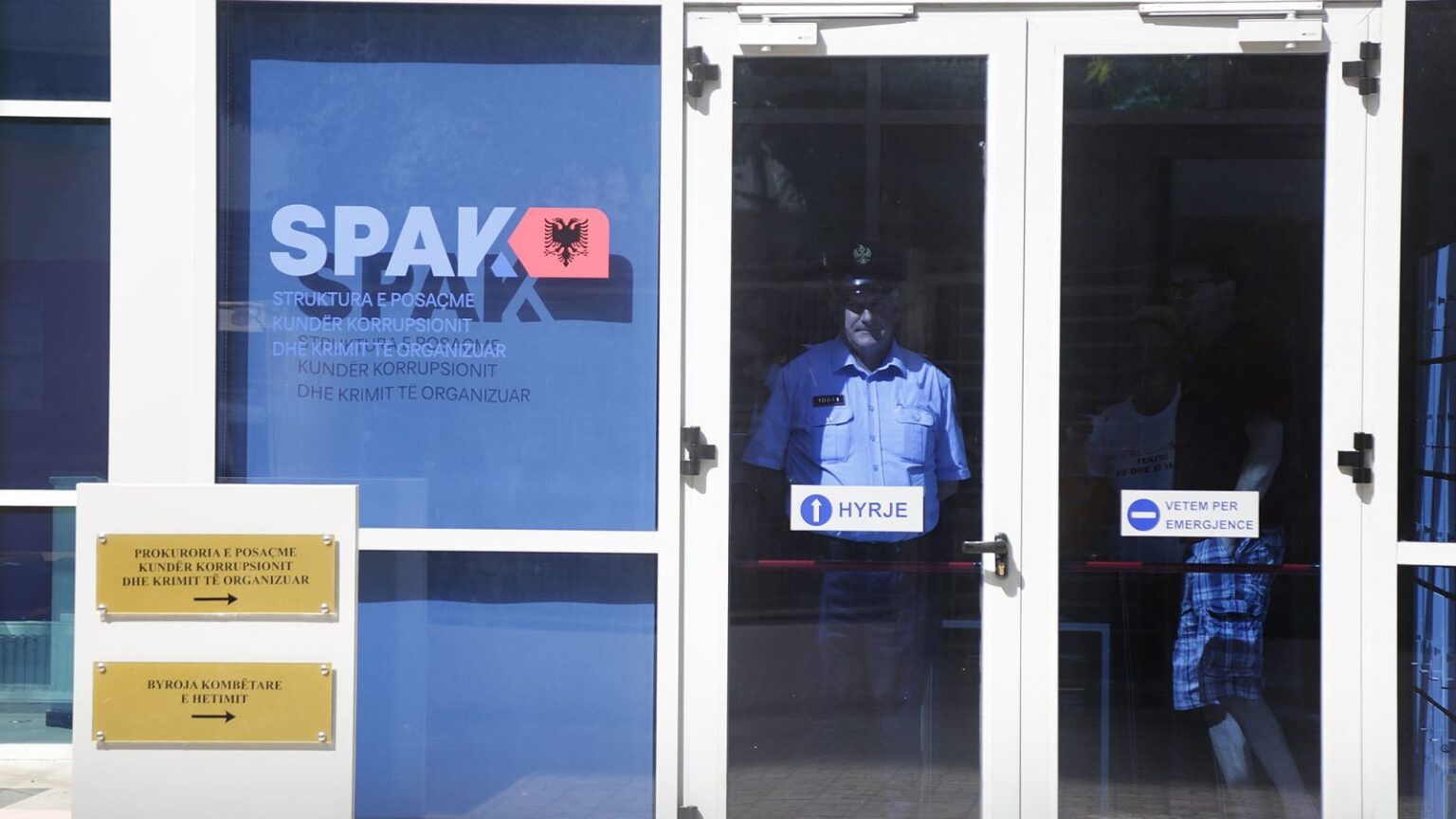
Albania’s Special Prosecution Against Corruption and Organised Crime, SPAK, has established a formidable reputation for investigating high-profile figures formerly seen as untouchable, ranging from former presidents and prime ministers to ministers, deputy ministers and other top officials.
But, as anti-corruption investigations intensify, SPAK faces a challenge from Prime Minister Edi Rama’s government, which plans to limit its powers.
His Socialist Party has already seen many of its officials investigated and even imprisoned. But what has completely changed its approach to SPAK is the case against Rama’s deputy, Infrastructure Minister Belinda Balluku.
SPAK was born out of the major justice reform that began in 2016 with the support of the EU and US, as part of Albania’s wider efforts to join the European bloc.
Until recently, the government insisted it would not interfere in justice cases and refused to comment on officials facing trial, saying any responsibility for wrongdoing was strictly personal.
But since the case was brought against Balluku, who is charged with interfering in public procurement procedures, Rama has proposed a new law that would not allow SPAK and the special anti-corruption court to suspend senior officials.
The move has been described by critics as an attempt to curb the judiciary’s powers, which could have an impact on Albania’s progress towards EU accession, which Rama has vowed to deliver by 2030.