
Portsmouth’s 2024/25 accounts covered their first season back in the Championship since 2011/12 , following promotion from League One the previous year.
After a “testing” start to the campaign that left them in the relegation zone, the club’s form steadily improved, so that they managed to retain their status in England’s second tier by finishing in a creditable 16th place.
Up until 2010, Pompey had enjoyed seven seasons in the Premier League, winning the FA Cup in 2008, then playing in the UEFA Cup, before suffering three rapid relegations, ending up in League Two.
They spent four seasons in England’s fourth tier, before securing promotion to League One in 2017, while it took them another seven years to get back to the Championship. In total, it took Portsmouth 12 years, two administrations and three points deductions to get back to the Championship,
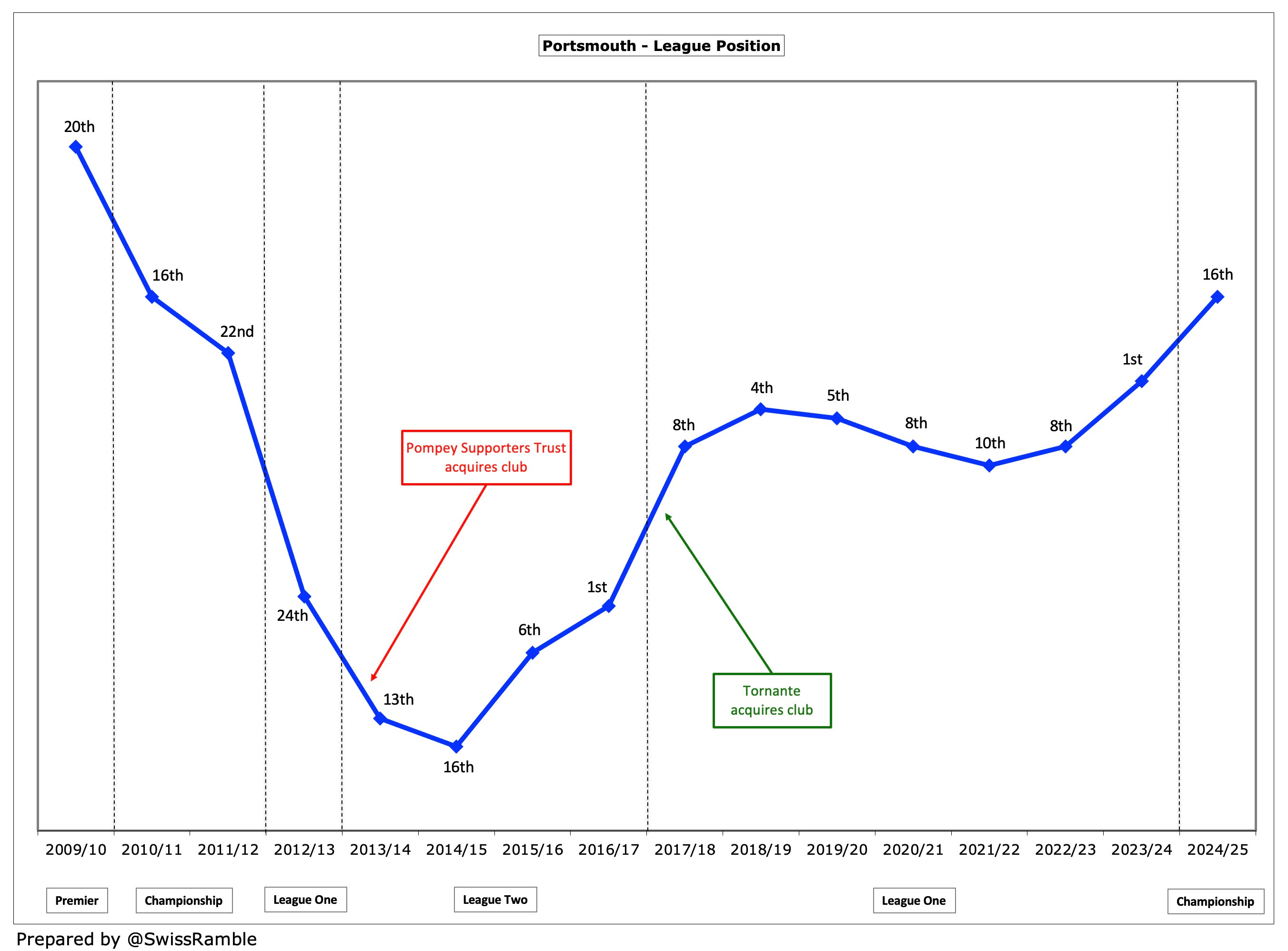
It’s not overly dramatic to say that Portsmouth were close to going out of existence at one stage, but they were saved by the fans, after the Supporters Trust took ownership of the club in April 2013. They managed to steady the ship, before Portsmouth began the slow road to recovery.
However, football clubs these days need owners with deep pockets, so in August 2017 the Trust approved the sale of the club to Tornante, an American company headed by former Disney chief executive Michael Eisner.
Recently, the 84-year-old Eisner started on succession planning by transfering 73.5% of his shares to his three sons (Breck, Eric and Anders), who now each own 24.5% of the club. However, Michael has retained a 26.5% stake and continues in his position as chairman.
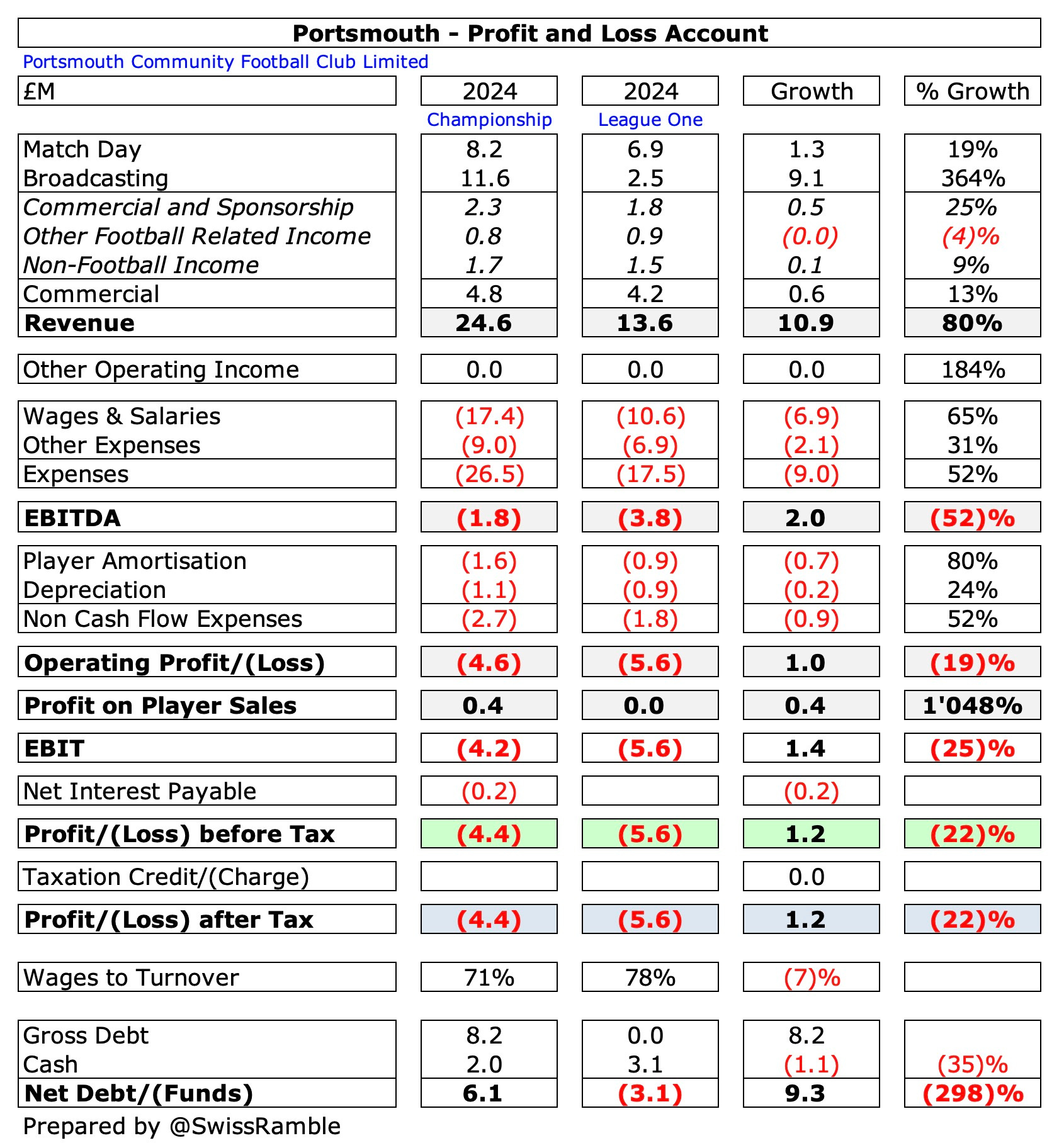
Following promotion to the Championship, Portsmouth’s pre-tax loss slightly narrowed from £5.6m to £4.4m.
Revenue shot up £11.0m (80%) from £13.6m to £24.6m, but this was pretty much offset by the increased cost of competing in the higher division, as operating expenses rose £9.9m (52%) from £19.3m to £29.2m.
Profit on player sales also increased, but only to a relatively low £0.4m.
The club incurred interest payable for the first time since 2013/14, though this was just £0.2m.
Chief executive Andrew Cullen said, “We saw significant revenue growth in turnover, thanks to the nature of broadcasting and solidarity payments in the Championship and from increased match day and commercial revenues.”
The higher TV deal in the Championship led to broadcasting income more than quadrupling from £2.5m to £11.6m, while there was also good growth elsewhere, as match day rose £1.3m (19%) from £5.9m to £8.2m, while commercial was up £0.6m (13%) from £4.2m to £4.8m.
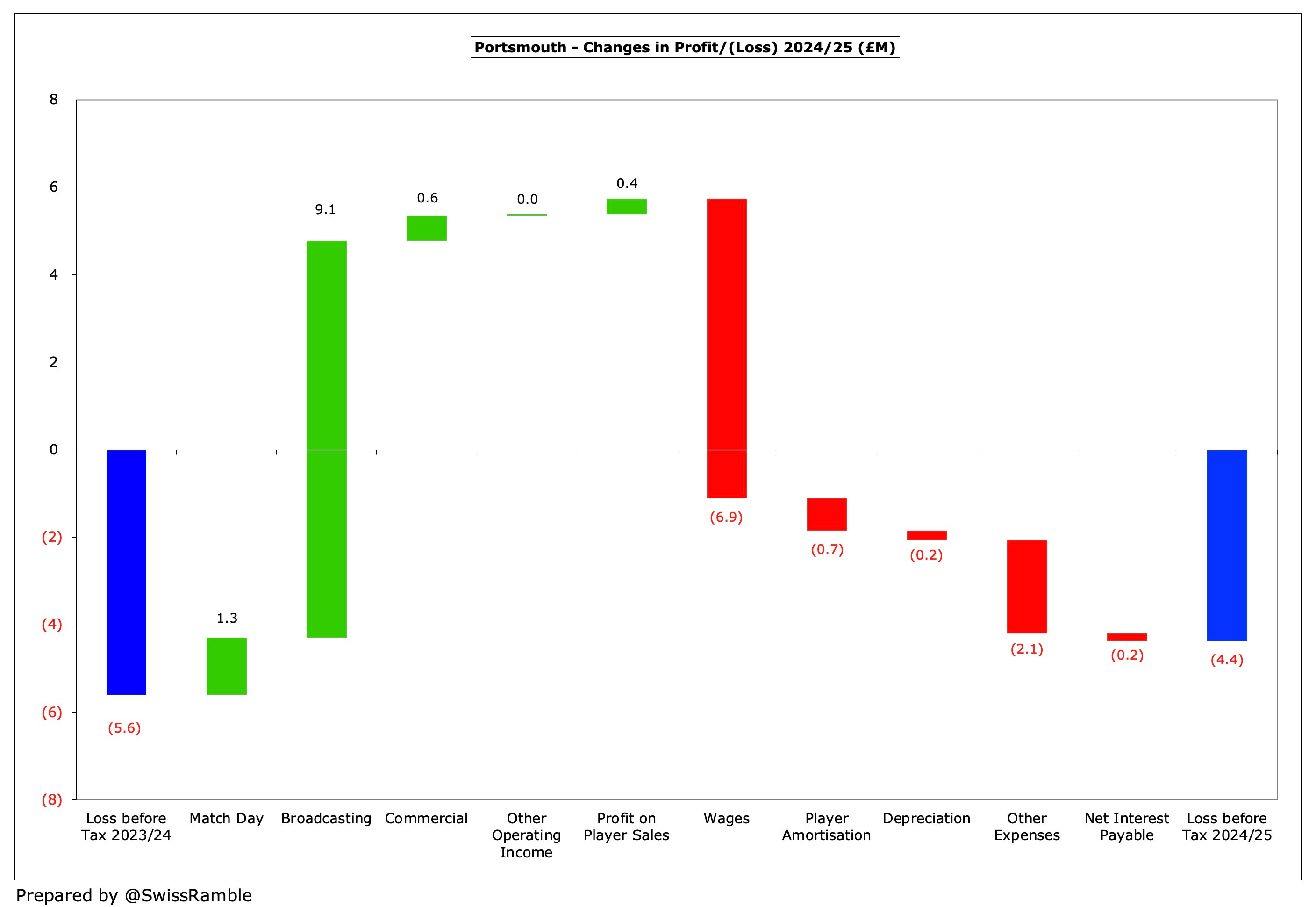
However, Portsmouth’s revenue growth was eaten up by higher costs, largely due to investment in the squad. Wages rose £6.8m (65%) from £10.6m to £17.4m, while player amortisation increased £0.7m (80%) from £0.9m to £1.6m. In addition, other expenses were up by around a third, rising from £6.9m to £9.0m.
Although losing money is never great news, Portsmouth’s £4.4m loss is actually one of the best results in the Championship to date. Only one club has managed to generate a profit – and that was just £0.3m at Plymouth Argyle.
The only clubs with smaller losses last season were Millwall £0.3m and Sunderland £4.0m, while many others lost much more, e.g. Cardiff City £35m, Coventry City £22m, Norwich City £21m and QPR £20m.