
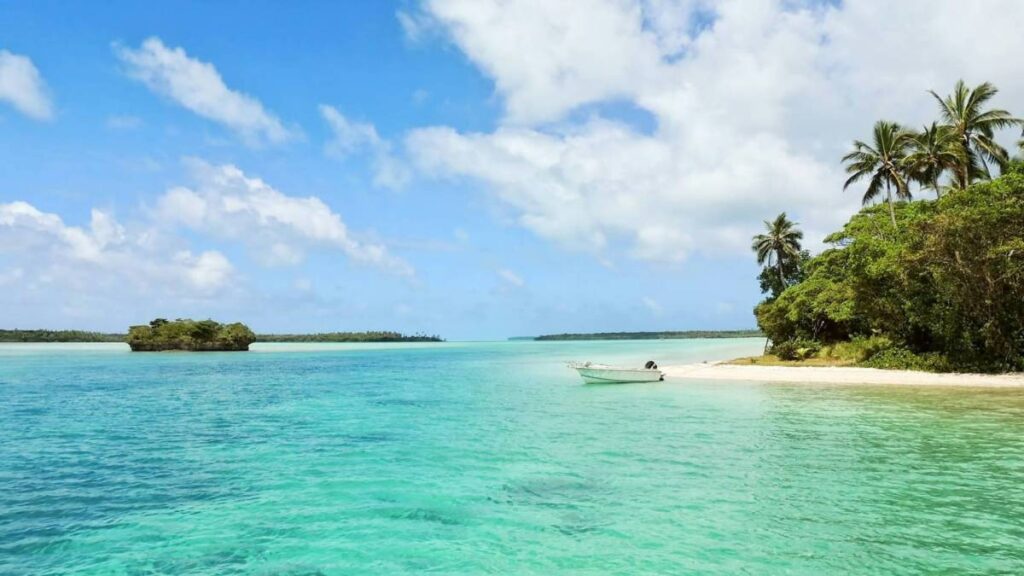
There is a certain kind of traveler who plans for months, builds itineraries in spreadsheets, and saves every receipt. And then there is Kevin Droniak, who looks at a map, a flight deal, and a free day and decides that the Swiss Alps or Turks and Caicos are simply doable.
Scrolling through his videos, I felt equal parts inspired and slightly skeptical. The idea that someone can wake up in New York City, land in Jamaica for a few hours, and still make it home the same night feels like bending time. But his trips are tightly engineered around flight schedules, airport efficiency, and a willingness to sacrifice comfort for experience.
What stands out is not just where he goes, but how he defines “being there.” It is a swim in impossibly clear water, a quick espresso in a European city, a walk through a landscape most people spend days reaching. These are not deep dives into culture. They are snapshots. And yet, for many travelers, that snapshot is enough to spark something bigger.
Your next trip starts here—get curated travel stories when you sign up for our newsletter.
How Kevin Droniak Makes Extreme Day Trips Work
Kevin Droniak, the New York City–based content creator known for his viral “micro travel” videos, has turned a seemingly impossible idea into a repeatable approach: visiting far-flung destinations in less than 24 hours. In his own words captured from a podcast known as ‘Creator’, “Micro travel is going somewhere typically for less than 24 hours and not spending the night at that destination.”
Making these trips feasible requires meticulous planning and strategic preparation. Droniak emphasizes the importance of packing light, keeping everything to a single personal item or backpack. Essentials include toiletries, a portable charger, travel documents, and a few spare clothes. Checking luggage is simply not an option when your schedule allows only a few hours on the ground. He also stresses the need for sleep on planes, explaining that without rest during transit, even the most efficient itinerary becomes exhausting.
Your next trip starts here—get curated travel stories when you sign up for our newsletter.
Navigating airports efficiently is just as critical. in an exclusive interview with People, Droniak strongly recommends TSA PreCheck or Global Entry to save time at security, particularly during busy travel periods. As he puts it, “My number one thing is getting TSA PreCheck… having that saves so much time and relieves so much stress.” He builds his itineraries around early departures and late returns, knowing that even a minor delay can jeopardize the entire day trip.
But no plan is flawless. Droniak is clear that contingency is part of the process. In one example from a trip to Ireland, a flat tire could have ruined the day, but he reframed it to the outlet as part of the adventure: “I was like, okay, this is still fun. I’m on the side of the road in Ireland… I met these Irish people… it just makes it more entertaining.” His strategy relies on flexibility, backup flights, and accepting that sometimes he may only explore airports or nearby neighborhoods if schedules are disrupted. He also ensures a minimum of 10 hours on the ground to make the trip feel worthwhile.
Budgeting the Impossible: How Day-Long Adventures Add Up
At first glance, this kind of travel feels chaotic. In reality, it is deeply strategic. Routes are chosen based on nonstop or near nonstop availability, and departures are often the earliest possible flights out of hubs like John F. Kennedy International Airport or LaGuardia Airport.
For example, a same day trip to Jamaica might involve a 6 a.m. departure, landing mid morning, spending three to five hours on the ground, and catching a late afternoon or evening return. Caribbean destinations are the most realistic because of flight times, while Europe, like a sprint to Zurich en route to the Swiss Alps, pushes the limits of what is physically and mentally sustainable.
Economically, the pattern is surprising. Based on public reporting:
-
Droniak’s eight‑hour Jamaica trip cost $382 total.
-
Reported same‑day Paris flights have been in the $700+ range when booked strategically.
-
Even day trips to Rome have been executed for under $650.
These are far from luxury prices, and far from the thousands of dollars most travelers assume overseas flights require.
What Happens When It Falls Apart
No one posts the version where it fails, but that version absolutely exists. Flights get delayed. Weather shifts. Crews time out. And when your entire trip is built on a narrow window, even a small disruption can unravel everything. Data from the Federal Aviation Administration consistently shows that delays are a normal part of air travel, not an exception.
The difference with this style is that there is no cushion. A missed connection might mean you never leave the airport at all. The smartest travelers build in contingency plans. Flexible tickets. Alternate routes. A mindset that values the attempt as much as the outcome. Maybe you do not make it to Jamaica. Maybe you end up exploring a terminal instead. That still becomes part of the story.
The Bigger Question: Is It Worth It?
After sitting with this for a while, I think the answer depends on what you want from travel. If you are looking for depth, connection, and immersion, this is not it. But if you are chasing moments, spontaneity, and the thrill of possibility, it makes a strange kind of sense.
I am not sure I would attempt the Swiss Alps in a single day. But I understand why someone would try. There is something undeniably compelling about proving that the world is closer than it looks.
This story was originally published by TravelHost on Mar 23, 2026, where it first appeared in the News section. Add TravelHost as a Preferred Source by clicking here.