

24
Mar 2026
Europe’s new digital border system has already flagged more than 4,000 travelers overstaying the Schengen Area.
The Entry/Exit System (EES), which began rolling out in October 2025, is designed to track non-EU visitors and enforce the 90/180-day stay limit.
Early data presented to European lawmakers shows that the system is operating at scale, while also exposing pressure points at major airports.
Over 4,000 overstaying travelers
The European Commission confirmed that more than 4,000 overstayers were identified during the system’s first months in operation.
Henrik Nielsen, a European Commission official, disclosed the figure during a February briefing to Members of the European Parliament.
The system has processed around 17 million travelers and recorded 30 million border crossings in its first four months. It has also logged about 16,000 refusals of entry.
Nielsen noted that roughly a quarter of those refusals were linked to individuals flagged as overstaying within the Schengen area.
Digital borders over stamps
The EES replaces traditional passport stamping with a centralized digital system that records entries and exits automatically.
It collects biometric data, including fingerprints and facial scans, to verify identities and track movement across Schengen countries.
The system calculates how long non-EU travelers remain within the zone, enforcing the rule that allows stays of up to 90 days within any 180-day period.
The shift is intended to improve border security, reduce identity fraud, and streamline checks over time.
The move marks a significant change for visa-free travelers, including citizens from countries such as the United Kingdom and the United States.

(Image courtesy of Angelyn Sanjorjo via Pexels)
Phased rollout underway
The system is being introduced in stages, with full implementation scheduled for April 10, 2026. It officially launched on October 12, 2025, with a gradual increase in coverage rather than an immediate full rollout.
Registration requirements have expanded step by step. Authorities initially processed about 10% of eligible travelers, rising to at least 35% from January 9, 2026.
The threshold is set to increase to 50% from March 10, before reaching full coverage in April.
Once fully implemented, passport stamps for short-stay travelers will be eliminated entirely.
System “stable”
EU officials have described the system’s central operations as stable and functioning as intended.
Tillmann Keber, executive director of eu-LISA, said that the rollout was “very smooth and successful at central level” and added that the system is now “fully stabilised” and running normally.
These assessments focus on the system’s technical backbone, which handles large volumes of traveler data across multiple countries.
At the policy level, the early results are being presented as evidence that the system can detect rule violations in real time.

(Image courtesy of Blue Planet Studio via iStock)
Airports face early disruptions
On the ground, the rollout has produced a different picture at several major airports.
In France, particularly at Paris Charles de Gaulle Airport, passengers experienced delays linked to faulty kiosks, software issues, and staff shortages.
In Portugal, Lisbon Airport temporarily reverted to manual passport stamping after biometric checks caused severe congestion.
Airport operators have warned that border processing times could increase by as much as 70% where the system is in use. At peak times, travelers have reported waiting up to three hours to clear border control.
Stricter rules for visitors
The EES enforces compliance with the Schengen short-stay rule more strictly than previous systems.
By automatically tracking time spent across all Schengen countries, it removes the margin for error that existed under manual passport stamping.
Travelers who overstay may face financial penalties. In France, the cited fine is €198.
An overstay can also affect future visa applications, creating longer-term consequences for those who exceed their permitted stay.
In more serious cases, authorities may issue removal orders or temporary entry bans, though such measures are described as rare.
Exceptions may apply in specific circumstances, including serious illness or other unforeseen events.
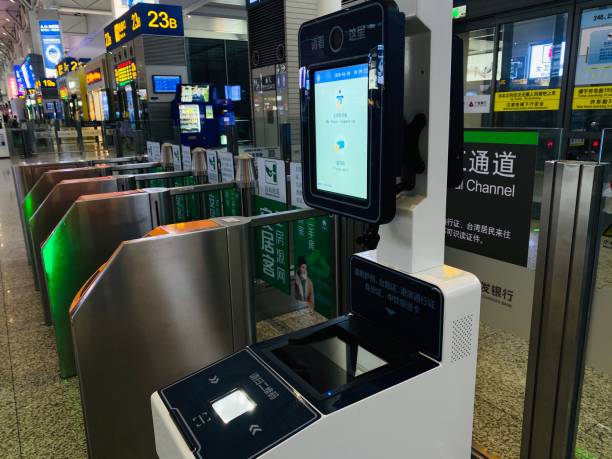
(Image courtesy of anilbolukbas via iStock)
Who must register
The system applies primarily to non-EU nationals traveling for short stays within the Schengen area.
Those holding long-stay visas or residence permits are not required to register under the EES. Even so, they may still experience delays at border crossings due to longer queues and the overall impact of the system on processing times.
The changes affect a wide range of travelers, particularly those entering visa-free, who must now ensure strict compliance with time limits.
Digital enforcement expands reach
The early months of the EES show a shift toward automated enforcement at Europe’s borders.
The detection of thousands of overstayers, alongside millions of recorded crossings, signals that authorities now have a clearer and more immediate view of who enters and leaves the Schengen area.
At the same time, the rollout has exposed operational challenges that continue to affect travelers on the ground.
As the system moves toward full implementation in April 2026, its impact on border control efficiency and travel experience is expected to remain under close scrutiny.