
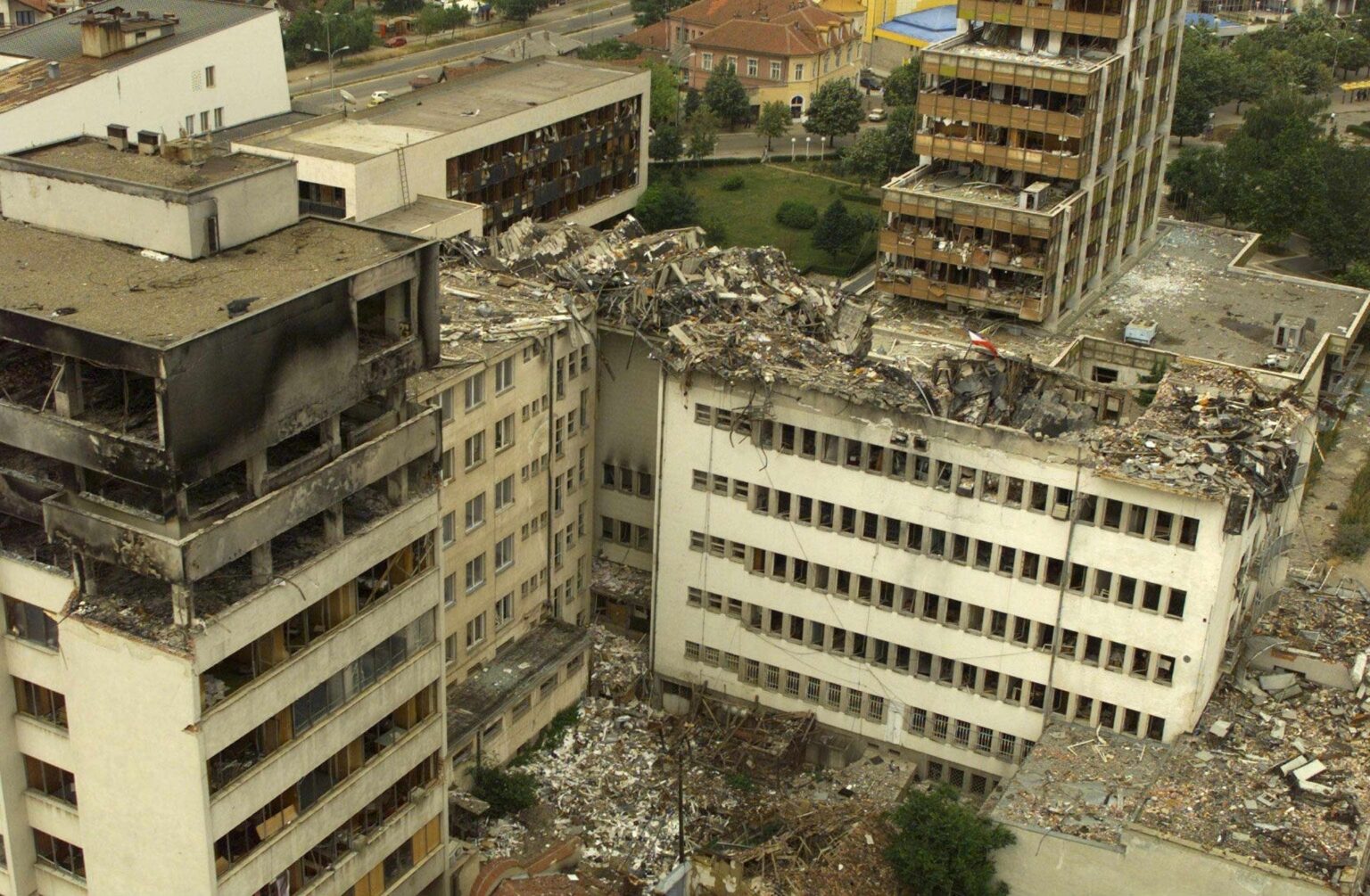
On the morning before the NATO air campaign started, she went to a hospital, which was then operating as part of the parallel healthcare system set up by Kosovo Albanians outside the Serbian-run state system. However, doctors told her she was still several days away from giving birth.
“I asked them if I could stay there because I was afraid,” Berisha tells BIRN. “But the doctor said no, the clinic was full, and there wasn’t even space to sit.”
She walked back to her sister’s apartment in a city controlled by Yugoslav Army troops and Serbian police and paramilitaries. NATO air strikes were imminent. Her unborn baby’s survival, like her own, appeared uncertain.
That evening, she heard that the NATO air campaign had begun, but recalls that the people around her felt no joy that the Western alliance was targeting Kosovo Albanians’ oppressors.
“We had hoped for an agreement. We saw the bombardment as support, but we were also aware of what would follow,” she recalls.
As the bombing began, Milosevic’s troops and police intensified their armed attacks, before they were eventually made to withdraw into Serbia.
Then Berisha’s luck turned, in one of those rare incidents of solidarity across the war’s ethnic dividing lines that saved lives – and in this case, protected a future life, too.
Her sister’s neighbour, Dragica Milicevic, a Serb woman, was trying to help the remaining residents in the building find safety.
“Dragica gave my late sister, Adile, the key to the basement of the Chemistry Faculty at the University of Pristina, which was close to her apartment, and advised us to hide there, as she worked at the faculty,” Berisha says.
“We went there. It was dark and cold. All we could hear were military vehicles and gunfire. There were around 30 of us,” Berisha says. “We had some blankets, but the floor was like ice. I couldn’t sit or lie down,” she adds.
Milicevic promised her neighbours that she would keep an eye on the building where they lived and alert them if anything happened.
By that point, most Kosovo Albanians had either fled Pristina or were trying to escape. Only a few remained hidden in basements as NATO’s bombardment targeted Yugoslav military sites within the city.
‘Unbearable anxiety’ in the maternity ward