
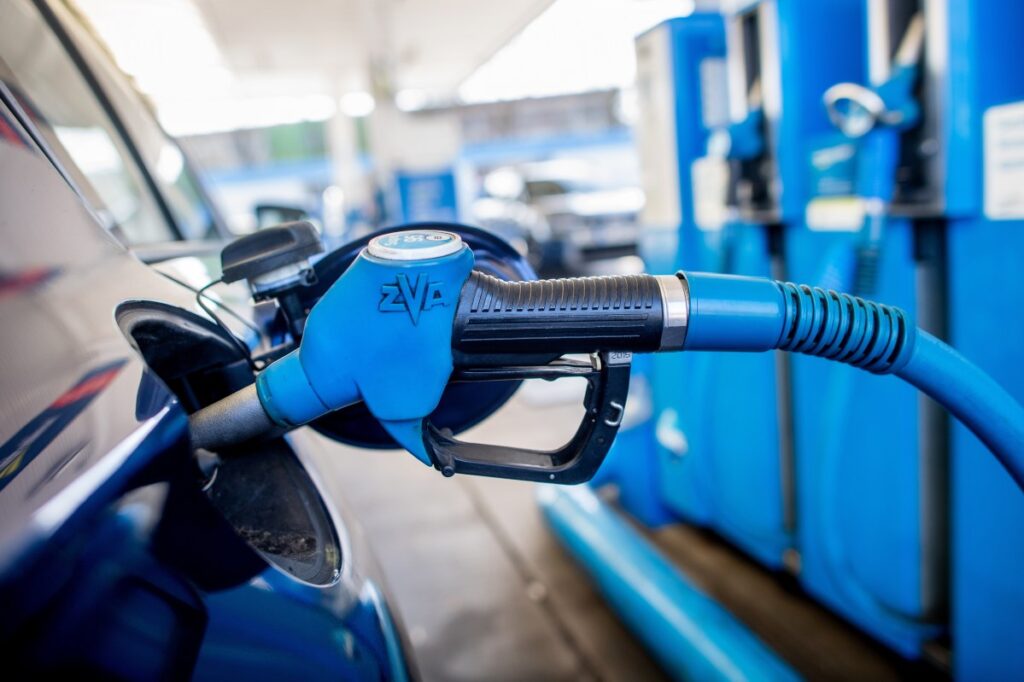
Slovenia imposed nationwide limits on fuel purchases after shortages and long lines formed at service stations, becoming the first European Union member state to introduce fuel rationing in response to recent supply disruptions amid the war in Iran, multiple outlets reported.
Under measures announced over the weekend, private motorists were limited to purchasing up to 50 liters, about 13 gallons, per day, while companies and priority users such as farmers were capped at 200 liters, about 52 gallons, with the restrictions in effect until further notice, according to a report from Reuters.
Prime Minister Robert Golob said the country had sufficient fuel stocks but faced problems moving supplies to forecourts, and he authorized the army to support distribution, the report said.
Why It Matters
The rationing marked the first such step by an EU country since a wave of market volatility linked to the conflict involving Iran and strikes in the region disrupted global energy flows, sending prices higher across parts of Europe.
Price caps in Slovenia, which kept gasoline and diesel below neighboring Austria’s market rates, have contributed to cross-border demand and stockpiling, straining filling stations, the BBC reported.
What To Know
Golob authorized the Slovenian Armed Forces to assist fuel retailers in transporting supplies from storage to service stations as the government sought to stabilize distribution, Reuters reported.
At an emergency session, the government accused Petrol, the largest Slovenian oil distributor in which the state holds a 32.3 percent stake, of failing to resolve distribution issues and ordered an inquiry into potential violations in fuel trading and management of critical infrastructure, along with a special audit of logistics after March 16. It also asked the Interior Ministry to report potential criminal offenses by some Petrol staff to law enforcement, according to the report.
Petrol rejected the accusations, said the disruptions stemmed from a sudden surge in demand, and noted it was adjusting measures to stabilize supply. Many filling stations closed on Sunday amid shortages as long lines formed in recent days, the report said.
BBC News reported that Slovenia’s regulated prices—recently capped around €1.47 per liter (about $1.70) for Euro-super 95 gasoline and €1.53 (about $1.77) for diesel—were lower than Austria’s prices, which neared €1.80 for gasoline and €2 for diesel, encouraging fuel tourism from neighboring countries. The BBC said official prices were set to rise on Tuesday.
Service stations operated by Hungarian oil and gas group MOL remained open and had already set a 30-liter cap for individuals and a 200-liter cap, about 52 gallons, for companies, Reuters reported.
The restrictions came as Slovenians headed to the polls, with Golob, a liberal, facing former Prime Minister Janez Janša, a right-wing populist, heightening political attention to fuel availability and distribution.
What People Are Saying
Slovenian Prime Minister Robert Golob said in a statement: “Let me reassure you that there is enough fuel in Slovenia, the warehouses are full and there will be no fuel shortages.”
Petrol said in a statement published by the state news agency STA: “The company has a crisis coordination group that continuously monitors the situation and adjusts measures to stabilize supply.”
Herbert Kickl, leader of Austria’s Freedom Party, said in a social media post about Austrian drivers refueling in Slovenia: “Isn’t this sad that we live in a country where it has become necessary for many to go abroad so that life is cheaper?”
What Happens Next
The purchase limits will remain in place until authorities lift them, with the army continuing to support distribution while retailers report station conditions to the government. Officials also encouraged or considered tighter limits for foreign drivers, and the government-ordered inquiry and audit into Petrol’s logistics are set to proceed, Reuters reported.
In a polarized era, the center is dismissed as bland. At Newsweek, ours is different: The Courageous Center—it’s not “both sides,” it’s sharp, challenging and alive with ideas. We follow facts, not factions. If that sounds like the kind of journalism you want to see thrive, we need you.
When you become a Newsweek Member, you support a mission to keep the center strong and vibrant. Members enjoy: Ad-free browsing, exclusive content and editor conversations. Help keep the center courageous. Join today.

