
Willow Kennedy
A Brazilian energy equipment manufacturer is establishing its first U.S. presence in rural North Carolina, and the product it chose to make there reflects the current state of domestic grid infrastructure as much as it does a business decision.
TSEA Energy, which has supplied power generation and distribution equipment to utilities across more than 50 countries since 1968, announced this week it will construct a 160,000-square-foot facility in Eden, a city in Rockingham County. The company has committed $25 million in capital investment and 160 jobs, with an average annual salary of $66,554 — significantly above Rockingham County’s average of $46,154.
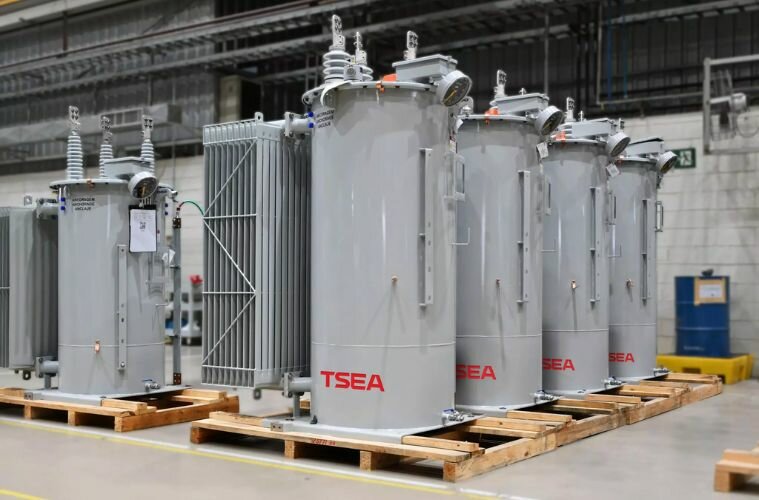
The Eden plant will manufacture voltage regulators, the equipment utilities depend on to maintain stability, power quality, and reliability across distribution networks. It is not the most visible category of grid infrastructure, but it is among the most operationally consequential, and domestic supply has not kept pace with the modernization demands utilities are now managing.
Utilities across the country are working to upgrade aging distribution systems while absorbing demand growth driven by data center expansion, manufacturing reshoring, and broad electrification. Equipment backlogs — particularly for large power transformers and grid stabilization hardware — have stretched lead times substantially over the past two years, in some cases leaving utilities waiting years for critical components. A domestic manufacturer entering this category with an established engineering pedigree addresses a documented supply constraint.
The facility is expected to double TSEA’s total global manufacturing capacity. It will also house an engineering and R&D center and a service operation, a combination that suggests the company is building the technical infrastructure for longer-term utility partnerships rather than simply relocating production.
North Carolina’s workforce appears to have been a decisive factor. The state claims the largest advanced manufacturing workforce in the southeastern United States, and the project drew institutional support from North Carolina A&T, NC State, UNC Charlotte, and Rockingham Community College. Duke Energy was listed among the project partners, a detail worth noting given the utility’s own infrastructure obligations across the region.
The state is providing a performance-based grant of $300,000 through the One North Carolina Fund. The structure is contingent — TSEA must deploy $17 million in capital and reach 106 jobs before any public funds are released.
For facilities and energy professionals managing procurement and infrastructure planning, the development carries practical relevance. Voltage regulators are specification-driven purchases where supplier relationships, lead times, and technical support capacity all affect project timelines. A manufacturer of TSEA’s depth establishing a domestic engineering and service presence changes the procurement conversation in ways an import arrangement typically does not.