
Published on
March 25, 2026
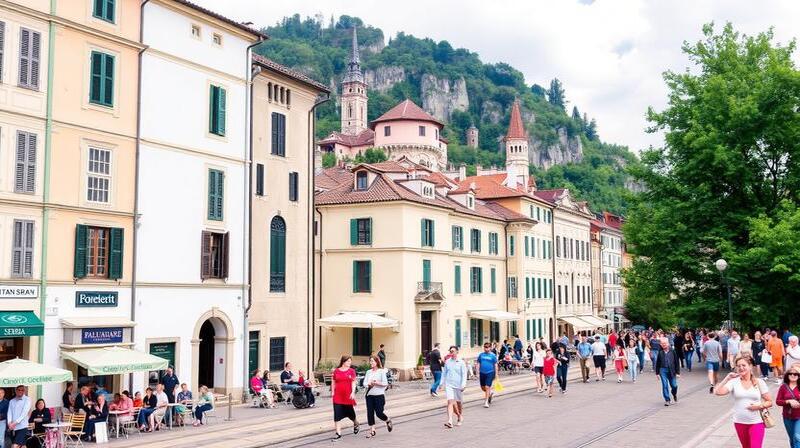
Image generated with Ai
Italy Overtake Serbia, Hungary and More as Slovenia’s tourism surges, with visitor arrivals and overnight stays reaching powerful new highs in February 2026
Slovenia’s tourism sector is riding a remarkable wave of growth as new official data for February 2026 reveals another leap forward in international travel interest and visitor engagement. Following solid gains in January, the Alpine-Adriatic country is consistently attracting more travellers than a year earlier, with both domestic and foreign guests contributing to a powerful rise in arrivals and overnight stays across a wide range of destinations. Performance metrics from the Statistical Office of the Republic of Slovenia show that the nation is not only sustaining but building momentum as a year-round destination and achieving strong early-year tourism results.
Sharp Year-on-Year Uplift in Tourist Arrivals Signals Renewed Confidence
February 2026 marked a continuation of Slovenia’s growth trend for tourism arrivals. Official figures show that total tourist visits climbed by 3.3 % compared with February 2025, bringing the total to roughly 307.6 thousand visitors. This steady expansion follows an earlier 7.9 % gain in January, indicating that the upward trajectory did not fade once winter travel patterns dipped after the holidays.
The contribution of foreign visitors has been particularly significant, with international arrivals rising by 3.6 % to reach about 184.9 thousand tourists in February alone. Meanwhile, domestic arrivals — an important stabilising segment of Slovenia’s tourism economy — also posted healthy growth at 2.7 %, with nearly 122.6 thousand domestic trips recorded. Both figures reflect broad-based demand and suggest that Slovenia’s appeal continues to resonate not just with locals, but with trans-border travellers as well.
Key Source Markets: Italy, Serbia, Hungary and Regional Dynamics
Breaking down the origin of foreign visitors, the largest shares for February 2026 were reported from several neighbouring or regional markets. Travelers from Italy accounted for about 14.5 % of all foreign tourists, followed by substantial segments from Serbia (31.2 %) and Hungary (19.6 %).
This distribution underscores Slovenia’s strategic location and strong appeal among Balkans and Central European markets. Italy’s long-standing cultural, culinary, and geographical ties make it a natural feeder market, while Serbia and Hungary’s growing travel participation aligns with broader patterns of increased intra-European mobility. Together, these source countries represent a meaningful share of international visits and highlight Slovenia’s role as a gateway destination blending mountainous landscapes, spa traditions, and urban culture.
Advertisement
Advertisement
Overnight Stays Up by More Than 4 % Show Deeper Engagement
Shrugging off just a rise in arrivals, Slovenia’s tourism sector also recorded a significant enhancement in overnight stays during February 2026 — up by 4.3 % year-on-year — reaching around 829.1 thousand nights logged across the nation’s tourism accommodation establishments.
This increase signals that visitors are not only coming in larger numbers but are also choosing to extend their stays. Longer stays generally translate to greater economic impact per traveller and reflect stronger satisfaction, with visitors engaging more deeply with local experiences, natural attractions, city culture, spa resorts, or outdoor activities.
Destination Patterns: Health, Mountain, and Urban Tourism Shine
Looking at which segments delivered the strongest performance, official figures highlight that the highest overnight counts were recorded in:
- Health and spa resorts – where travellers seek wellness, relaxation, and therapeutic services in Slovenia’s world-renowned thermal centres.
- Mountain resorts – experiencing a robust 7.3 % uptick in stays as visitors flock to alpine landscapes, hiking trails, winter sports, and scenic escapes.
- The capital city – Ljubljana, where cultural vibrancy, heritage sights, and cosmopolitan attractions helped drive an impressive 11 % growth in stays.
This diversified growth pattern shows that Slovenia’s appeal is well distributed across tourism typologies — from nature escapes to cultural urban stays and wellness experiences. It is not confined to any single niche, which is a key factor in broader resilience and long-term tourism health.
Strong Start to 2026: January–February Cumulative Gains
When viewed over the first two months of the year, the cumulative impact is even clearer. Official statistics confirm that from January to February 2026, Slovenia welcomed an overall 5.6 % increase in total tourist arrivals compared with the same period in 2025, bringing total visits to an estimated 624.9 thousand people.
This early-year momentum is vital because it shows not just a seasonal spike but a structural uplift — a strong buffer against potential headwinds later in the year. Continued gains in both international and domestic trips signal robust demand, healthy travel confidence, and sustained appeal well beyond summer or peak periods.
What This Means for Slovenia’s Tourism Sector
These official numbers tell a powerful story of a small European nation punching well above its weight in attracting travellers. A few key implications stand out:
- Market diversification and resilience – With substantial contributions from neighbouring countries like Italy, Serbia, and Hungary, Slovenia’s visitor base is broad enough to withstand fluctuations in individual markets.
- Healthy balance of domestic and foreign tourism – The ongoing rise in both domestic and foreign travel indicates that Slovenia remains a preferred destination for national residents while continuing to expand its global appeal.
- Experiential depth – The rise in overnight stays shows that many visitors are choosing to stay longer and explore more, which points to growing satisfaction and richer tourism experiences.
- Segmented destination strengths – Leisure clusters such as spa tourism, mountain retreats, and urban cultural stays are all thriving — enabling Slovenia to extend tourism beyond traditional summer seasons.
Looking Ahead: Sustained Growth on the Horizon
While these figures capture only the first two months of 2026, the early trends are consistent with broader regional and European tourism patterns where intra-continental travel continues to expand. Europe’s tourism markets have been recovering steadily over recent years, and nations that offer diverse experiences, safety, and sustainable travel options are seeing above-average gains.
For Slovenia, sustained focus on quality, destination diversification, and welcoming services appears to be paying off in higher arrivals and longer stays — key indicators of success in the global tourism landscape.
Advertisement
Advertisement
