
This year, Turkey’s President Erdoğan chose the war in Iran as the subject of his message to mark Eid, the end of the holy month of Ramadan. Calling for the Islamic world to unite, he vowed to ‘overcome the challenges in our geography’. He is no stranger to utilising religion and regional crises for political aims. Since the outbreak of the Arab Spring protests in late 2010, Erdoğan has aligned himself with Islamist movements, presenting himself as a protector of Muslims and a bulwark against Islamophobia in the West – a tactic that plays well with his conservative electoral base.
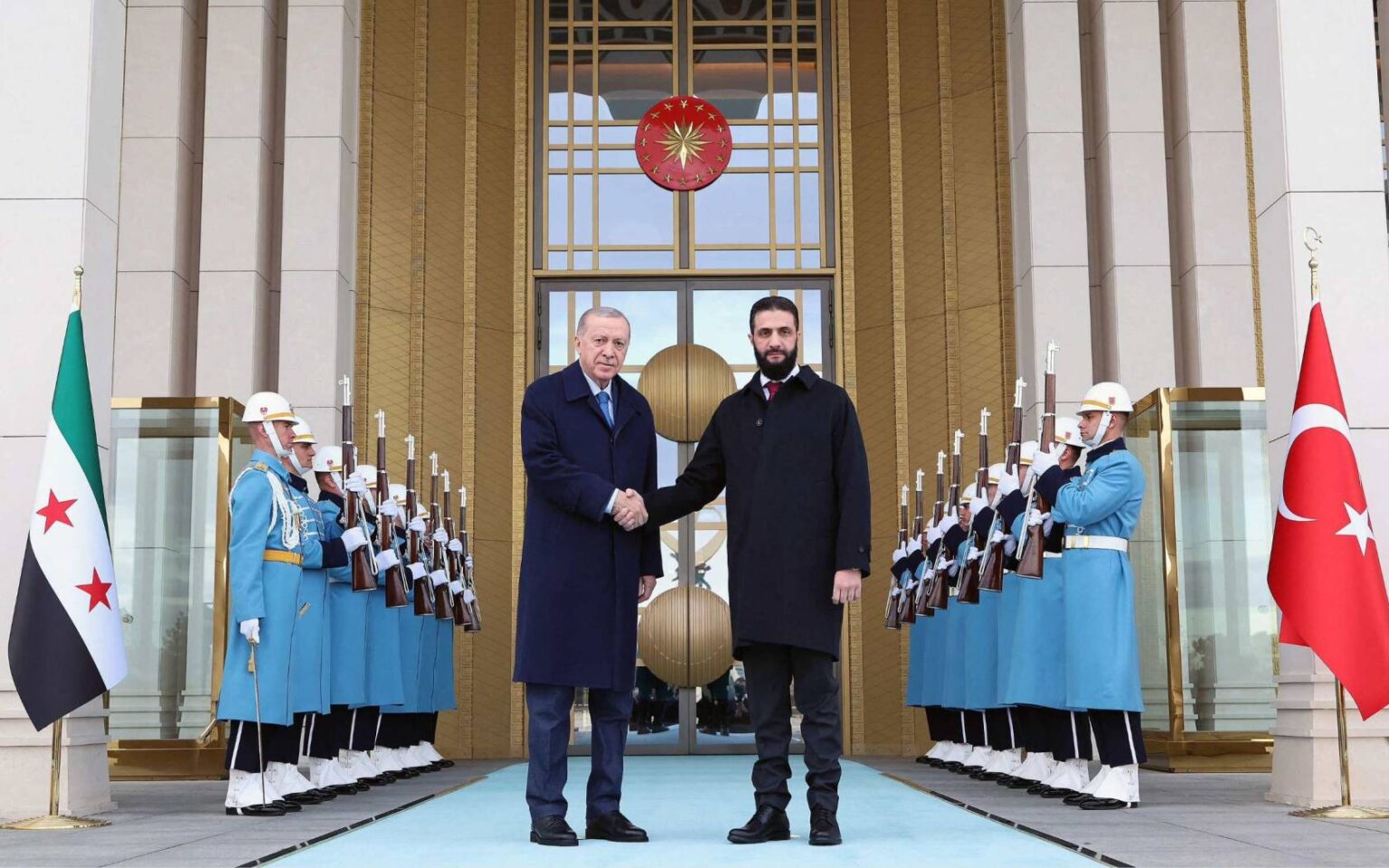
Usually, his parameters are simple. Israel is a perennial antagonist and an easy target for condemnation given its long-running attacks on the Palestinians. The United States, too, makes a useful enemy, given the deep-rooted anti-American sentiment in Turkey; in the past decade, Washington’s alliances with Kurdish forces in the Middle East has only heightened that sentiment. Iran is a trickier prospect. The relationship between Ankara and Tehran is complicated by their sectarian split (the Iranian regime is the world’s major Shia power, while Turkey is majority Sunni), their 330-mile shared border, a major migration route, and their previous patronage of opposing factions in the Syrian Civil War; Iran propped up the regime of former president Bashar al Assad, while Turkey is a major backer of the new president, former Islamist rebel leader Ahmed al-Sharaa.
Yet Erdoğan finds himself in a tricky spot in this latest war, the first major conflagration since Assad fell and the Middle East’s alliances were redrawn. Since Donald Trump re-entered the White House in January 2025, he and Erdoğan have enjoyed a far warmer relationship than previously, partly due to the Turkish leader’s mediating role in the Ukraine conflict but mainly because of their similar populist-autocratic instincts. Washington now seems poised to lift the sanctions that it imposed on Turkey in 2020 in response to Ankara’s purchase of Russian missile defence technology, something that Ankara has been lobbying for.
Ideologically, however, siding overtly with the US in this war would leave Erdoğan in an uncomfortable position, as a de facto ally of Israel. For Iran, this is a useful fault line, and one that it has exploited with its attacks on the NATO base at Incirlik, close to Adana on Turkey’s Mediterranean coast. Iran has twice fired ballistic missiles towards Incirlik since the start of this conflict, despite the fact that it has not been used in this war. They were intercepted by NATO’s Patriot missile defence systems, and more Patriots have now been deployed to Incirlik, deepening Ankara’s reliance on the western security alliance. Erdoğan condemned Iran over the attacks, warning Tehran against ‘provocative steps’ – yet it seems almost certain that he will not go any further than that.
In Syria, Sharaa is in a similarly tight position. The new government in Damascus has cut ties with Tehran, which for a decade had used Syria as a key theatre in its military expansion across the Middle East. Iranian-backed Shia militias including Lebanese Hezbollah fought for Assad throughout the war, and units of the Iranian Revolutionary Guard Corps (IRGC) were also based there. Iran’s footprint was not only military; in the later years of the war, Iranian citizens began buying up properties that had been abandoned by or requisitioned from their Syrian owners. There is little sympathy for the Iranian regime among the Syrian population, yet there is little appetite for being drawn into a new war. On the other hand, Trump’s America is Sharaa’s most important economic ally. US sanctions on Syria were lifted after the two leaders met in May 2025, opening the way for large reconstruction contracts and energy deals – vital for both Syria’s rehabilitation and Sharaa’s survival.
Trump, aware of the leverage he has over Sharaa, has requested that Syria join in the military strikes against Hezbollah in Lebanon. For Sharaa, though, much like Erdoğan, becoming a de facto ally of Israel in a regional war could be a catastrophic move domestically. Syria and Israel are officially at war and Israel has annexed more of the Golan region since Assad’s fall. Yet behind the scenes they have established de-escalation and intelligence-sharing channels under Washington’s auspices, and are united on the issue of Iran. Yet most Syrians are war-weary, and many sympathise with the plight of the Palestinians, making any substantive alliance with Israel a huge political risk. Furthermore, Hamas publicly supported Sharaa’s ouster of Assad in December 2024. So far, Sharaa has managed to avoid being pulled into the war. Although, should the current conflict drag on, Trump will almost certainly dial up the pressure on him to intervene.
The red line for both Ankara and Damascus would be the Kurds. Sharaa is still struggling to bring the Kurdish-controlled north eastern region of Syria under his control, with the leadership there demanding a degree of autonomy from the central government. That is unpopular in Damascus and anathema to Turkey, another of Sharaa’s key allies, which opposes the formation of any Kurdish quasi-state at its border. At the same time, Erdoğan is also pushing towards a reconciliation with the Turkish Kurds, having engineered a ceasefire with the PKK, the separatist militia operating in eastern Turkey. Again, his motive is domestic politics; he is aiming to form an electoral alliance with Turkey’s main Kurdish party in order to ensure a comfortable victory in the next elections.
That could all be undone should Trump decide to back Iranian Kurdish fighters in a ground operation against the regime in Tehran. Such an operation would also involve Iraqi Kurdish units and would revitalise Kurdish militancy across the region at a moment when both Erdoğan and Sharaa need it to be quelled. If that happened, it would be extremely difficult for Erdoğan to keep his relations with Trump steady, having spent a decade lambasting the US for its support of the Syrian Kurds against ISIS. Sharaa would also find it near impossible to support such a move by the US while pushing for the incorporation of the Syrian Kurds under the authority of the Damascus government. Assad’s fall showed how quickly the lines in the sand can shift in the Middle East; but should Trump ask too much of his new regional allies, he may find them shifting against him.