
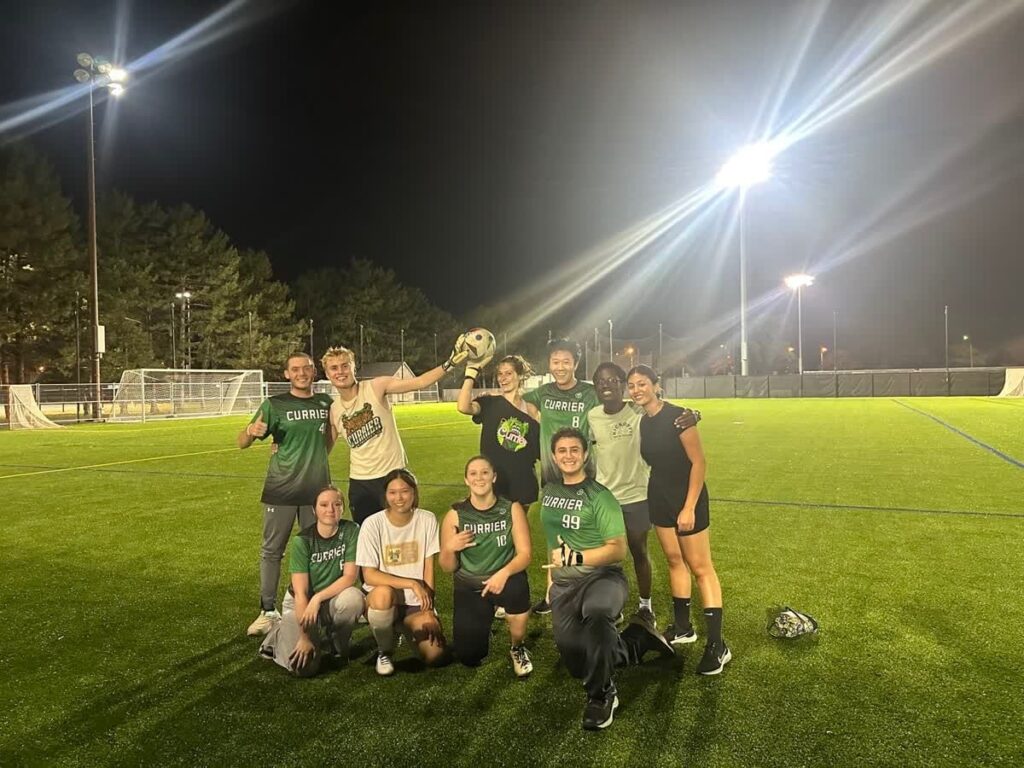
Harvard’s athletic facilities are a long way from the Quad, but this year, that has not stopped Currier from showing up. Holding the most intramural championship titles for the 2025-2026 academic year so far, the Trees are third behind just Winthrop and Eliot in the standings for the Straus Cup — a close race that will be decided this spring season.
Harvard’s 12 houses compete for the Straus Cup throughout the year, accumulating points by forming intramural sports teams made up of residents of each house. Points are earned through wins and losses across a variety of sports leagues and single-weekend tournaments. A win earns 20 points, a loss 10, and a forfeit costs 15. From well-loved classics like volleyball and basketball to more niche events like rock climbing and broomball, intramurals attract a wide range of participants from across campus and bring together house communities in the spirit of healthy competition and the opportunity to care about something that doesn’t affect their GPAs.
For River houses, recruiting for intramurals is relatively simple and often spontaneous because of their proximity to facilities like Harvard Stadium and the Bright-Landry Hockey Center, where many events are held. For Currierites, just getting there is half the battle. Senior Ricardo Marrero-Alattar, one of Currier’s IM Representatives, describes his assertive approach to prospective players as a key to recruitment.
“Just going up to random folks here that we’ve never met before and saying, ‘Hey, you look like you’ve played squash before,’” he said. “I’ve had people come up to me now instead of me having to go to them.”
The house’s centralized layout, with the residential towers converging into a single common hallway, makes the Currier dining hall the perfect place to ensnare potential athletes.
Sometimes, it’s as easy as convincing someone just to give it the old college try. This year’s championship-winning squash team was built entirely of people he didn’t know before his upfront approach. The threshold, Marrero-Alattar says, is almost always the first game.
“The moment people get to their first game, they are five times, 10 times, 20 times more likely to come back once they discover how incredible it feels to be part of a team,” he said. “The moment people try and begin, they never leave.”
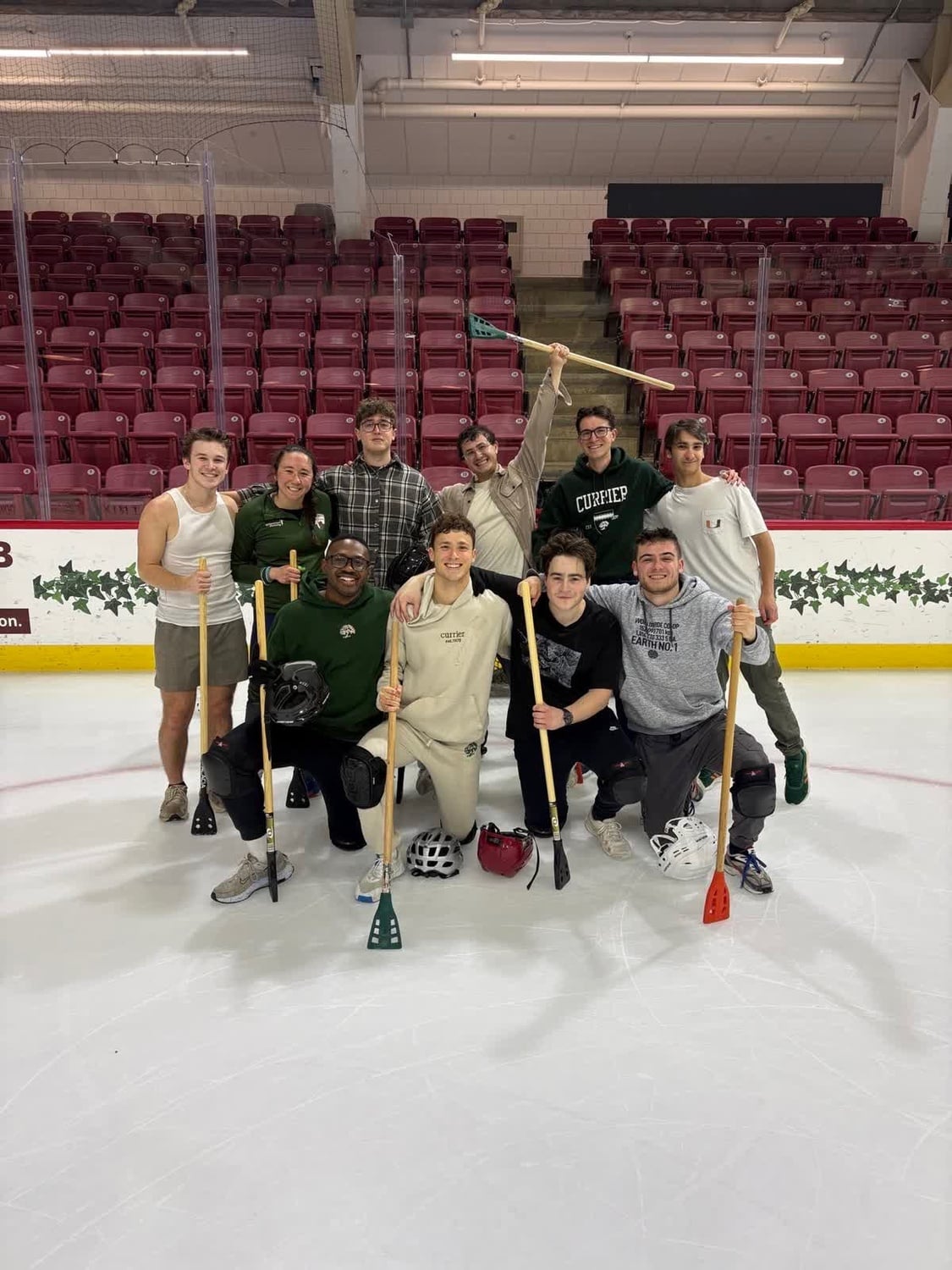
For all the spreadsheets and strategies that go into Currier’s intramural success, the reason why students show up to a broomball game at 10 p.m. on a Tuesday during midterm season is not the points. It’s about connecting with friends and neighbors, and meeting new ones. Senior Alex Stone started playing IMs as a sophomore after being recruited in the dining hall. He has since played nearly every sport the program offers and was named one of the two 2025 Intramural Athletes of the Year by Harvard Recreation.
“Some of my best friends at Harvard I met through IMs,” Stone said. “It’s really cool how it connects seniors, juniors, and sophomores. It’s all just friends and good vibes.”
Junior Jackson Herrera, who has played soccer and volleyball intramurally since his freshman year, describes the friendships they’ve given him as among the closest he’s made at Harvard.
Senior Natalie Weiner, who had never played flag football before joining the Currier championship-winning squad, says feeling like a valued member of the group is what kept her coming back.
“It’s always the highlight of my day,” Weiner said. “We just get super, super hyped, and it’s also just such a great way to meet other people in the house.”
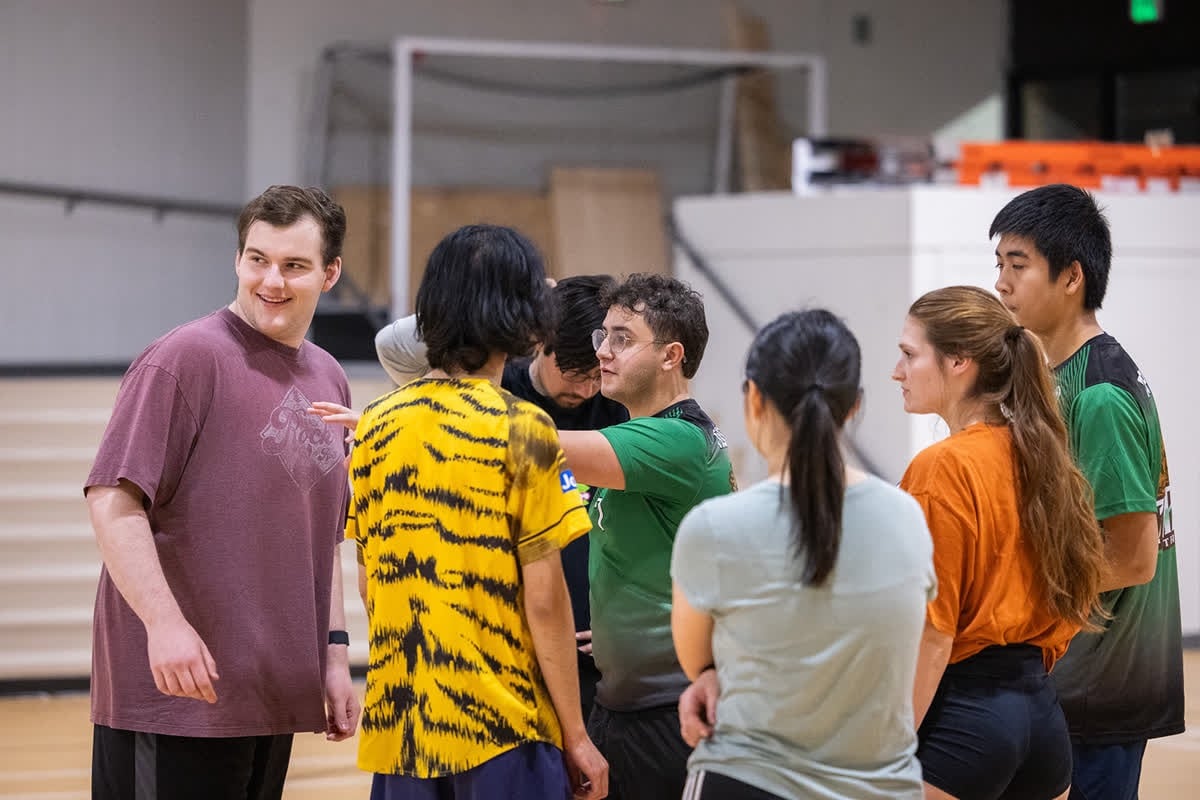
For Marrero-Alattar, who played volleyball seriously in Puerto Rico before a torn labrum ended his ability to compete at that level, intramurals offered him something he hadn’t expected to find again.
“Being able to reinvest that energy into Currier IMs made me feel like I was finding a piece of my heart again,” the senior said.
Although intramurals ignite competition and house pride, students distinguish them from the higher-stakes competitions that define much of life at Harvard and appreciate the freedom that comes with that.
“It’s okay to lose here if you’re losing with a team that you’re so excited to be a part of,” Marrero-Alattar said. “People want to have a competitive outlet without consequences.”
Senior Shealeigh Crombie, who plays soccer and broomball, said she arrived expecting the environment to feel exclusionary and found the opposite.
“I was super intimidated at first because I assumed it would be a pretty male-dominated space,” she said. “I feel like it’s a very community-based space. It’s an awesome way to feel like you’re part of something bigger and supporting your house.”
Sophomore Samson Axelrod, an IM co-rep who leads the ultimate frisbee team, came in having played none of the sports he now competes in regularly. In addition to picking up some new opportunities to stay active, he has come away with a greater appreciation for Currier’s strong community.
“The best part about being a Tree is that we actually have community in this house,” he said. “If you want to play literally anything, we have a spot for you. Anybody that wants to step up and be a part of it, we love to have you there.”
Whether this expansive participation will translate to a Straus Cup this spring remains to be seen. There are four league points and five tournaments up for grabs in the coming weeks, and the margin for error is slim. But for the Trees showing up to these games, the cup seems secondary to what happens along the way.
—Staff writer Rani J. Amin can be reached at [email protected].