
A behind-the-scenes intervention by Greece’s embassy in Washington has averted what could have quickly escalated into an embarrassing diplomatic incident—highlighting that, even years after the Prespa Agreement, the Macedonia name issue remains politically charged.
According to reports by STAR, US First Lady Melania Trump was preparing to address representatives from 45 countries at an international gathering when she was set to use the phrase “we welcome Macedonia” in reference to the delegation linked to North Macedonia’s Prime Minister, Hristijan Mickoski.
For Athens, wording is a major issue. It cuts to the heart of a decades-long dispute over history, identity and international recognition—issues that resonate not only in Greece but across the global Greek diaspora.
Greece’s ambassador to the United States, Antonis Alexandridis, was alerted in time and moved swiftly through diplomatic channels to prevent the phrasing from being used.
By the time the First Lady spoke, the correction had been made.
“I welcome North Macedonia,” she said—an adjustment that avoided reopening a sensitive fault line at a high-profile international event.
Vigilance over Hellenic national issues remain constant, particularly in global centres of power like Washington, where even a single word can carry geopolitical weight.
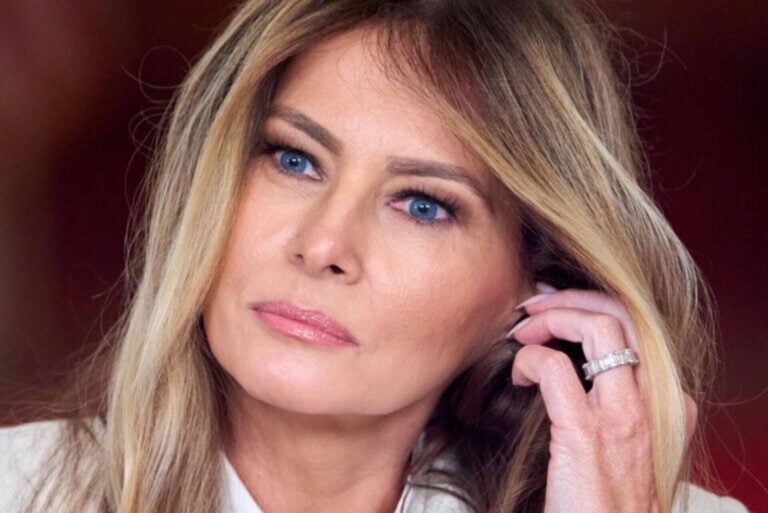 US First Lady Melania Trump was set to address 45 countries, initially preparing to say “we welcome Macedonia” when referring to North Macedonia’s delegation. Photo: AAP /Jacquelyn Martin
Diaspora at the centre: “We owe so much to the Greeks”
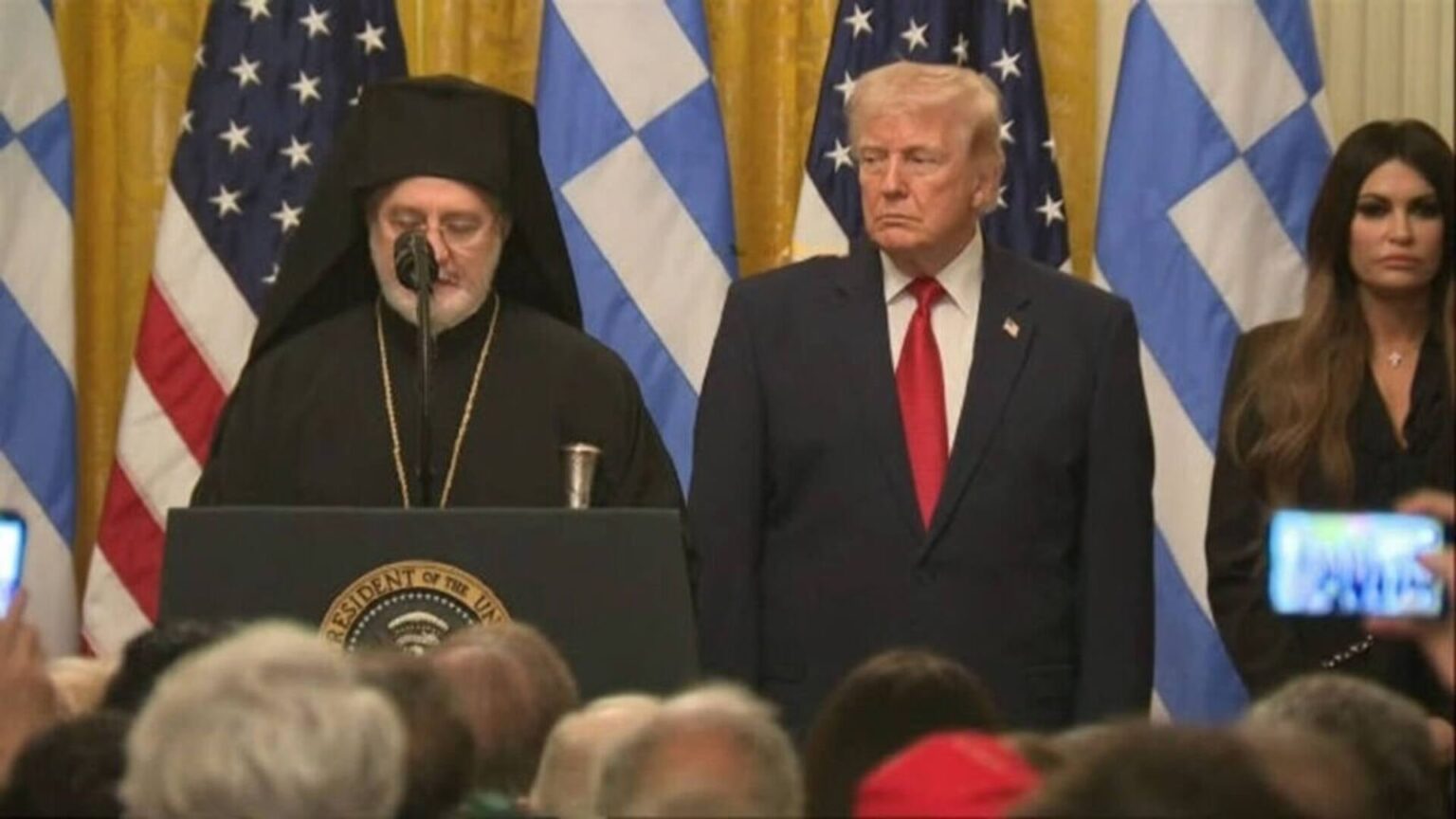
The episode unfolded as the White House hosted its annual reception marking Greek Independence Day on 25 March—an event that, for the Greek American community, is far more than symbolic.
US President Donald Trump, appeared alongside Archbishop Elpidophoros of America, and said the celebration was both a tribute and a recognition of American Hellenic legacy.
“This is an event I wouldn’t miss for anything,” he said, wishing Greek Americans a Happy Independence Day and acknowledging the enduring imprint of Hellenic ideals on the United States.
“The founders of our nation were deeply inspired by the example of ancient Greece,” he said. “We owe so much to the Greeks.”
In a room filled with members of the diaspora—figures who bridge Hellenism and public life—the message resonated.
The annual reception, one of the very few ethnic national commemorations formally observed at the White House, has long stood as a testament to the standing of Greek Americans in the political and civic fabric of the United States.
Trump singled out prominent Greek American officials including Michael Kratsios, Michael Rigas, Nicole Malliotakis and Gus Bilirakis, pointing to a community that has not only preserved its identity but translated it into influence.
He also referenced the Greek community in New York and the rebuilding of St Nicholas Church at Ground Zero—a project imbued with symbolism, linking faith, memory and resilience.
Among those present were Greece’s ambassador Antonis Alexandridis—fresh from his quiet diplomatic intervention—Cyprus’ ambassador Evangelos Savvas, and US Ambassador to Greece Kimberly Guilfoyle.
Archbishop Elpidophoros, in turn, positioned the evening within a broader strategic context.
“This event brings America and Greece together in a strategic alliance,” he said, pointing to growing cooperation across defence, energy and shipping—areas where Hellenic interests continue to intersect with global priorities.
Looking ahead, he noted the convergence of milestones in 2026: 250 years since American independence and 205 years since the Greek War of Independence—two revolutions grounded in shared ideals of freedom and self-determination.
He thanked the President for support on issues central to global Hellenism: religious freedom, the Ecumenical Patriarchate, the long-standing effort to reopen the Halki Theological School—an issue he said he had raised directly with Turkish President Recep Tayyip Erdoğan—and ongoing US engagement on Cyprus.
Yet, in the closing moments the Archbishop joked and said, “Everyone is wondering what I will offer you this year,” recalling last year’s presentation of the Cross of Constantine the Great.
Instead of a ceremonial gift this time, he offered something the U.S. President may need more right now, a prayer on peace, from the Orthodox tradition, attributed to Saint Basil.
“Remember, Lord, our devout and faithful President… Grant him deep and lasting peace.”
The evening concluded with the signing of the presidential proclamation marking Greek Independence Day—the annual affirmation suggests that Hellenism, far from being distant, remains firmly embedded at the heart of American public life.