
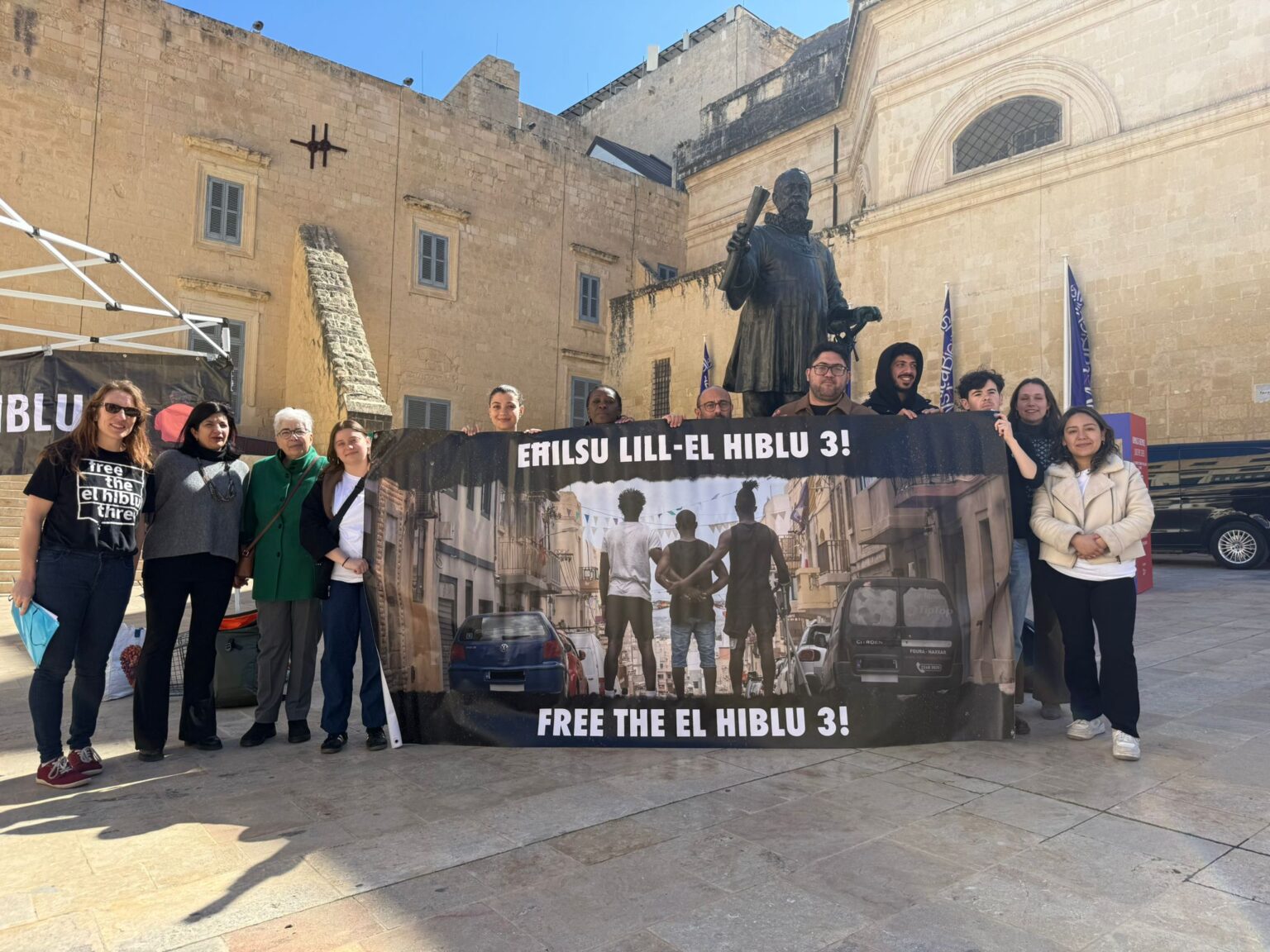
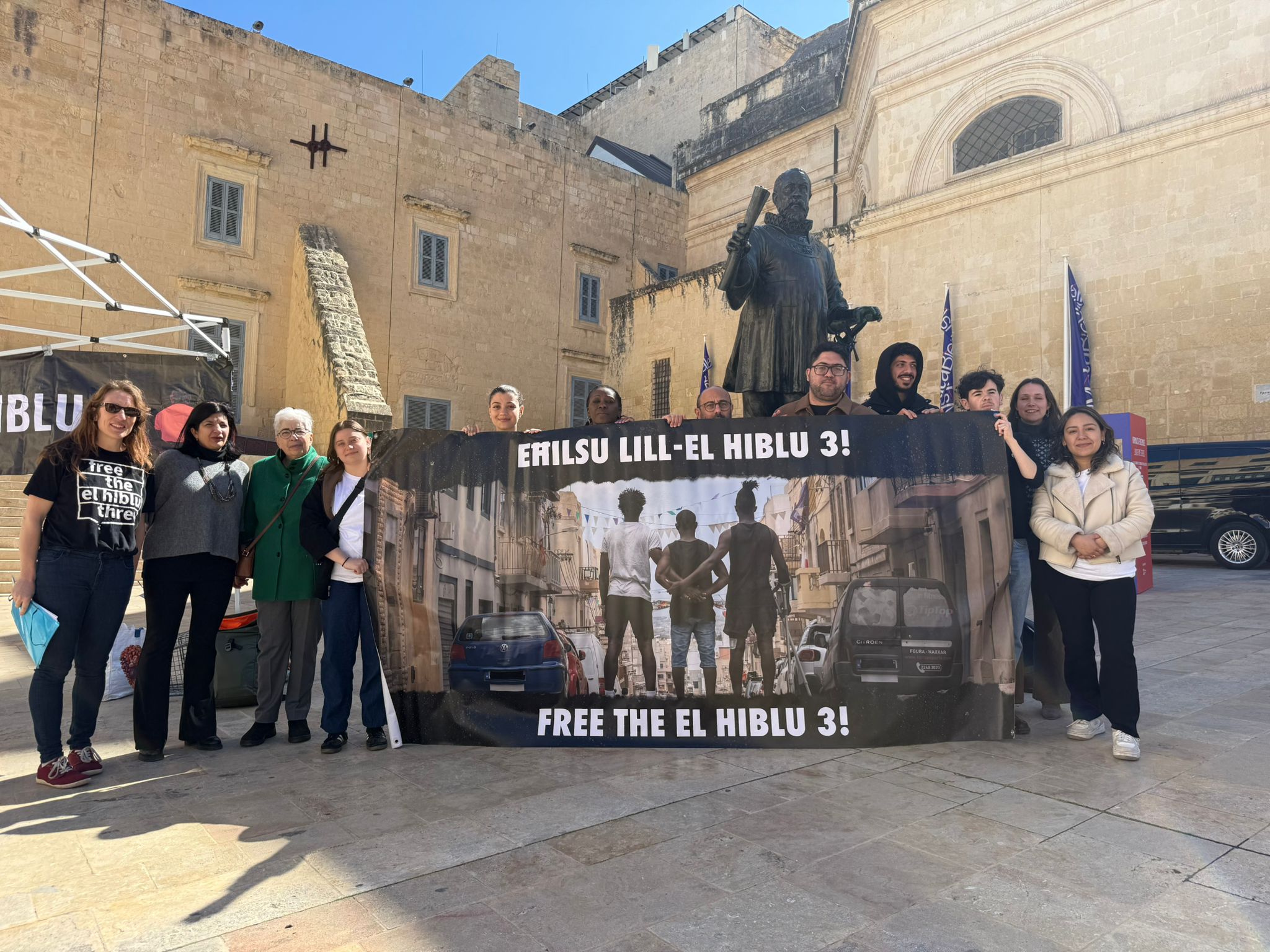
 Photo: Gabriel Schembri/Coalition for the El Hiblu 3
Activists supporting the El Hiblu 3 marked the seventh anniversary of the fateful day in which the three young men were arrested to face trumped-up charges of terrorism, reiterating their call – echoed by UN experts and international human rights organisations – for the charges to be dropped for good.
In light of the anniversary, the NGOs and individuals forming part of the Coalition for the El Hiblu 3 organised a 7-hour vigil, with a different activity held every hour.
A potential life sentence for interpreting and mediating
Abdalla, Amara and Kader were aged just 19, 15 and 16 years old respectively when they left Libya on a crowded rubber boat in a bid to reach safety in Europe alongside 111 others.
108 of them – 6 refused rescue and remained on the boat – were rescued by the El Hiblu 1, a Turkish-flagged tanker captained by Nader el-Hiblu, after their deflating boat was spotted by a patrol aircraft of an EU naval mission. The aircraft relayed the instruction of the Libyan Coast Guard for the tanker to return to Libya, a pushback in breach of international law.
The group protested as they realised they were reaching Libya, with some even threatening to jump overboard, and the matter was complicated by the language barrier that existed. It was in this context that the young trio intervened and played a decisive role in resolving the matter.
Amara was the only English speaker in the group – he had attended an English-language school in his native Guinea – and thus had to act as an interpreter, while fellow Guinean Abdalla and Ivorian national Kader acted as mediators. The captain maintained that the ship lacked enough fuel to reach Italy, but would instead head to Malta.
But when the vessel reached Malta, the three boys were arrested and charged with terrorism – a charge which carries a potential life sentence – with the tanker’s captain insisting that the group had hijacked the ship.
No evidence, however, was provided of any violent acts, with eyewitnesses confirming that the young trio sought to mediate.
The Maltese authorities ignored national policies related to the protection of minors when they put the trio – including the two minors – in the maximum security wing of the adult prison: they spent nearly 8 months in detention before they were released on bail.
The trio have now been stuck in a legal limbo in Malta’s notoriously slow justice system, with the authorities refusing to drop a prosecution which UN independent experts and Amnesty International have both insisted should never have been brought in the first place.
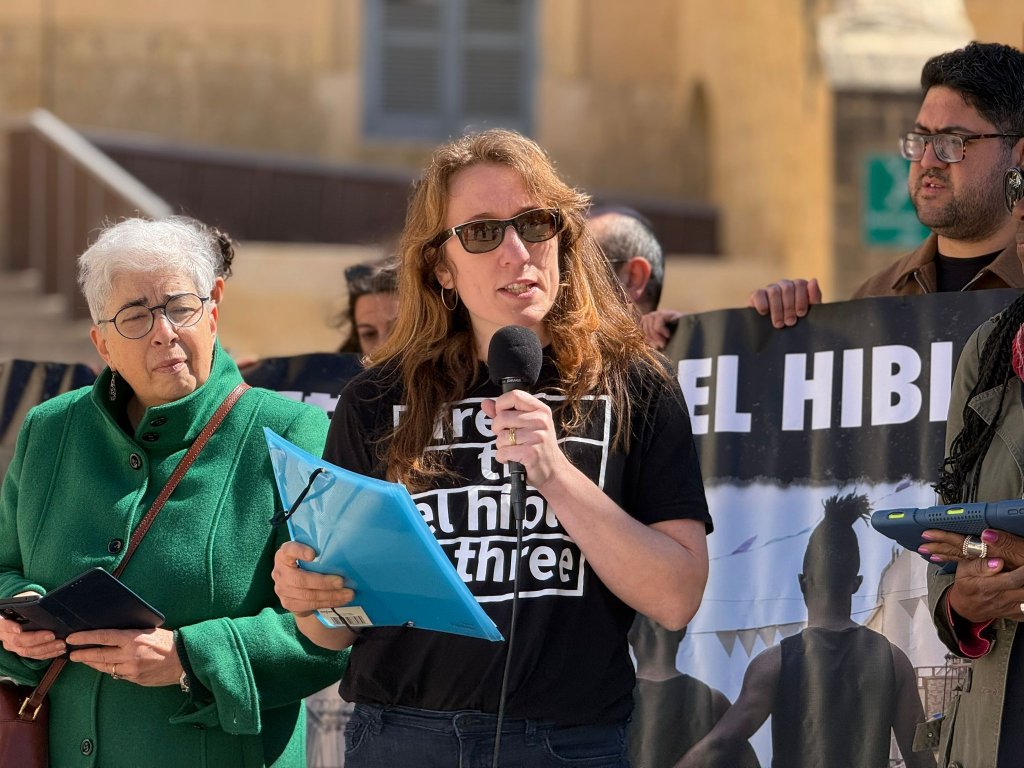 Ċetta Mainwaring speaking at an event marking the 7th anniversary of the arrest of the El Hiblu 3.
Photo: Gabriel Schembri/Coalition for the El Hiblu 3
Speaking on behalf of the coalition during Saturday’s visit, Ċetta Mainwaring – an academic and activist with a particular focus on migration – hailed the courage showed by the young trio on board the El Hiblu 1, noting that “their bravery in this moment helped prevent an illegal pushback to Libya.”
Mainwaring noted how they were already “painted as terrorists and pirates by the media before they even arrived in Malta, and have since then continued to endure criminalisation by the authorities.
“For 2,556 days, their freedom has been denied, robbing them of their youth and their futures,” she said, as she reiterated the coalition’s call to drop the charges and put an end to their ordeal.
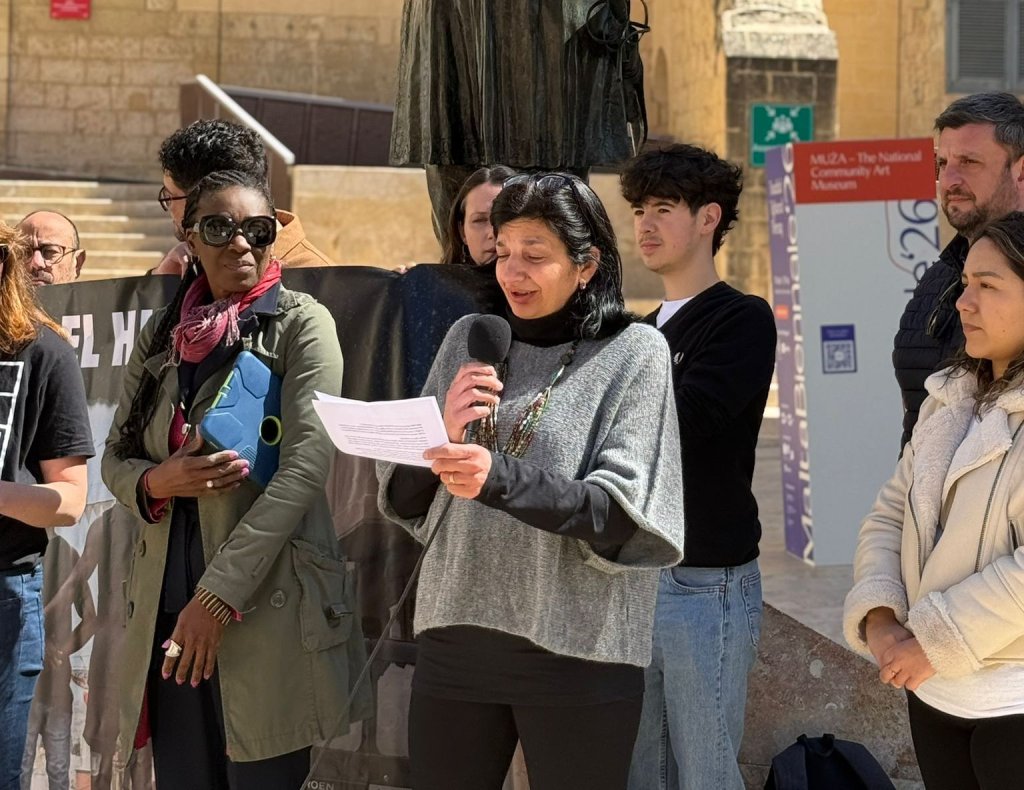 Jesuit Refugee Service Malta director Katrine Camilleri addressing an event marking the 7th anniversary of the arrest of the El Hiblu 3.
Photo: Gabriel Schembri/Coalition for the El Hiblu 3Malta’s pursuit of agreements with Libya condemned
The speakers included Jesuit Refugee Service Malta director Katrine Camilleri, who emphasised that there was ample evidence in 2019 that Libya was not a safe place for asylum seekers, and that not much had changed on this front today.
Yet Malta – and other European states – persisted in seeking agreements with Libya in a bid to ensure that asylum seekers are stopped from leaving and are even returned there, irrespective of the consequences.
“Today, we live in a world where states go to ever greater lengths to evade their freely assumed obligations to protect the life, liberty, safety, and dignity of men, women and children seeking protection,” Camilleri lamented. “Not only this. They also use their power to intimidate or even punish those who dare stand against abuse of power and human rights violations, even if they are using the remedies that the law gives them. “
In this context, she said, one had to recognise the contributions of those who refused to give in to fear and do the right thing – including Amara, Abdalla and Kader.
“We stand in solidarity with them, as they face this injustice and promise them our support, and we commit to follow their example, by standing for human rights, as they did,” she said.
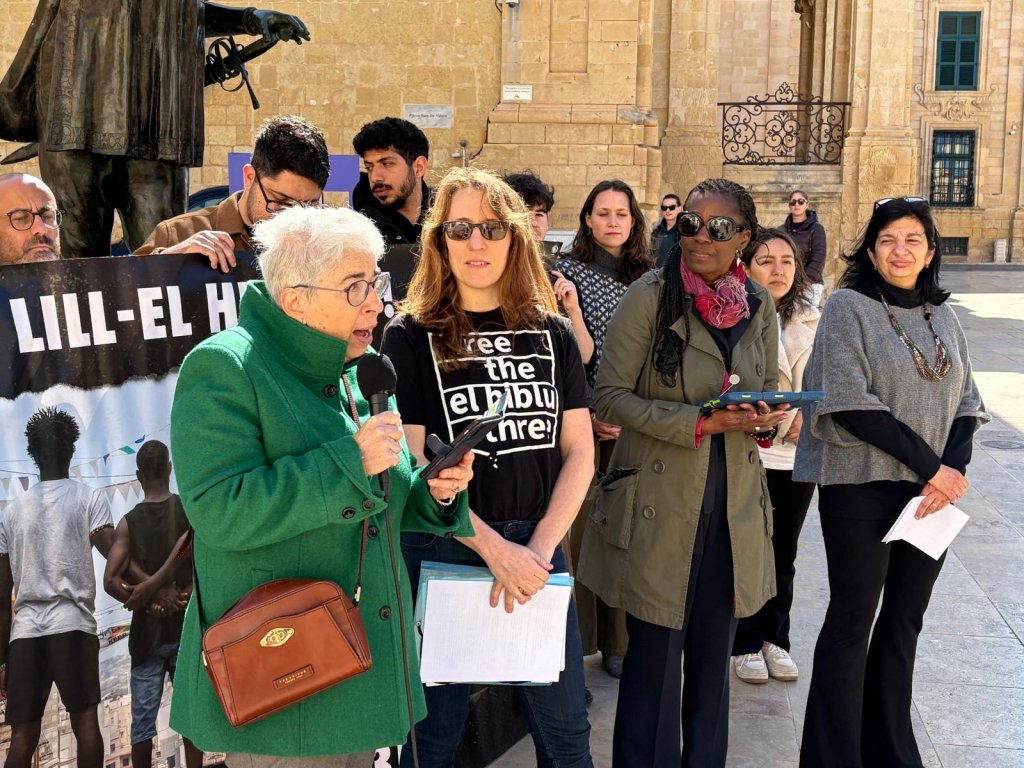 Repubblika president Vicki-Ann Cremona addressing an event marking the 7th anniversary of the arrest of the El Hiblu 3.
Photo: Coalition for the El Hiblu 3Repubblika president questions use of anti-terrorism law
Vicki-Ann Cremona, president of rule of law organisation Repubblika, said that the use of anti-terrorism laws to prosecute the El Hiblu 3 raised “profound concern.”
“Anti-terrorism laws are among the most serious instruments available to the state. They are designed to address acts of violence intended to spread fear and undermine society. To apply them in circumstances such as these risks distorting their purpose and weakening their legitimacy,” she warned.
She also emphasised that the length of proceedings was in itself an injustice, and insisted that Malta’s continued pursuit of the charges “raises serious questions about proportionality, about fairness, and about the responsible use of prosecutorial discretion.”
Cremona stressed that the attorney general had the authority to reassess the case, and argued that she had the responsibility to do so and ensure that the law was not abused, justice is not reduced to process and Malta’s criminal law “retains its moral credibility.”
“This is not a question of weakening the law. It is a question of preserving it,” she said.
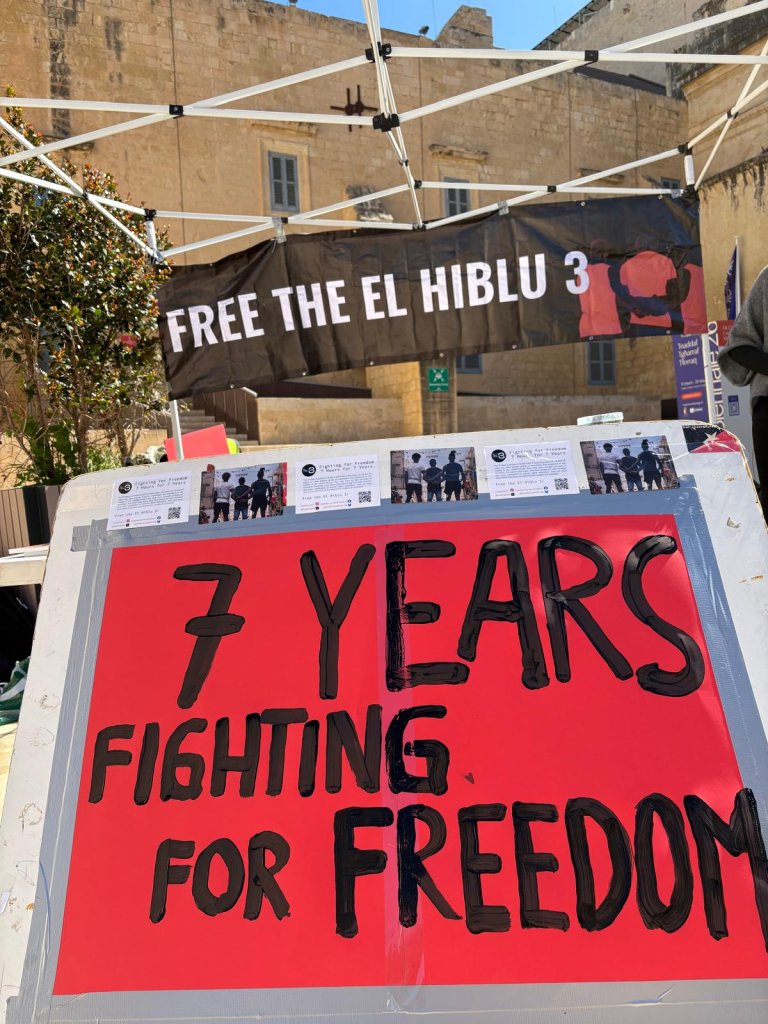 Photo: Coalition for the El Hiblu 3The spectre of racism
In her own address, African Media Association Malta Regine Nguini linked the prosecution of the trio to the racism black people – herself included – experienced.
“Speaking about racism is exhausting. Our good friends tell us to get over it. And we try. Still, we are tired, because it is still, and always, there, hanging above our heads like the Sword of Damocles. We see the same patterns again and again, patterns that have been normalised,” she said.
Nguini said that the manner in which politicians talked about racialised people was “highly problematic” calling out home affairs minister Byron Camilleri for a post showing a black person being arrested by two police officers captioned ‘we will send back any foreigner who doesn’t collaborate, even if they have spent 15 years here.’ The post, she emphasised, ensured that the photo’s subject was “mobbed by a cyber crowd of racists.”
“That is how stories without context are channelled, and some people are immediately seen as a problem before they are even seen as human,” she maintained.
People were being reduced to labels, Nguini added, and this included the El Hiblu 3, who now spent seven years hoping that a case with no merit would be dismissed.
“No more reducing human beings to labels and categories. No more injustice that we are expected to ignore. No more criminalising people for surviving,” she concluded.

