
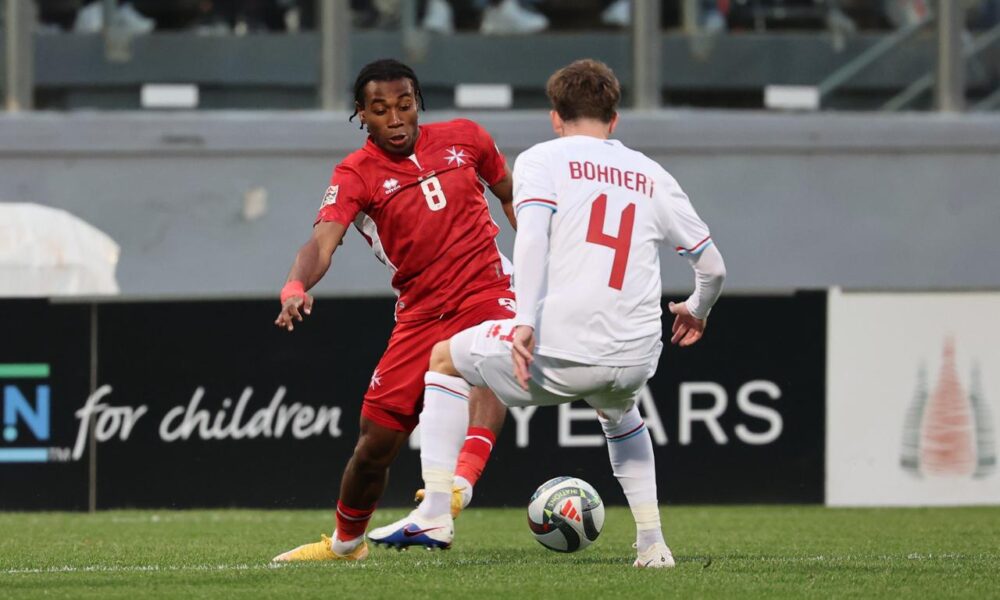
Luxembourg finished the match with 57% possession, including a staggering 62% in the first half.
However, for all their control of the ball, they produced very little in terms of real danger.
In fact, Luxembourg registered just one serious effort on goal – their opening goal – while their second came directly from a corner kick. Their only other attempt in the first half was a shot off target.
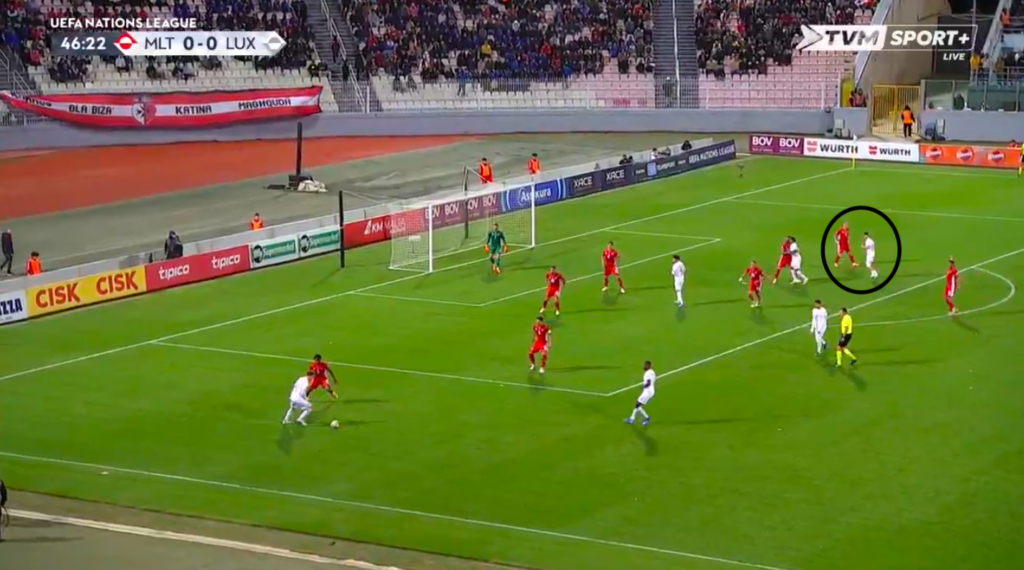 First-goal scorer Vincent Thill (black circle) closely marked inside the box, just before the cross from the left flank.
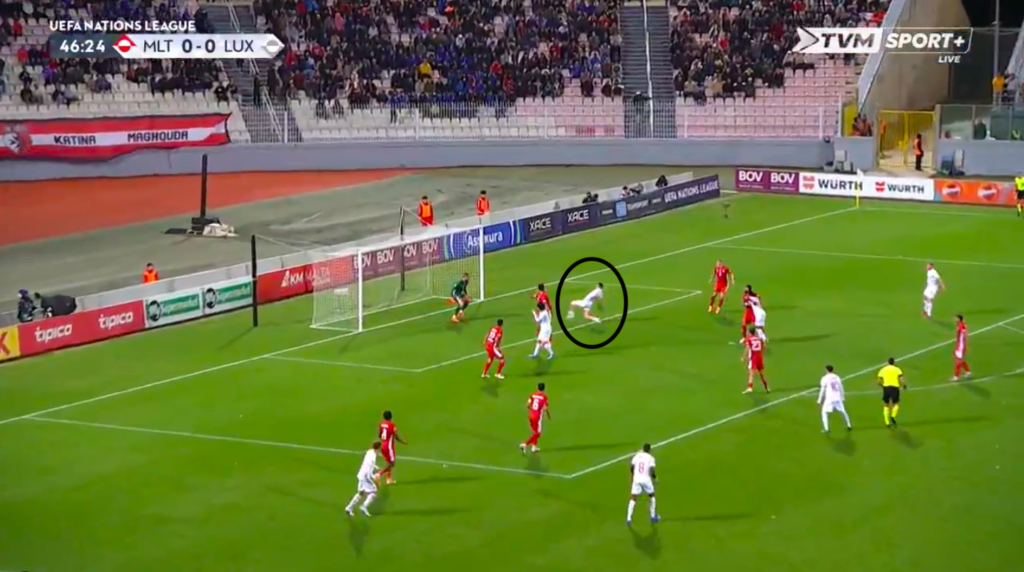 Vincent Thill (black circle) is now unmarked, tracks the ball and manages to beat Henry Bonello from close-range, just after the break.
On the other hand, Malta created better chances. They finished the match with nine total shots, including big opportunities that fell to Irvin Cardona, Paul Mbong, Alexander Satariano and Trent Buhagiar.
Malta also recorded a higher Expected Goals (xG) figure than Luxembourg – 1.11 vs 0.59 – which underlines Malta’s main problem on the night – a lack of clinical finishing in decisive moments.
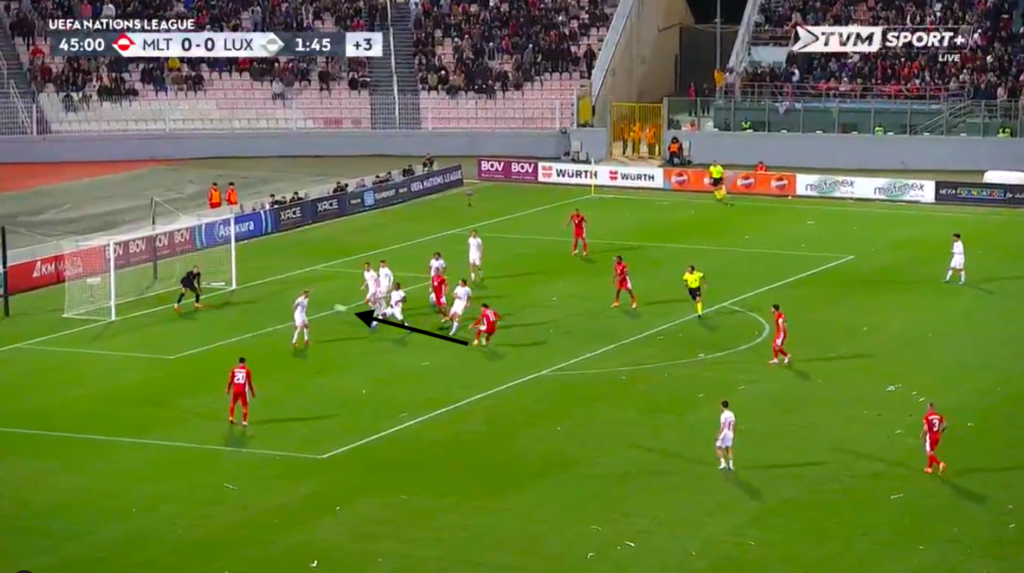 Irvin Cardona (black arrow) sent this effort wide from next to the penalty spot.
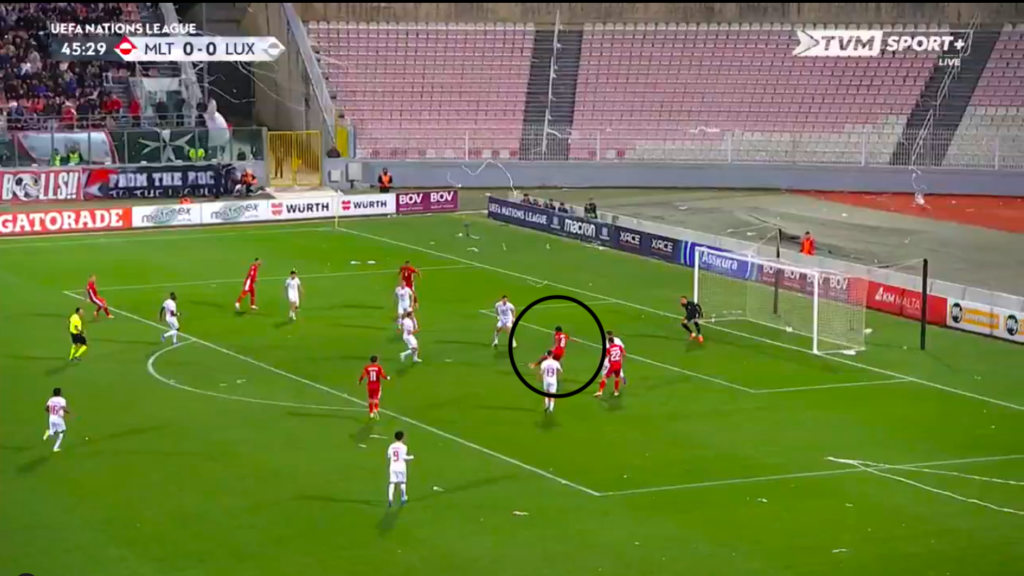 Paul Mbong (black circle) failed to capitalise on this chance – moments later, Luxembourg scored.
“We always speak about details and it is true, it’s always the small details that decide games,” Zach Muscat told the Times of Malta after the match.
“Disappointed with the result. We could have capitalised on our chances and whoever watched the match could see how many times we arrived in the final third and how many chances we had. In all honesty, besides their two goals, I don’t remember any saves that Henry Bonello made during the game.”
In fact, Bonello did not make a single save. Apart from the two goals, Luxembourg did not create any other clear chances from open play.
Despite showing good combinations centrally and occasionally playing through Malta’s pressing, they struggled to break down a compact Maltese defensive line, particularly in individual duels.
“Also, I think we were better than them in 1vs1 duels, especially defensively, but also when our wingers tried to beat their full-backs,” Muscat said.
Muscat backed this up with his performance, winning four of his six duels and all three of his aerial duels at right-back, while Ryan Camenzuli, on the opposite flank, won three of the five duels he was involved in.
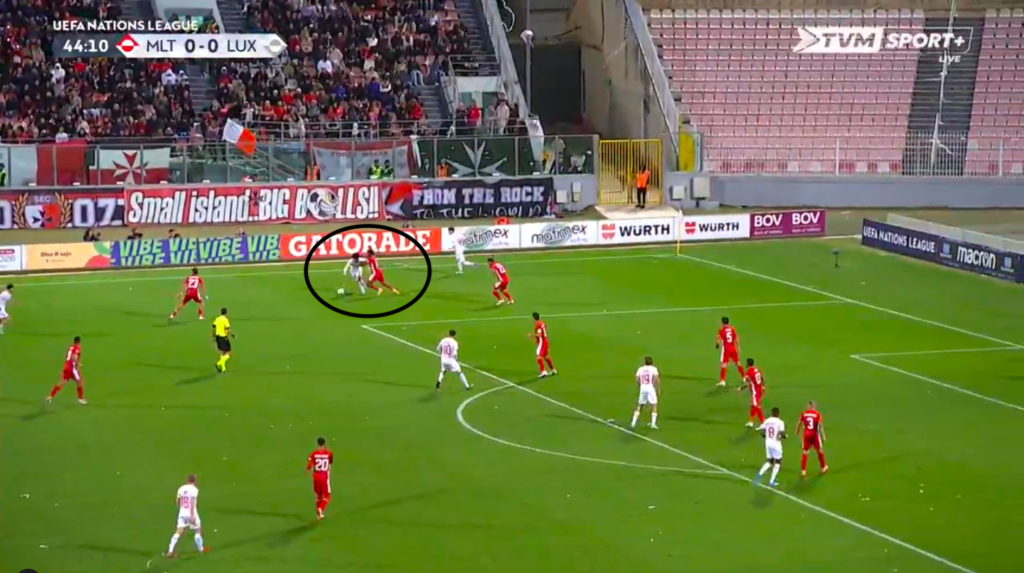 For instance, Luxembourg’s left winger (black circle) tries to cut inside for a shot but is forced to pass back by Paul Mbong.
There also appeared to be a recurring tactical pattern in Malta’s attacking play, particularly with switches of play towards Paul Mbong.
On several occasions, Mbong found himself in space on the far side, which raises questions about Luxembourg’s defensive structure – particularly whether both their wingers were tracking back consistently enough.
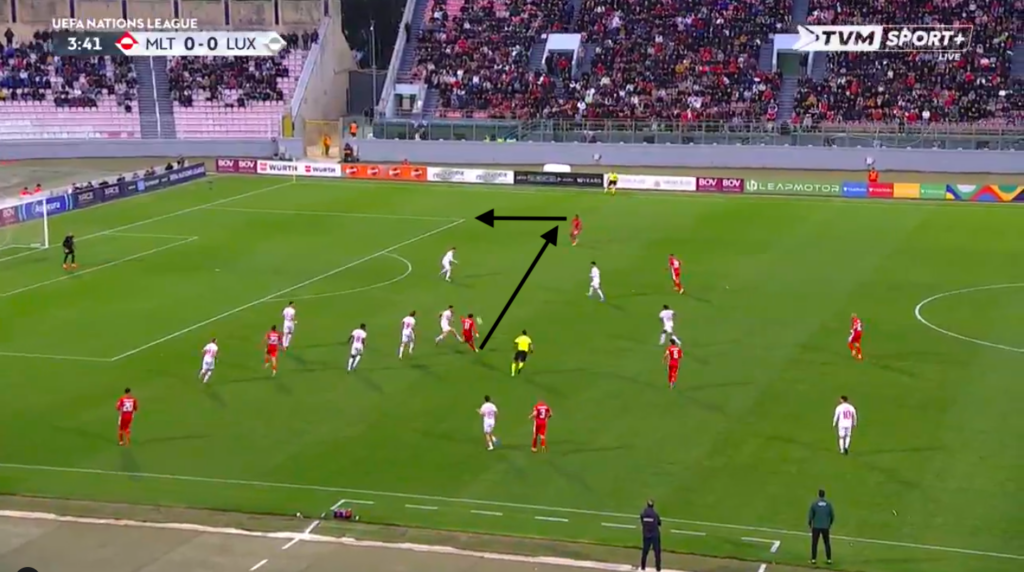 Here, Irvin Cardona switches ball to Paul Mbong who can take on his defender in a 1vs1 duel.
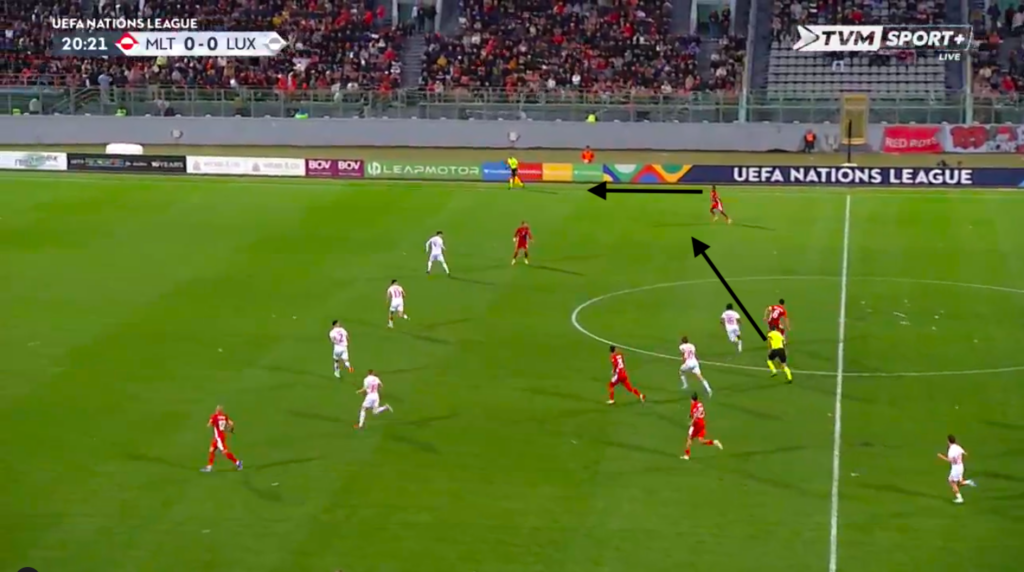 Now, Matthew Guillaumier switches play to Paul Mbong who finds a lot of space during Luxembourg’s shift in pressure.
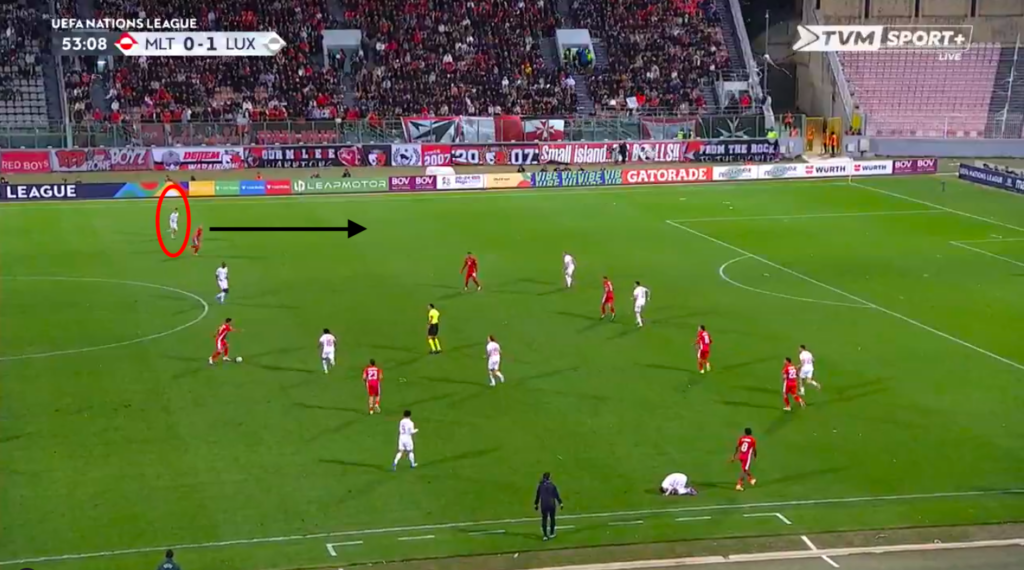 Here, Ryan Camenzuli (black arrow) pushes up to overload – an instance where Luxembourg’s right winger fails to track properly.
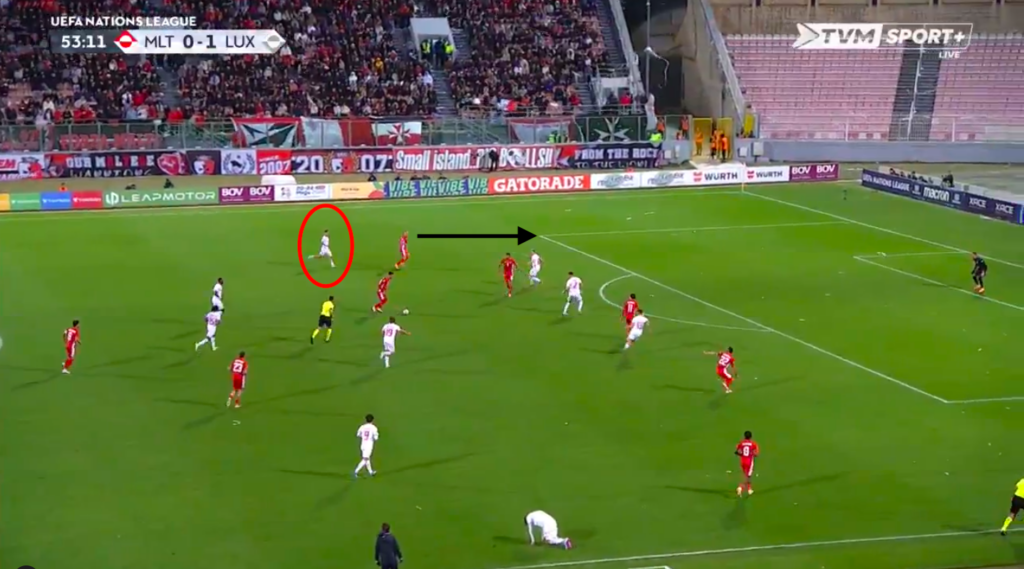 Ryan Camenzuli (black arrow) has now gained space with his opponent still behind – nonetheless, here Ilyas Chouaref takes a shot on goal.
Dardari and Vincent Thill, who played as inverted wingers, completed six successful dribbles between them from 13 attempts, with most of these moves involving them cutting onto their stronger foot.
However, this rarely translated into real end product. Dardari did not register a single shot, while Thill had two – one off target in the first half and the shot that led to Luxembourg’s opening goal.
“On the other hand, their goalkeeper and defenders tried their best to close us down, but we also lacked something upfront. We still believe in the comeback. It is difficult, but we did create chances in the final third and now we need to work on finishing in training,” Muscat said.
“Luxembourg players were already celebrating, which means they think the tie is over. But for us, it is still open. We need to regroup quickly and try our best on Tuesday.”
Muscat also pointed out Luxembourg’s technical quality in possession, although they did make some errors – both forced and unforced – which led to some of Malta’s chances, particularly in transition.
A large part of Luxembourg’s build-up play went through Mathias Olesen, undoubtedly one of their best performers on the night.
He completed 92% of his 47 asses, with an 81% accuracy rate in the opposition half. He also recorded 19 ball carries – defined as moving the ball at least five metres under control – for a total carrying distance of nearly 147 metres, highlighting his importance in progressing Luxembourg up the pitch.
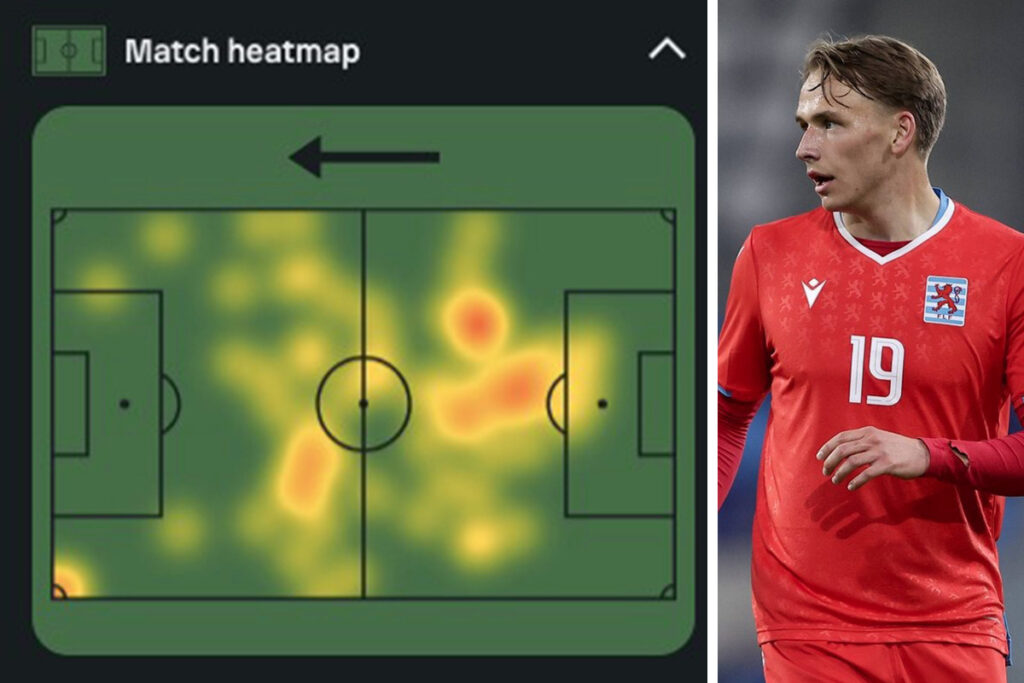 Mathias Olesen’s heat map against Malta – his range of action was mostly inside the defensive half, initiating the build-up.
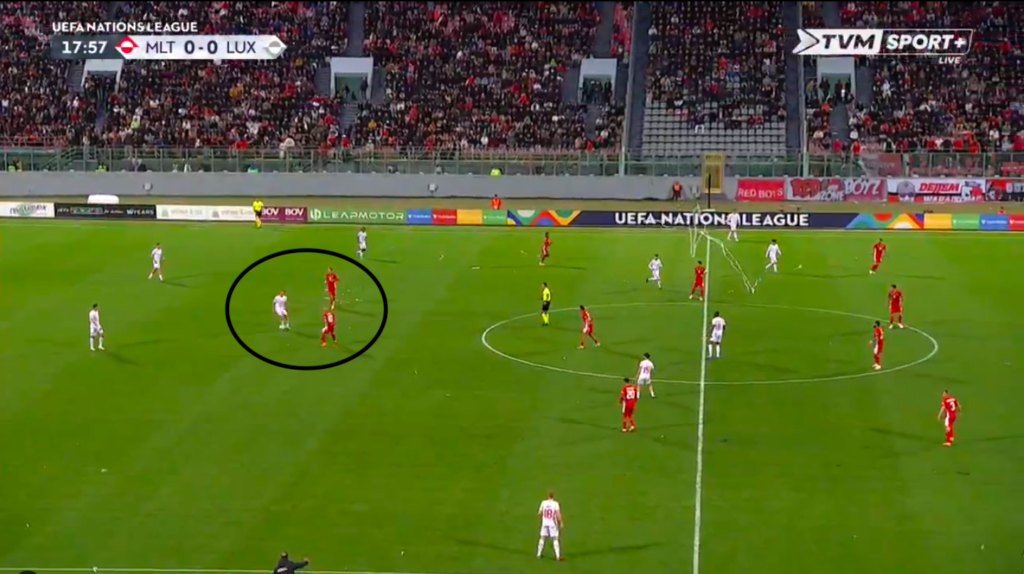 Mathias Olesen (black circle) helping in build-up, attracting pressure.
“They had more possession than us but, for all the possession they had, they did not put us under a lot of pressure in the final third. They made some errors, both forced and unforced, and we had counter-attacks but did not capitalise on our chances. In the end, they were simply more clinical than us,” Muscat concluded.
Statistics powered by SofaScore.