
Published on
March 29, 2026
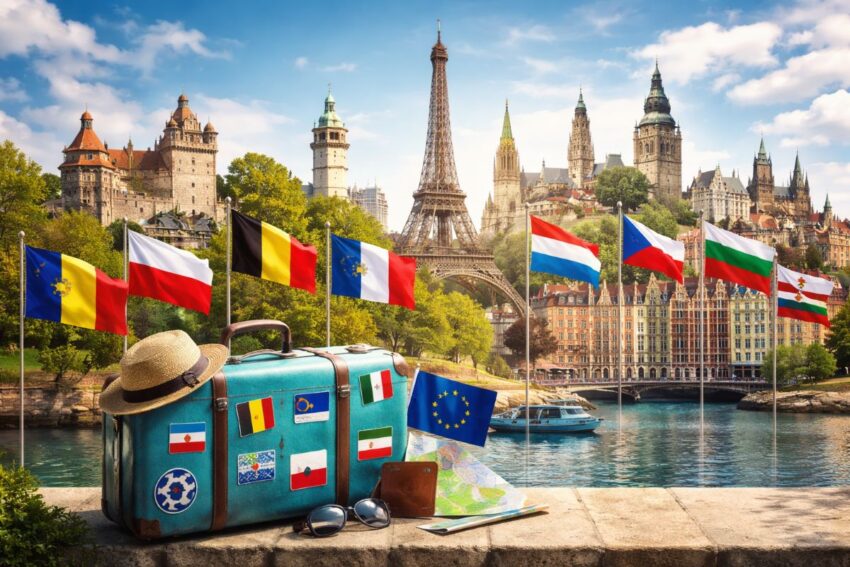
Image generated with Ai
In March 2026, as the conflict in the Middle East intensified, Romania became one of the first countries to adopt the European Union’s rescEU policy, joining Poland, Belgium, France, Ireland, Luxembourg, Netherlands, Bulgaria, and Czechia. The EU’s rescEU policy, introduced in 2025, marks a significant shift in crisis management, providing a fully EU-funded fleet for emergency evacuations. This new approach enables member states to call upon the EU’s resources when their national capabilities are exhausted, ensuring that all European citizens receive support in times of crisis.
In response to the rapidly evolving situation, the EU coordinated a large-scale evacuation effort, with over 13,000 citizens repatriated. These countries, once reliant solely on their own assets, now benefit from a collective effort that pools resources and optimizes airlift capacity. The rescEU framework ensures that smaller countries without the long-range military transport capabilities of larger nations are not left behind in such critical situations. This adoption of the rescEU policy demonstrates the EU’s commitment to solidarity, showing that even in the most challenging times, Europe can unite to protect its citizens and ensure swift, effective responses to crises.
What is the RescEU Policy?
In a historic move, the European Union (EU) has leveraged the newly adopted rescEU policy to address a massive travel crisis caused by escalating conflicts in the Middle East. Countries like Romania, Poland, France, and Belgium have become the first to use this advanced evacuation mechanism to swiftly repatriate thousands of European citizens. As tensions in the region increased, this EU-led operation marked a monumental shift in how the bloc handles international crises, providing a powerful example of EU solidarity and travel security during emergencies.This rapid response comes as a direct result of the EU’s rescEU initiative, which has become a vital tool in managing large-scale evacuations, improving the safety and security of European travelers when national resources are stretched thin.
The rescEU policy was introduced by the European Commission as a strategic move to bolster the EU’s ability to respond to large-scale emergencies. Under this policy, the EU has developed its own fully funded fleet of passenger aircraft, which is available for use when national resources are insufficient. This ensures that during global crises, EU countries do not need to rely on individual assets, but can instead access the collective strength of the entire Union.
In March 2026, the rescEU policy became the centerpiece of Europe’s crisis response as airspace closures and ongoing conflicts in the Middle East stranded thousands of travelers. By activating the rescEU fleet, the European Commission ensured that over 70 flights were coordinated, bringing citizens safely home.
Key Countries Adopting RescEU for Travel Evacuations
The rescEU policy was first activated by Romania and Poland, which faced limitations in their national evacuation resources. These two nations became the first to request EU-funded flights under the rescEU framework. As a result, they received direct assistance, marking the first deployment of EU-owned aircraft in this capacity.
Advertisement
Advertisement
- Romania: Romania was the first country to benefit from the rescEU policy during this crisis. The country received multiple flights, with over 500 citizens repatriated from the Middle East.
- Poland: Following Romania, Poland also adopted rescEU assistance and successfully repatriated citizens, with over 300 individuals returning to Poland via EU-funded flights.
In total, 23 countries requested EU assistance, and countries like Belgium, France, Luxembourg, Czechia, and Italy also utilized the EU Civil Protection Mechanism, either receiving rescEU flights or collaborating in resource-sharing to support the evacuation effort.
How the RescEU Policy is Coordinated
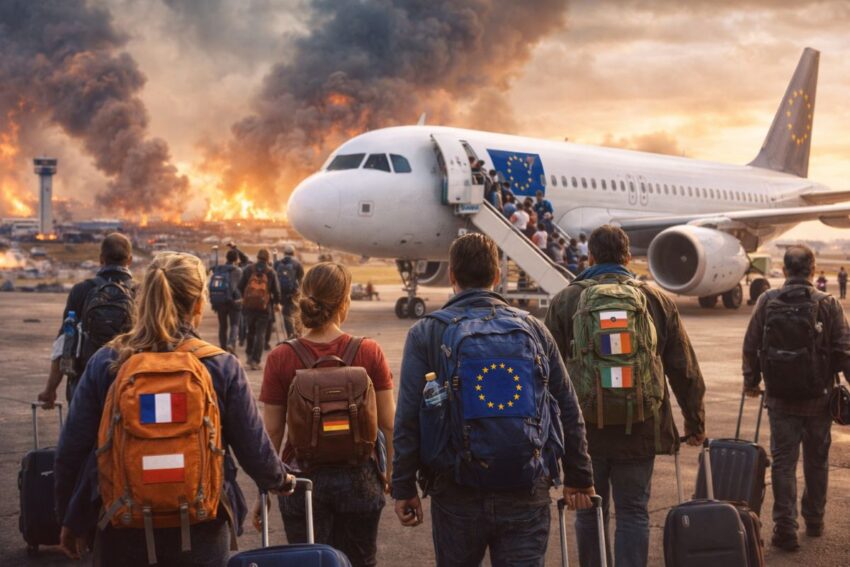
Image generated with Ai
The Emergency Response Coordination Centre (ERCC), based in Brussels, plays a critical role in managing and coordinating the rescEU operation. Acting as the EU’s crisis control center, the ERCC is responsible for ensuring that evacuations proceed smoothly across multiple countries.
A key aspect of the rescEU policy is the 30% Rule, which requires countries to open at least 30% of the seats on their flights to citizens from other EU nations in exchange for EU co-funding. This ensures that smaller EU nations can tap into a collective pool of resources, even if they do not have the means to contribute fully on their own.
The Role of the EU in Enhancing Travel Security and Evacuations
In the wake of the Middle East crisis, over 20,000 flights were canceled in a single week, and many airports were closed due to the conflict. The rescEU policy ensured that European citizens stranded in these affected areas were not left behind. By deploying EU-funded flights, the EU was able to bypass the slow processes of diplomatic coordination and directly assist those in need.
The rescEU policy also represents a step forward in ensuring that citizens of smaller EU states are not left vulnerable during crises. Previously, nations with fewer resources, such as Luxembourg, would be at the mercy of larger neighbors for evacuation support. Now, with rescEU available, these countries can expect rapid assistance from a dedicated EU fleet.
Tourism Impact: Reassuring European Citizens
One of the most immediate concerns during such large-scale crises is the safety and well-being of travelers. The rescEU policy ensured that vulnerable groups—such as the elderly, families with children, and those with medical needs—were prioritized in evacuation efforts. By designating safe hubs in Oman (Muscat) and Saudi Arabia (Jeddah), the EU was able to facilitate the smooth extraction of citizens from conflict zones, reducing the potential for further disruption to the global travel industry.
As airports across the Middle East closed their doors, the rescEU fleet stepped in to provide a lifeline, bringing EU citizens home safely and restoring a sense of security to the broader tourism sector. These evacuations helped prevent further chaos in the global travel and tourism industry, allowing EU governments to regain control over their national travel sectors more quickly.
Strategic Autonomy in Crisis Response
The success of rescEU during the March 2026 crisis underscores the EU’s shift towards Strategic Autonomy in managing international crises. The ability of the European Commission to deploy its own resources, independent of individual member states, ensures a faster, more effective response to emergencies that impact travel and tourism. This marks a new normal for European crisis management.
In the future, the EU is expected to continue developing rescEU to further expand its capacity for handling diverse crisis situations, such as natural disasters, terrorist threats, or other emergencies that require immediate action. This proactive approach will continue to enhance the security and safety of European travelers, ensuring that citizens from all EU states can rely on swift, efficient evacuations in times of need.
How Does it Work?
The rescEU policy is part of the EU’s strategy to enhance its crisis response capabilities by using a fleet of EU-funded transport aircraft dedicated to evacuations and relief efforts. Prior to rescEU, EU countries had to rely on their own national assets to manage such crises, which often left smaller nations at a disadvantage. However, with rescEU, the European Commission has stepped in to take charge, ensuring speedy evacuations and efficient resource distribution across the continent.
In the case of the recent Middle East conflict, countries like Romania and Poland needed external assistance after their national evacuation assets were overwhelmed. Through the rescEU framework, the EU took control of evacuation operations, deploying fully funded flights to bring stranded citizens back to Europe. This marked the first time that EU-owned aircraft were mobilized for such a mission, showcasing the flexibility and resourcefulness of the EU’s emergency response system.
Countries Taking the Lead in Adopting rescEU
As part of this unprecedented evacuation operation, Romania emerged as the first country to activate the rescEU policy, successfully bringing back over 500 citizens from conflict zones in the Middle East. Following Romania’s lead, Poland also requested EU support, resulting in the deployment of EU-funded flights to repatriate over 300 Polish citizens, as well as citizens from other European nations.
In total, 23 countries requested EU assistance, with Belgium, France, Luxembourg, and Czechia among those also receiving rescEU-assisted flights. Countries outside the EU, like Bosnia and Herzegovina, also benefitted from this collaborative framework, allowing them to bring their citizens home without delay.
The Role of the European Commission in Crisis Management
The European Commission’s Emergency Response Coordination Centre (ERCC) has played a pivotal role in coordinating these complex evacuation operations. Acting as the control tower for EU-wide solidarity, the ERCC ensures that no EU citizen is left stranded when national resources are stretched. With the capacity to pool resources and manage flights efficiently, the ERCC ensures that countries with limited airlift capabilities, such as Luxembourg, can still access evacuation services by securing available seats on flights coordinated by larger neighbors like France or Belgium.
The ERCC also has the power to mobilize rescEU’s fully funded fleet, ensuring a quick response to emergencies and bypassing lengthy diplomatic processes that could delay evacuations. This ability to act quickly and decisively has been essential in managing the travel chaos caused by the Middle East conflict, where over 20,000 flights were cancelled in a single week.
Travel Impact: Prioritizing Vulnerable Passengers
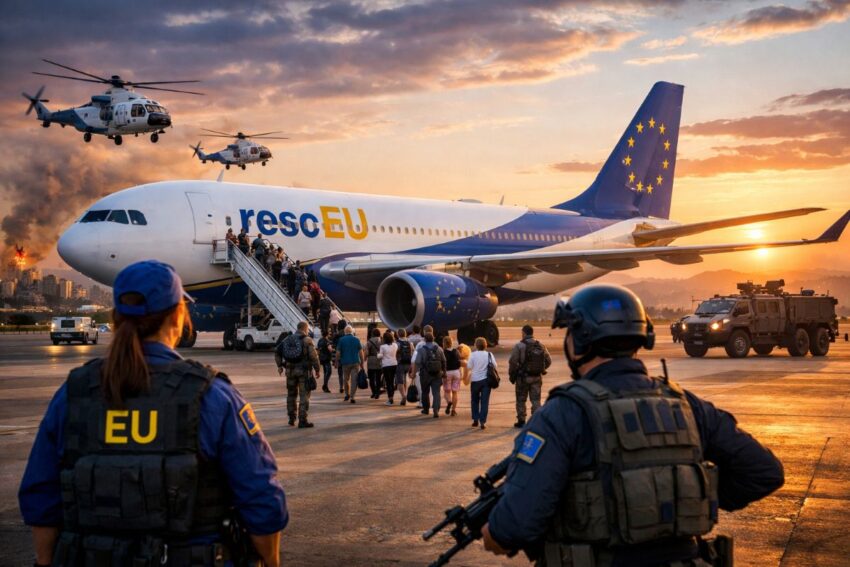
Image generated with Ai
One of the most crucial aspects of the rescEU evacuation operations is the prioritization of vulnerable passengers, such as the elderly, children, and those with medical conditions. With regional airspace closures and travel restrictions in place, these vulnerable travelers needed immediate assistance, and rescEU flights ensured their safe repatriation to Europe. Safe hubs like Muscat, Oman, and Jeddah, Saudi Arabia, were designated as extraction points, where travelers could gather and board flights back to Europe.
The speed and efficiency of the rescEU initiative have also been key in preventing further disruptions to the global travel and tourism industry, which was already reeling from the impacts of the conflict. By clearing the skies of stranded citizens, the EU helped reduce the risks of further chaos and delays, ensuring that tourism recovery efforts in Europe could continue without significant setbacks.
The Future of EU Travel Security: The “New Normal”
This response to the Middle East crisis is a glimpse into the future of European travel security. With the successful activation of rescEU, it’s clear that the EU is moving towards greater strategic autonomy in managing its crises. The ability of the European Commission to deploy its own aircraft and resources immediately without waiting for individual states to offer help is a major step forward in ensuring the safety of EU citizens during times of international unrest.
In future crises, European travelers can now rely on rescEU as a guaranteed last-resort safety net, ensuring that citizens from smaller EU nations, who might not have the capacity for large-scale evacuations, are equally protected. As solidarity becomes more than just a diplomatic buzzword, the rescEU initiative will play a crucial role in fortifying Europe’s disaster response mechanisms and reinforcing the region’s commitment to protecting travelers, no matter the circumstances.
A Testament to EU Solidarity and Security
The EU’s handling of the recent travel crisis is a powerful demonstration of the solidarity and efficiency that can be achieved when nations come together for a common cause. The adoption of rescEU by Romania, Poland, France, and other countries marks a significant milestone in European travel security. As the EU moves towards more comprehensive and self-sufficient crisis management systems, it is clear that this collaborative effort will continue to serve as a model for global travel safety and humanitarian operations. The future of European travel and tourism now looks stronger and more resilient, thanks to the foresight and leadership shown by the European Union in managing such critical situations.
Advertisement
Advertisement
