
Published on
March 29, 2026
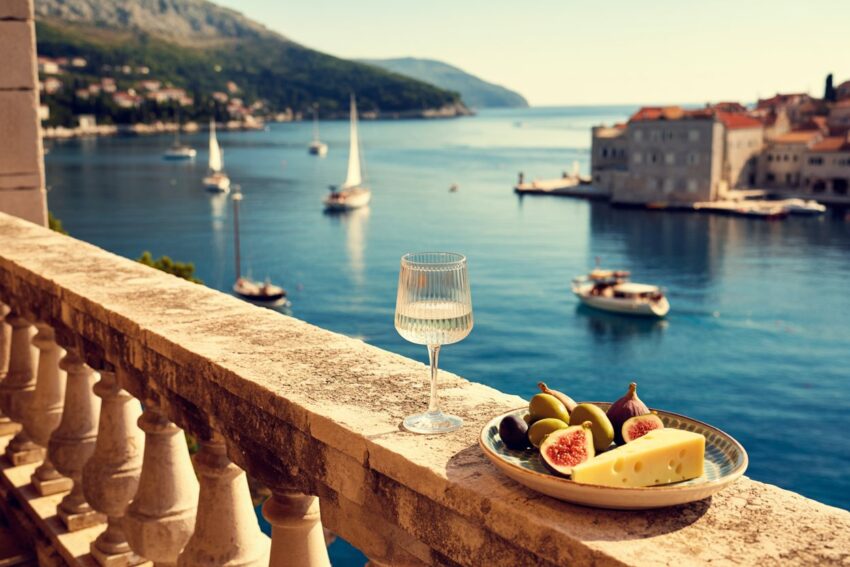
Image generated with Ai
As the Adriatic sun begins to warm the coast for another year, the conversation across Croatia has shifted from “if” people will come to “how” they will travel. The 2026 tourism season is shaping up to be one of the most complex in recent memory—a delicate dance between record-breaking potential and the unpredictable currents of global geopolitics.
Recently, during a visit to Primorje-Gorski Kotar County, Prime Minister Andrej Plenković addressed these challenges head-on. His message was clear: Croatia is ready, but the industry must remain agile, grounded, and, perhaps most importantly, realistic about pricing.
The New “Last-Minute” Reality
For decades, the travel industry relied on early-bird bookings to forecast the success of a season. However, 2026 is proving that those days might be behind us. According to the Croatian National Tourist Board, a significant trend has emerged: travelers are waiting.
Whether it is the lingering uncertainty of Middle Eastern conflicts or the fluctuations of the global economy, tourists are now prioritizing flexibility. They are clutching their passports and watching the news, often waiting until the final weeks—or even days—before hitting the “book” button. This shift requires Croatian hoteliers and excursion providers to pivot their marketing strategies, moving away from rigid seasonal planning to a more dynamic, real-time approach.
The Plenković Perspective: Balance is Key
Prime Minister Plenković’s briefing revealed a surprising silver lining. While geopolitical tensions generally dampen travel, some data suggests that travelers are viewing Croatia as a “safe harbor” within the Mediterranean. However, Plenković was quick to temper this optimism with a warning about the ripple effects of prolonged conflict.
“If the situation becomes prolonged, it could create inflationary pressures and slower economic growth,” the Prime Minister noted. The logic is simple: when the cost of living rises at home, the budget for a seaside villa in Hvar or a walking tour of Dubrovnik is the first thing to be cut.
Advertisement
Advertisement
To combat this, the Prime Minister highlighted a crucial internal factor: pricing policy. After a period of aggressive price hikes across the Mediterranean, the 2026 season may belong to those who offer value. Plenković stressed that a “more reasonable pricing policy” compared to the previous year would be the linchpin of a successful season. In a world where airfares are skyrocketing due to high airline occupancy, the destination itself must remain accessible to the average European family.
By the Numbers: Ambitious Goals
Despite the cautious tone, the government’s projections remain robust. Croatia is aiming for:
Advertisement
Advertisement
- 22 million arrivals
- 110 million overnight stays
- Total revenues exceeding €15.5 billion
These aren’t just vanity metrics; they represent the lifeblood of the Croatian economy. To reach these heights, the country is leaning on its strengths—enhanced transport connections and a continuous push to upgrade the quality of service. From the luxury resorts of Istria to the hidden eco-retreats in the Gorski Kotar highlands, the focus is on providing an experience that justifies the journey.
The Competition for the Mediterranean
Croatia doesn’t exist in a vacuum. Rivals like Greece, Turkey, and Italy are fighting for the same slice of the tourism pie, often with aggressive promotional campaigns and competitive price points.
One area where Croatia currently holds an edge is its connection to the European market. The outlook for the Easter period remains “solid” precisely because Croatia is easily reachable by car and short-haul flights for millions of Germans, Austrians, and Slovenians. This regional stability acts as a buffer against the more volatile long-haul market.
Humanizing the Travel Experience
Beyond the statistics and the geopolitical analysis, the 2026 season is about the people. It’s about the local konoba owner in Split who decides to keep prices fair so that returning guests can afford their favorite octopus salad. It’s about the digital nomad looking for a secure and beautiful place to work for a month.
The industry professionals are calling this a “defining season.” It is the year Croatia decides what kind of destination it wants to be: an exclusive enclave for the ultra-wealthy, or a welcoming, diverse Mediterranean gem that remains true to its roots while adapting to a changing world.
As we move toward the peak summer months, all eyes will be on the Adriatic. If the industry heeds the call for sensible pricing and stays resilient in the face of global shifts, 2026 won’t just be a “solid” season—it will be a testament to Croatia’s enduring appeal.
The Future of the Adriatic: A Defining Moment for Croatian Tourism
As we look toward the horizon of the 2026 season, it is clear that Croatia stands at a crossroads. The conclusion of this year’s narrative won’t just be written in the ledger of arrivals and overnight stays, but in the reputation the country builds for the next decade. Prime Minister Plenković’s emphasis on “sensible pricing” is more than just economic advice; it is a call for a sustainable partnership between the local hospitality industry and the global traveler.
In an era where “revenge travel” has cooled and consumers are becoming more discerning, the value proposition is everything. Croatia has the natural assets—the 1,244 islands, the crystalline waters of the Adriatic, and the UNESCO-protected history of cities like Split and Dubrovnik. But in 2026, the human element will be the true differentiator. It is the ability of the Croatian host to offer an authentic, high-quality experience that doesn’t feel like an opportunistic transaction.
Advertisement
Advertisement
