
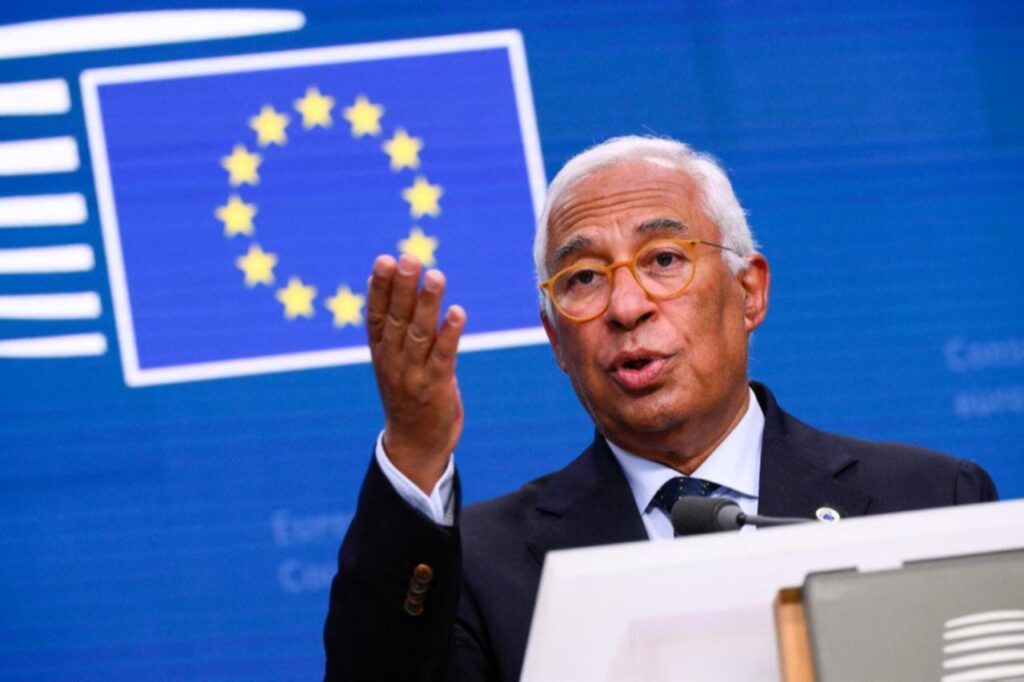
European Council President Antonio Costa gives a press conference after working sessions at the European Council in Brussels on June 26, 2025. (AFP Photo)
March 29, 2026 08:19 PM GMT+03:00
European Council President Antonio Costa on Sunday reaffirmed the European Union’s solidarity with Gulf Cooperation Council countries as Iranian drone and missile strikes continue to target civilian infrastructure and military installations across the region, now entering a second month of hostilities triggered by coordinated US-Israeli strikes on Iran.
“The EU stands in solidarity with the Gulf Cooperation Council countries in the face of continued Iranian airstrikes and drone attacks targeting civilians and infrastructure in the region. These attacks must stop immediately,” Costa wrote on the social media platform X.
His statement followed a phone call with UAE President Sheikh Mohamed bin Zayed Al Nahyan, during which the European Council chief reiterated the bloc’s support for the Emirates, one of the Gulf states most heavily affected by Iran’s retaliatory campaign.
Costa also urged restraint from all sides, saying the EU “continues to urge all parties to de-escalate and give diplomacy a chance, in the interest of security and stability in the Middle East.”
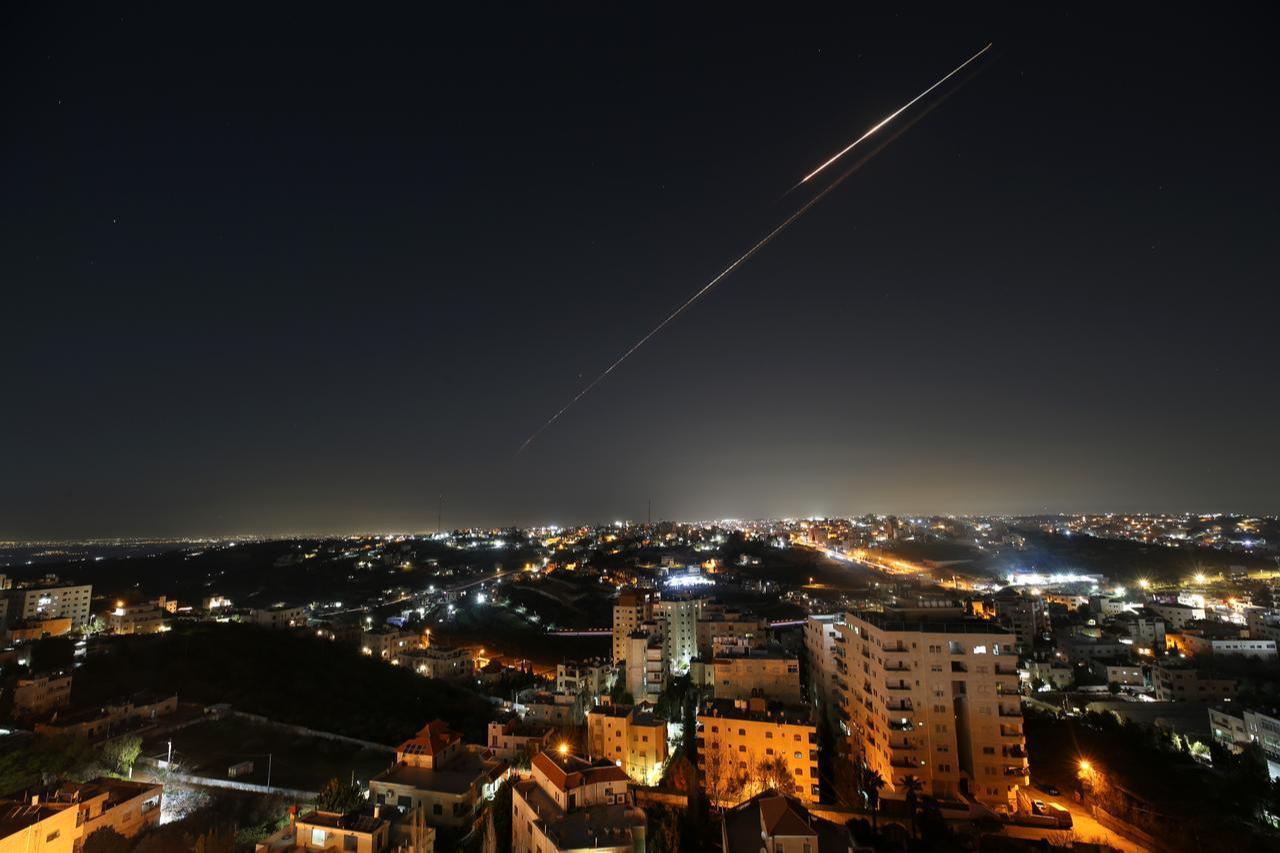

Missiles fired from Iran toward Israel are spotted in the skies over the city of Hebron, Palestine on March 27, 2026. (AA Photo)
A widening conflict draws in Gulf states
The US and Israel launched airstrikes on Iran beginning February 28, with stated objectives ranging from dismantling Tehran’s nuclear and ballistic missile programs to pursuing regime change. The strikes have killed more than 1,400 people, including then-Supreme Leader Ali Khamenei, whose death marked one of the most consequential targeted killings in the conflict.
Iran has responded with a sweeping retaliatory campaign of drone and missile strikes directed at Israel, as well as Jordan, Iraq and Gulf countries that host US military assets. The attacks have caused casualties and significant damage to infrastructure across the region while sending shockwaves through global energy markets and disrupting international aviation.
The UAE alone has faced more than 2,100 Iranian missiles and drones since the conflict began, according to the UAE Ministry of Defence, with 11 people killed, including military personnel, and 178 injured from 29 different nationalities. Bahrain, Kuwait, Qatar and Saudi Arabia have all reported repeated attacks on their territories, with Gulf airspace shut down and oil production disrupted as the fighting intensifies.
EU deepens diplomatic engagement with the region
Costa’s latest remarks build on an intensifying pattern of EU diplomatic outreach to the Gulf since the war began. On March 9, Costa and European Commission President Ursula von der Leyen held a video conference with leaders from 13 countries in the Middle East and Gulf region, including the UAE, Saudi Arabia, Qatar, Kuwait, Bahrain and Oman.
In a joint statement following that call, the two EU leaders condemned what they called indiscriminate attacks by Iran in the strongest terms and conveyed their full solidarity with the people of the region. They also thanked regional leaders for their assistance in repatriating tens of thousands of European citizens who were stranded in their countries when the war started.
At the EU Ambassadors Conference on March 10, Costa went further, describing Iran as “responsible for the root causes” of the situation while insisting that “unilateralism can never be the path forward.” He also praised the rapid deployment of military forces by Greece, France, Italy and Spain to protect Cyprus, an EU member state that has come under threat during the conflict, calling it “a powerful example of European autonomy and steadfast solidarity.”

March 29, 2026 08:19 PM GMT+03:00