
Published on
March 30, 2026
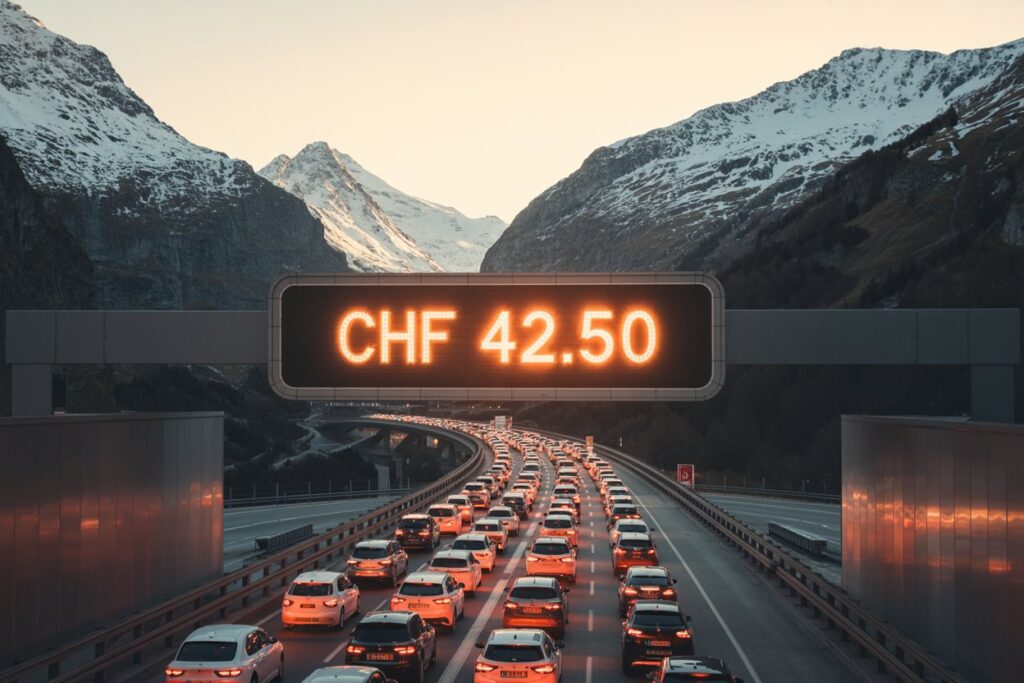
Image generated with Ai
For decades, the journey through the Swiss Alps has been a rite of passage for European road trippers. Whether you’re chasing the sun toward the Italian Lakes or navigating the snowy passes for a ski weekend, the Swiss motorways offer some of the most breathtaking—and heavily trafficked—routes in the world.
However, as of March 2026, the Swiss Parliament has moved to change the cost of that passage. In a decisive vote, the National Council backed a new “Transit Fee” specifically targeting foreign motorists who use Switzerland as a shortcut between neighboring countries. If you’re planning to drive through the heart of Europe this year, the “Swiss shortcut” is about to get a little more expensive.
The Problem: A Third of Traffic Never Stops
The motivation behind this new law is simple: congestion. Data from the Swiss Federal Statistical Office reveals that nearly 30% of all passenger traffic crossing the Alps is “pure transit.” These are drivers entering at one border (typically from Germany or France) and exiting at another (usually into Italy) without spending a single franc on local hotels, restaurants, or attractions.
During peak holiday seasons like Easter and the summer break, the result is “kilometer-long” traffic jams, particularly at the Gotthard and San Bernardino tunnels. For local residents in mountain valleys, the endless streams of idling cars have become a major source of noise and air pollution.
Advertisement
Advertisement
The New Fee: How Much and How It Works
The proposed transit fee is designed to be a “usage-based” charge that sits on top of the existing motorway vignette. Here are the key details emerging from the March 2026 parliamentary approval:
- The Base Cost: A fee of approximately 21 Swiss Francs (approx. €22) is being discussed for a single transit journey.
- Dynamic Pricing: Unlike the flat-rate vignette, this fee may be “dynamic.” This means the price could increase during peak travel hours or on busy weekends to encourage drivers to travel during off-peak times.
- Automated Recording: The system is expected to use high-tech cameras at border entry and exit points. If a vehicle leaves the country within a specific window (likely 12 hours), the transit fee is triggered.
- In Addition to the Vignette: Crucially, this is not a replacement for the mandatory 40 CHF annual vignette.Foreign drivers will still need the sticker (or e-vignette) to use the motorways at all.
Humanizing the Commute: Who Does This Hit?
While the law is aimed at holidaymakers, it has sparked a heated debate among cross-border workers (Frontaliers).Thousands of people live in Italy, France, or Germany and commute daily into Swiss hubs like Lugano or Geneva.
Advertisement
Advertisement
“For a tourist, 21 francs is a one-time holiday expense,” says one commuter from the Italian border. “But for someone crossing every day, this could become a massive financial burden.”
To address this, the Swiss government is currently drafting specific exemptions for regular commuters and those who can prove they have a “significant stay” (such as a hotel booking) within Switzerland. The goal is to penalize “through-traffic,” not the people who contribute to the Swiss economy.
Advertisement
Advertisement
International Friction: The EU’s Reaction
The move hasn’t gone unnoticed by Switzerland’s neighbors. The European Commission has already raised concerns, suggesting that a fee targeting only foreign-registered vehicles could violate international treaties on the free movement of people.
However, Swiss lawmakers argue that the fee is a “management tool” rather than a discriminatory tax. They point to similar congestion charges in London, Milan, and Stockholm as evidence that nations have the right to manage their own infrastructure.
Survival Guide for Your 2026 Swiss Road Trip
If you are heading to the Alps this year, here is how to stay ahead of the new regulations:
- Go Digital: Ensure you purchase the 2026 Digital E-Vignette (40 CHF) before you hit the border. It’s linked to your license plate and saves you from scraping stickers off your windshield.+1
- Time Your Transit: If the dynamic pricing model is implemented, try to cross the Alps mid-week or during late-night/early-morning hours to avoid both the traffic and the highest fee tiers.
- Consider the Train: Switzerland’s rail network remains one of the best in the world. If you’re just transiting, the “Rolling Highway” (combined road-rail) might become a more cost-effective and stress-free alternative.
- Keep Your Receipts: If you are staying in Switzerland overnight, keep your hotel or campsite receipts. These will be your “get out of jail free” card if the automated system mistakenly flags you for a transit fee.
The Road Ahead
The final legislation is currently being drafted by the Federal Council. Because this may require a change to the Swiss Constitution, there is a high probability it will be put to a national referendum before fully coming into force.
For now, the message is clear: the era of the “free lunch” on Swiss motorways is ending. Switzerland is no longer willing to be just a corridor; it wants to be a destination.
Advertisement
Advertisement
