
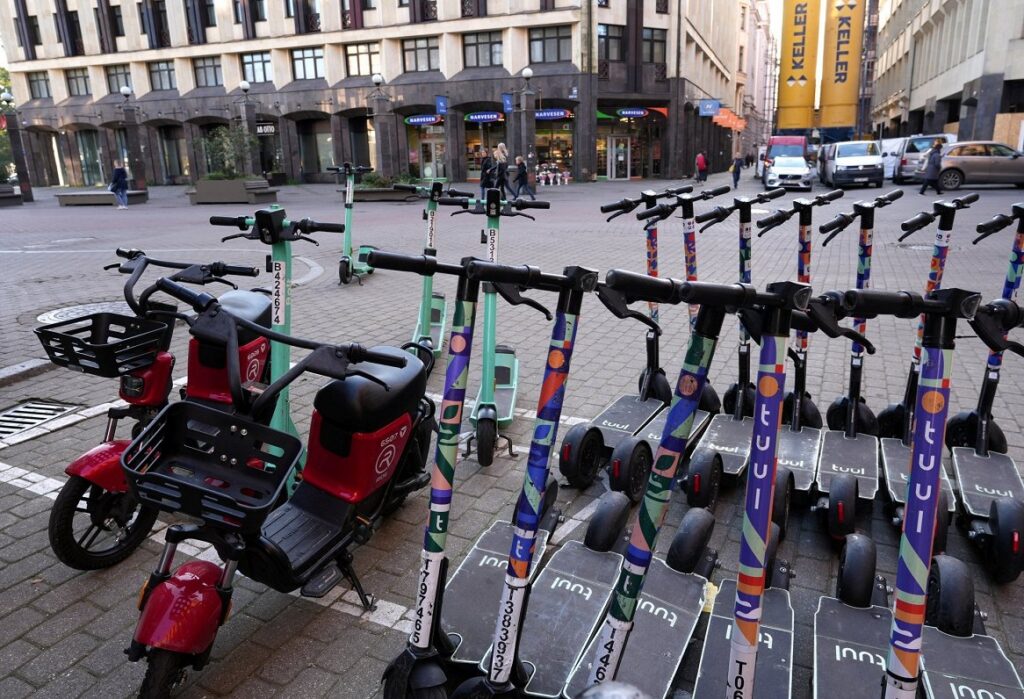
Starting April 1, stricter rules will apply to users of electric scooters and other similar vehicles. These rules will particularly affect travel on sidewalks in urban areas, where so-called self-propelled bicycles are becoming increasingly common. The industry, unsurprisingly, is unhappy with this, Latvian Radio reported on 30th March.
One of the most significant changes is that self-propelled motorised bicycles will no longer be allowed to ride on sidewalks. The rules governing how these vehicles may use pedestrian paths and cross the roadway have also been clarified to reduce conflicts with pedestrians.
Another change is that to and including the age of 17, a bicycle license is required to operate a bicycle or any other vehicle. Minors are required to wear a helmet.
For electric scooters and motorised bicycles, mandatory civil liability insurance (OCTA) is required to cover liability in road traffic. It is planned that if OCTA is not obtained and the motorised bicycle is used on public roads, the owner of the vehicle will be subject to a fine ranging from 125 to 200 euros.
Industry warns of consequences
Meanwhile, industry representatives are warning of the consequences. The bike-sharing company “Nextbike LV” announced as early as the beginning of March that, due to the new requirements, its bikes will not be available in Rīga this year. Company owner Mārcis Blumbergs explains that the requirement to conduct identity, eligibility, and reaction checks before each ride creates disproportionate costs and makes it difficult to use the service. He also notes that the new regulations, including speed limiters and parking restrictions in central Riga, have made traditional shared bicycles practically unusable.
Edgars Jākobsons, CEO of the shared e-bike operator “Ride Mobility” and a board member of the Latvian Micromobility Association, notes that negotiations with the industry regarding the new regulations were “dry” and one-sided. The industry expressed its views, but for the most part, neither the industry’s recommendations nor its needs were hear, he said.
“In my view, they are overregulated and too strict, often without justification. Two weeks ago, one of our members was forced to leave the market because, essentially, these regulations are disproportionate. I admit that some part of it won’t work. What I would really like is for attention to be paid to this and for the situation to be monitored to see what happens, how these developments unfold, and perhaps in the near future, these regulations could be relaxed to make them accessible to all market participants,” says Jākobsons.
Jākobsons emphasises that he does not support riding on sidewalks on a daily basis if appropriate infrastructure—bike lanes or bike paths—is available. However, in situations where such infrastructure is lacking, for example, on busy roads or bridges, a complete ban may be disproportionate and endanger the safety of people who use these vehicles.
Select text and press Ctrl+Enter to send a suggested correction to the editor
Select text and press Report a mistake to send a suggested correction to the editor
Tell us about a mistake