
Mammoet joined more than 40 Westinghouse Electric supply chain partners to showcase the advantages of building a US fleet of AP1000 nuclear power plants.
Through more than 100 meetings, Westinghouse and its suppliers shared the economic impact and manufacturing jobs that could be created by building a fleet of AP1000 units. For its part, Mammoet shared how it provides engineered heavy lifting and transport services to AP1000 projects, sustaining a workforce that will grow significantly alongside market demand, in Texas and the wider USA.
“Mammoet’s vast experience across the energy sectors, across the US and worldwide, is directly deployable to the US nuclear market”, said Rick Bohne, commercial director at Mammoet. “Our vast fleet of equipment – including the world’s strongest land-based crane, the SK6000 – allows companies in the nuclear sector to build in the largest possible pieces, benefitting from modular construction methodologies that allow facilities to reach the first gigawatt faster.”
Fully licensed and construction-ready, Westinghouse and its partners highlighted how the advanced AP1000 modular reactor is positioned to deliver on the administration’s plan to build a fleet of large nuclear reactors. Two AP1000 units are currently in commercial operation at Plant Vogtle, a four-unit nuclear power plant near Waynesboro, Georgia.
“Work to deliver an AP1000 reactor can begin immediately, answering the administration’s call for new gigawatt-scale nuclear,” said Dan Sumner, interim ceo, Westinghouse. “Westinghouse and our experienced supply chain are prepared to start nuclear construction at scale in the US.”
The parties outlined how a fleet of AP1000 plants could boost the competitiveness of the nation’s most energy intensive industries, such as artificial intelligence (AI) and advanced manufacturing.
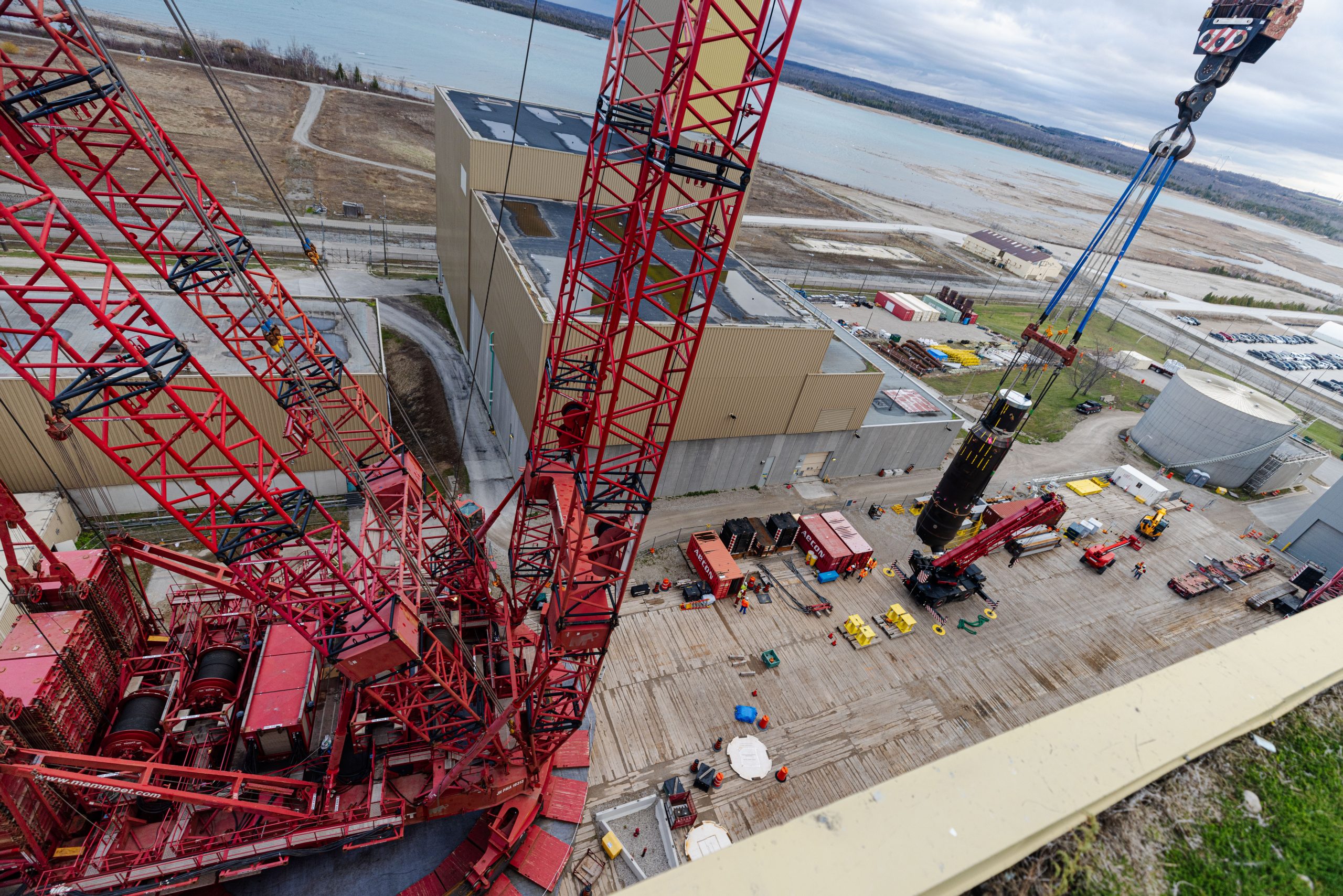 Mammoet has been involved at the Bruce Power nuclear power plant in Ontario, Canada.
The meetings followed the October 2025 strategic partnership between the US government, Westinghouse, uranium company Cameco and Brookfield Asset Management to speed up the development of Westinghouse’s nuclear reactor technologies in the USA and abroad.
Nuclear power back in the mix
Globally, nuclear energy capacity is poised to increase significantly in the coming years as a result of surging power demand triggered by growing populations, the electrification of different industries and the rise of AI and data centres.
According to 2025 research from Morgan Stanley, there could be 586 GW in new global nuclear capacity by 2050 – a 53 percent increase on its initial forecast in 2024 when analysts reported that a “renaissance” was coming for the industry.
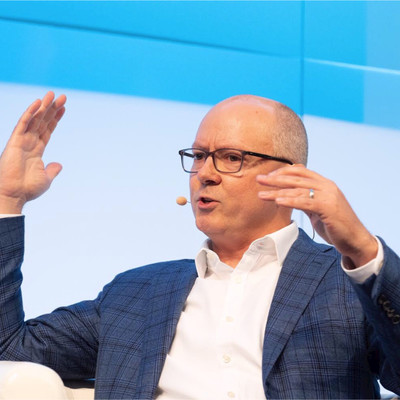 Morgan Stanley’s Stephen Byrd.
“We believe natural gas will be the primary near-term solution for powering AI data centres due to its speed to market, reliability and flexibility, while nuclear power represents a longer-term clean energy alternative that is likely to gradually increase in importance,” explained Stephen Byrd, Morgan Stanley’s global head of sustainability research. “Gas and nuclear are likely to play complementary roles.”
Global players
As of March 23, 2026, there are over 75 reactors under construction across the world, according to the World Nuclear Association. About 120 further reactors are planned.
Most reactors under construction or planned are in Asia, with China leading the charge.
The 2025 report from Morgan Stanley predicts that China could surpass the USA as the world’s largest producer of nuclear power by 2030. The projection is driven in part by China’s rapid expansion of nuclear infrastructure and its efforts to supply data centres with low-carbon electricity.
The USA will also ramp up its deployment though, with various measures put in place at the start of the year to hasten the development of next generation nuclear technology. The current administration aims to expand nuclear energy capacity from roughly 100 GW in 2024 to 400 GW by 2050.
As for Europe, nuclear power growth has been predominantly coming from countries in the central and eastern parts of the continent, with modest expansion expected from Western nations such as France, Spain and Sweden.
Already have a subscription? Log in.
Considering a corporate subscription? Contact us to find out more.
Or
Want to read this article for free?
You can read one free article per month. Enter your email and we’ll send you a free link to access the full article. No payment required.