
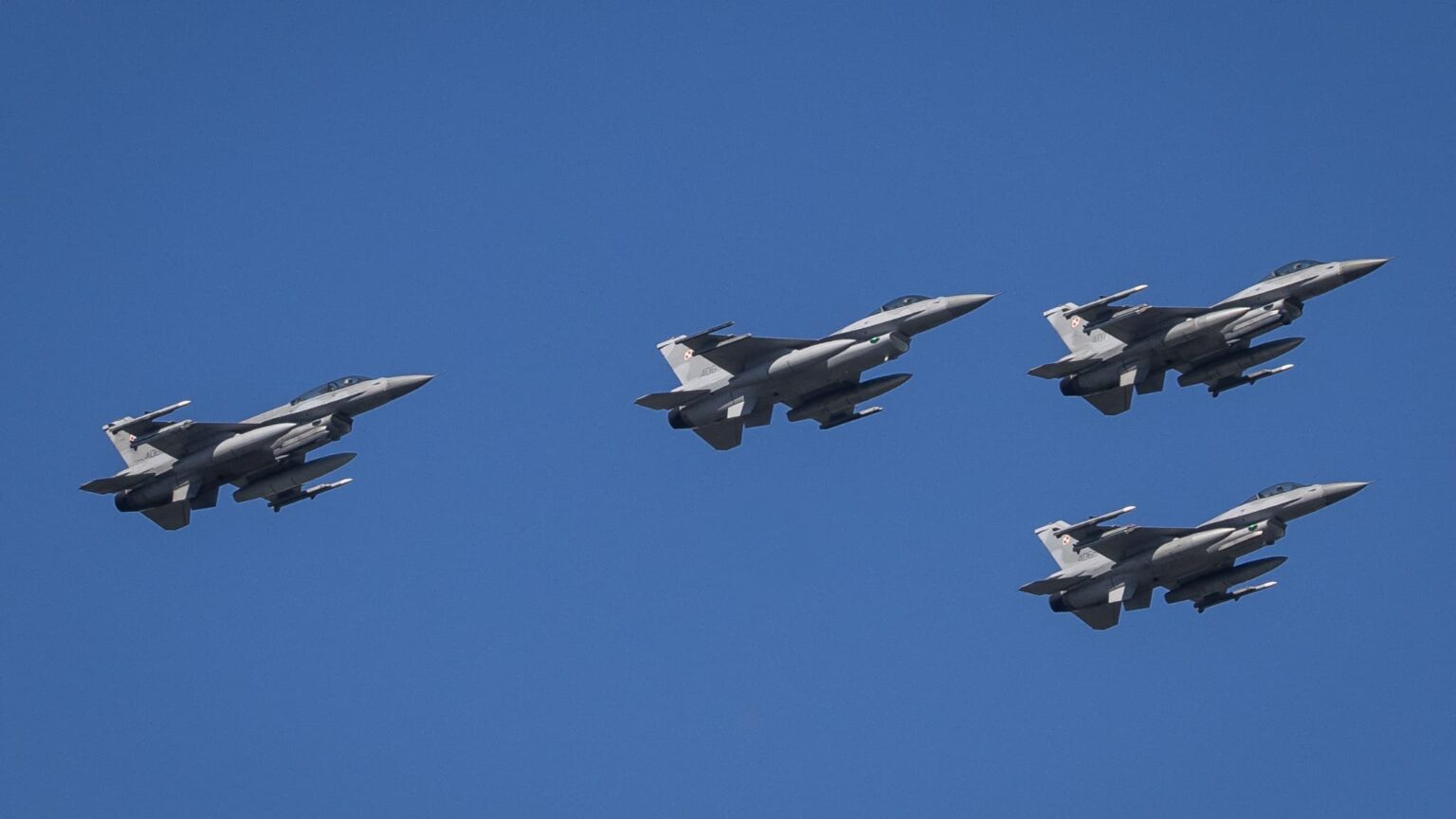
Polish and allied aircrews scrambled on short notice after new Russian strikes in Ukraine sent alarms rippling along the frontier. Authorities confirmed a temporary deployment of combat aircraft and helicopters as sensors tracked hostile drones operating close to Polish territory. With tensions elevated, radar networks and ground-based defenses surged to their highest alert posture.
A rapid response along the frontier
Poland’s Operational Command said the situation warranted immediate action, citing the risk posed by unmanned systems near the border. “Due to the threat of unmanned aerial vehicles operating over Ukraine near the Republic of Poland, Polish and allied aircraft are operating in our airspace,” the command stated, emphasizing intensified reconnaissance and air-defense vigilance. Deputy Defense Minister Cezary Tomczyk added that helicopters were also committed to the mission, amplifying coverage across sensitive sectors.
Prime Minister Donald Tusk referenced the same threat, urging calm while underscoring the need for readiness. He said authorities were tracking Russian drones closely and coordinating with allied partners to prevent spillover or accidental incursions. “We remain vigilant,” Tusk noted, as assets cycled through combat airspace patrols during the day’s evolving scenario.
Airspace disruptions and local impact
As the posture intensified, authorities closed airspace above Lublin Airport in the southeast, rerouting or delaying multiple flights as a precaution. The measure reflected a layered defense approach, balancing civil aviation needs with real-time risk management near potential drone corridors. While temporary, the steps indicated how quickly such threats can ripple through daily life near Europe’s most volatile frontier.
By evening, the immediate alert was lifted, and traffic patterns began returning to normal. That easing roughly coincided with separate Romanian claims that a Russian drone briefly violated its skies, a reminder of the region’s fragility. Even short-lived incidents can demand broad coordination, from air-traffic managers to military controllers and allied warning centers.
Alliance readiness and regional tensions
The weekend’s drill-down did not happen in a vacuum. Poland and allied detachments have remained on edge since the night of September 9–10, when roughly twenty Russian drones pushed toward Ukrainian zones abutting the Polish border. Each successive episode reinforces a simple reality: proximity magnifies risk, even when adversaries aren’t aiming across the line.
Several European partners—among them France, Germany, and Sweden—have announced reinforced contributions to Poland’s eastern air and missile defense. The aim is to harden detection nets, thicken intercept layers, and compress the time from warning to response across the NATO perimeter. Joint training, common data standards, and shared command procedures are accelerating, knitting together a faster, more coherent defensive picture.
Amid the quickened tempo, officials emphasize that NATO’s moves remain defensive and proportionate to observed threats. Still, constant drone activity near a major alliance border tests the region’s crisis management and raises the chance of inadvertent escalation. Clear communication, disciplined rules, and robust deconfliction are now everyday requirements, not extraordinary measures.
What to watch in the days ahead
- Expanded allied air-policing sorties, including more frequent quick-reaction alerts across the eastern flank.
- Additional ground-based air defense units rotating into critical corridors near the border.
- Improved cross-border radar fusion, enabling faster, shared tracking of low-flying drones.
- Civil aviation contingency plans refined for rapid, localized closures without broader disruption.
- Continued political coordination, balancing deterrence with careful messaging to avoid miscalculation.
Precision, restraint, and deterrence
For Warsaw, the guiding principles remain clarity, restraint, and deterrence. Clarity ensures that allies, neighbors, and adversaries understand thresholds and likely responses. Restraint reduces the odds of a damaging misread, especially when unmanned platforms skirt international boundaries at low altitude and high speed.
Deterrence, meanwhile, depends on credible capabilities married to steady resolve. The visible presence of allied jets, the hum of helicopters on patrol, and the humbler but vital radars stitching together the common air picture all send the same signal. NATO is present, Poland is prepared, and the margin for surprise is growing ever smaller.
In such a fluid environment, moments of calm can be as telling as surges in activity. The lifting of Saturday’s alert brought a return to routine, yet it also underscored a new normal along Europe’s eastern edge. Until the broader conflict in Ukraine recedes, vigilance will remain Poland’s most reliable shield.