
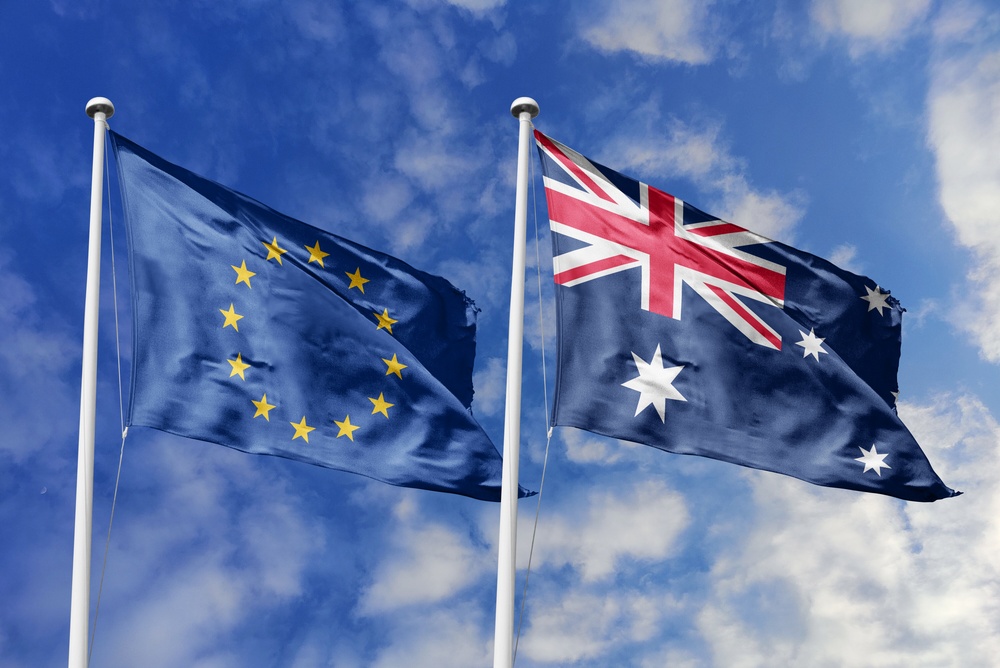
The move follows a recent visit by Commission President Ursula von der Leyen to Australia. It reflects broader efforts to strengthen ties between the two partners across research, trade, and security domains.
Commenting on the talks, Ekaterina Zaharieva, European Commissioner for Startups, Research, and Innovation, said: “With the EU–Australia agreements last week, we are moving quickly to bring our innovation ecosystems closer together.
“This will add to the growing list of like-minded countries that have chosen to join Horizon Europe, the world’s largest and most prestigious research programme.”
Horizon Europe association: What’s at stake
Association with Horizon Europe would grant Australian institutions access to the programme on terms comparable to EU member states and other affiliated countries. This includes eligibility for direct funding and participation in large-scale, multi-country research consortia.
For Australia, this represents a shift from its current status as a non-associated partner. While Australian researchers are already active – contributing to more than 200 projects – the proposed arrangement would simplify administrative processes and enable longer-term, strategically aligned collaboration.
From the EU perspective, expanding the network of associated countries is part of a broader strategy to reinforce global research partnerships in areas critical to economic competitiveness and technological sovereignty.
Focus areas: Technology, climate, and health
If negotiations conclude successfully, cooperation under Horizon Europe is expected to intensify in several priority sectors.
These include emerging and critical technologies, clean energy systems, climate science, healthcare innovation, and supply chain resilience.
By aligning funding mechanisms and research agendas, both sides aim to accelerate the development and deployment of new technologies while addressing shared global challenges.
Budget expansion and long-term outlook
The negotiations come as the European Commission prepares its proposal for the EU’s next multiannual budget (2028–2034), which includes plans to increase Horizon Europe’s funding to €175bn – roughly double its current allocation.
A larger budget would expand opportunities for international partners, making Horizon Europe association more attractive for countries seeking deeper integration into European research ecosystems.
A longstanding research partnership
Scientific collaboration between Australia and the EU is not new. The two sides have operated under a formal science and technology agreement since 1994, later updated in 1999. Over time, this framework has supported joint research initiatives across multiple disciplines.
However, full association with Horizon Europe represents a more advanced level of integration. It is considered the closest form of cooperation available to non-EU countries within the EU’s research and innovation architecture.
Expanding the Horizon network
Australia would join a growing list of non-EU countries already associated with Horizon Europe, including Canada, the United Kingdom, Norway, and Israel, among others. Negotiations with Japan have also been completed, while exploratory discussions with India have concluded.
This expanding network underscores the EU’s intent to position Horizon Europe as a central hub for international scientific collaboration.
Next steps
Negotiations between the European Commission and Australia are expected to continue in the coming months, focusing on financial contributions, governance arrangements, and alignment of research priorities.
A final agreement would require approval from both sides, but if concluded, it could significantly reshape the landscape of EU–Australia scientific cooperation and broaden access to one of the world’s largest research funding programmes.