
Donna Gregory
The numbers in IQAir’s 2025 World Air Quality Report don’t tell a reassuring story for the United States. After years of incremental progress, the country’s annual average PM2.5 concentration rose 3% in 2025, reaching 7.3 μg/m³. The culprits were familiar but intensifying: wildfires, geographic extremes, and an emerging pollution source that most operations teams are only beginning to account for.
A Year Defined by Smoke
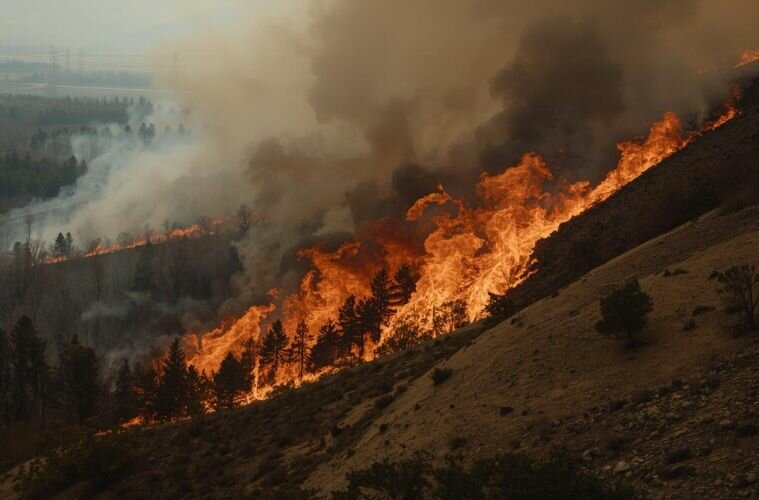
The January 2025 wildfires in Southern California set the tone for the year. The Palisades and Eaton fires burned more than 40,000 acres, caused 24 fatalities, and pushed daily PM2.5 averages in downtown Los Angeles above 100 μg/m³ at their peak. The Southeast corridor of Los Angeles, including Cudahy, Huntington Park, and Florence-Graham, ended the year as the most PM2.5-polluted area in the country.
The smoke didn’t stay in California. Canadian wildfire activity, which became the second most severe season on record, pushed smoke south across the Great Lakes corridor. Minnesota, Wisconsin, and Michigan cities saw PM2.5 averages spike by roughly 8 μg/m³ throughout June and July. By September, Washington state’s wildfire season had released over 1.5 megatonnes of carbon emissions, pushing monthly averages above 50 μg/m³ in parts of central Washington. San Francisco and Seattle were rare exceptions, each consistently meeting WHO annual guidelines with averages below 5 μg/m³.
AI Data Centers as an Emerging PM2.5 Source
One finding in the report that is drawing attention from operations and sustainability teams is the identification of AI data centers as an emerging contributor to PM2.5 pollution. The report notes they contribute indirectly through increased power plant emissions needed to meet their energy demands, and directly through reliance on diesel backup generators. Research cited from UC Riverside and Caltech estimates that training a single large-scale generative AI model produces more PM2.5 than 10,000 round trips between New York and Los Angeles by car. For companies managing facilities near data center clusters, this is a factor worth monitoring.
The Federal Standard Question
The regulatory picture is less settled than it was a year ago. In 2024, the EPA finalized a revision to the PM2.5 National Ambient Air Quality Standards, tightening the annual limit from 12 μg/m³ to 9 μg/m³. That rule is now being challenged in court, and by early 2026 the EPA had moved to vacate it, potentially reverting to the older and looser standard. According to IQAir’s report, the proportion of regional cities meeting the WHO annual PM2.5 guideline fell from 29% in 2024 to 23% in 2025. If the federal standard is rolled back at the same time air quality is deteriorating, EHS professionals responsible for air quality planning will be navigating a more complicated baseline than they faced even two years ago.
The 2025 data is a reminder that air quality improvements don’t hold passively. They require active management, and the conditions that threaten them — wildfire seasons, regional industrial shifts, emerging energy loads — are not easing.