

-
In March 2026, Enphase Energy introduced IQ Energy Management in Australia and New Zealand, an AI-driven platform that coordinates Enphase solar, IQ Batteries, compatible electric water heaters, and select third-party EV chargers through the Enphase App to optimize home energy use under variable electricity tariffs.
-
At the same time, multiple law firms launched securities class action lawsuits alleging Enphase misrepresented its ability to handle channel inventory and the impact of expiring U.S. residential clean energy credits, raising fresh questions about how policy shifts and disclosure practices intersect with the company’s longer-term energy technology ambitions.
-
We’ll now examine how these lawsuits over inventory management and tax credit impacts could reshape Enphase’s previously outlined growth and risk narrative.
The future of work is here. Discover the 33 top robotics and automation stocks leading the charge in AI-driven automation and industrial transformation.
To own Enphase, you generally need to believe in long term demand for integrated solar, storage, and software-managed home energy, supported by profitable execution across cycles. Right now, the key near term catalyst is whether Enphase can stabilize revenue and margins as the U.S. residential market adjusts to expiring tax credits, while the biggest risk is that the new securities class actions around inventory and 25D disclosures extend uncertainty rather than materially changing fundamentals in the short term.
Among recent announcements, IQ Energy Management in Australia and New Zealand looks most relevant, because it ties directly into the catalyst of expanding higher value, software-enabled energy systems outside the U.S. This kind of international, app-centric platform may help diversify Enphase’s revenue mix and partially offset U.S. policy risk, while also reinforcing the company’s ambition to earn more from integrated solar, battery, and EV charging solutions over time.
Yet against this product momentum, the new litigation around inventory and tax credit disclosures is a risk investors should be aware of, because it could…
Read the full narrative on Enphase Energy (it’s free!)
Enphase Energy’s narrative projects $1.6 billion revenue and $232.0 million earnings by 2028. This requires 3.0% yearly revenue growth and about a $57 million earnings increase from $174.7 million today.
Uncover how Enphase Energy’s forecasts yield a $45.28 fair value, a 30% upside to its current price.
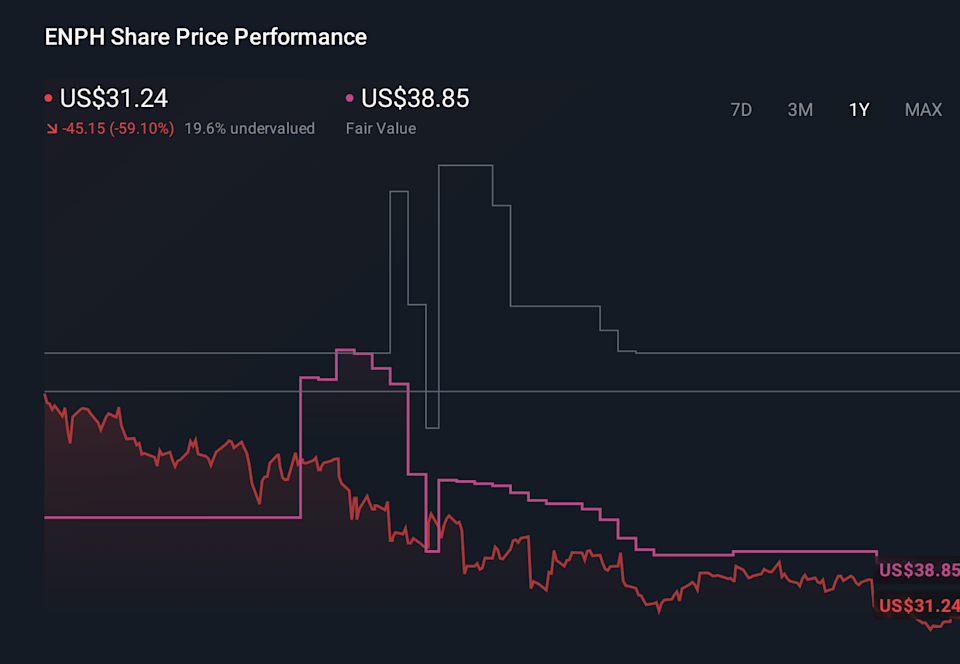
ENPH 1-Year Stock Price Chart
The most optimistic analysts once modeled Enphase reaching about US$2.2 billion in revenue and US$423 million in earnings by 2029, but recent lawsuits and policy questions might test that narrative of margin expansion and global growth, so it is worth comparing those upbeat views with more cautious takes before deciding how you see the stock’s path from here.