
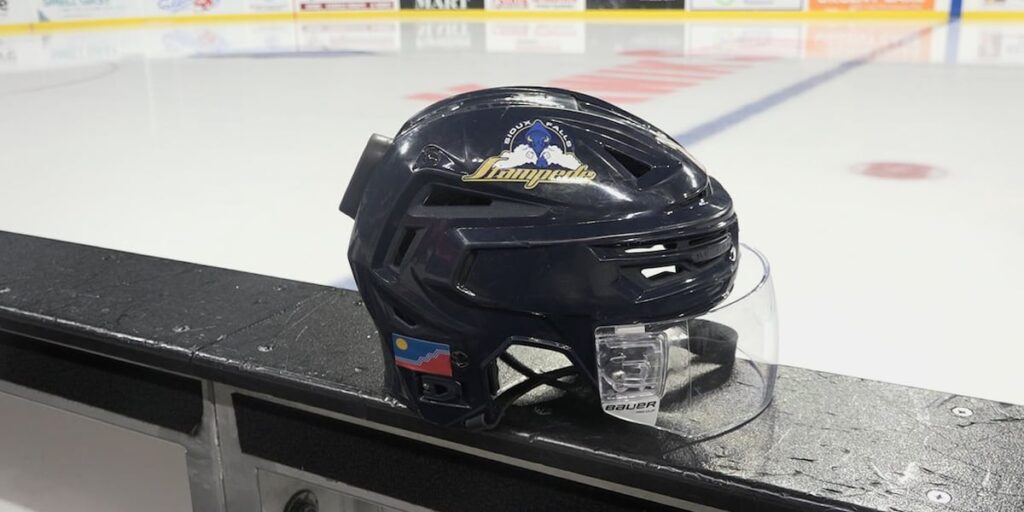
SIOUX FALLS, S.D. (Dakota News Now) – The Sioux Falls Stampede have their final homestand of the regular season this weekend. Throughout the long season, the athletic trainer is utilizing a new method to monitor players’ health and keep them in the game.
Last summer, the team was approached by a Swiss company called Bearmind. Soon after, a partnership was in place to utilize sensors on the players’ helmets to track pressure and movement for possible injuries. In the process, they became the first team in North America to use this technology.
Success on the ice starts with the health of the athletes. It’s not always easy for head athletic trainer Jordan Whitsell to track the condition of every player on the ice at the same time, especially for head trauma-related injuries.
The sensors have been a welcome addition, once they got past the aesthetic.
“We were a little cautious because of the placement of the sensor and kind of how ridiculous it looked, but the owners of our team were actually very interested in it. They were interested in the safety of our athletes,” Whitsell said.
Of course, players are competitive at heart and are itching to stay in the game, but Whitsell said they’ve been excited about seeing the data collected, even if it means they might need to take time off for their own health.
“Players now are all about data, what’s going to make them better, what’s going to make them last longer, stay healthier. Are they upset if they have to miss games and practice? Absolutely, but what’s great about this data is that the players want to know. They’re intrigued by what their sensors are saying. Coaches are curious when a kid does get a concussion, did the sensors go off?” Whitsell said.
Notification of a potential severe hit is sent to the trainer in real time. Through an app, Whitsell gets instant messages on his watch while the game or practice is going on.
“That can just assist me in finding those players and asking the typical question, ‘Are you alright?’ And kind of going through steps to make sure they’re ok to stay in the game or even go back,” Whitsell explained.
Early detection can help reduce long-term issues, which can give them better health long after their playing career is over. The stampede takes great pride in being the first to implement the Bearmind sensors in North America and hopes more hockey teams will follow suit.
“It’s always really exciting to be a pioneer. Our goal is to keep these guys safe, keep them in a lasting career. We want to make them healthy now, but we also want to make them healthy in the future,” Whitsell said.
The team has been able to track early symptoms of six concussions over the course of the season using the helmet sensors. Bearmind is in talks with Bauer, the team’s helmet sponsor, to come up with a design that puts sensors inside the helmet next season.
Copyright 2026 Dakota News Now. All rights reserved.