
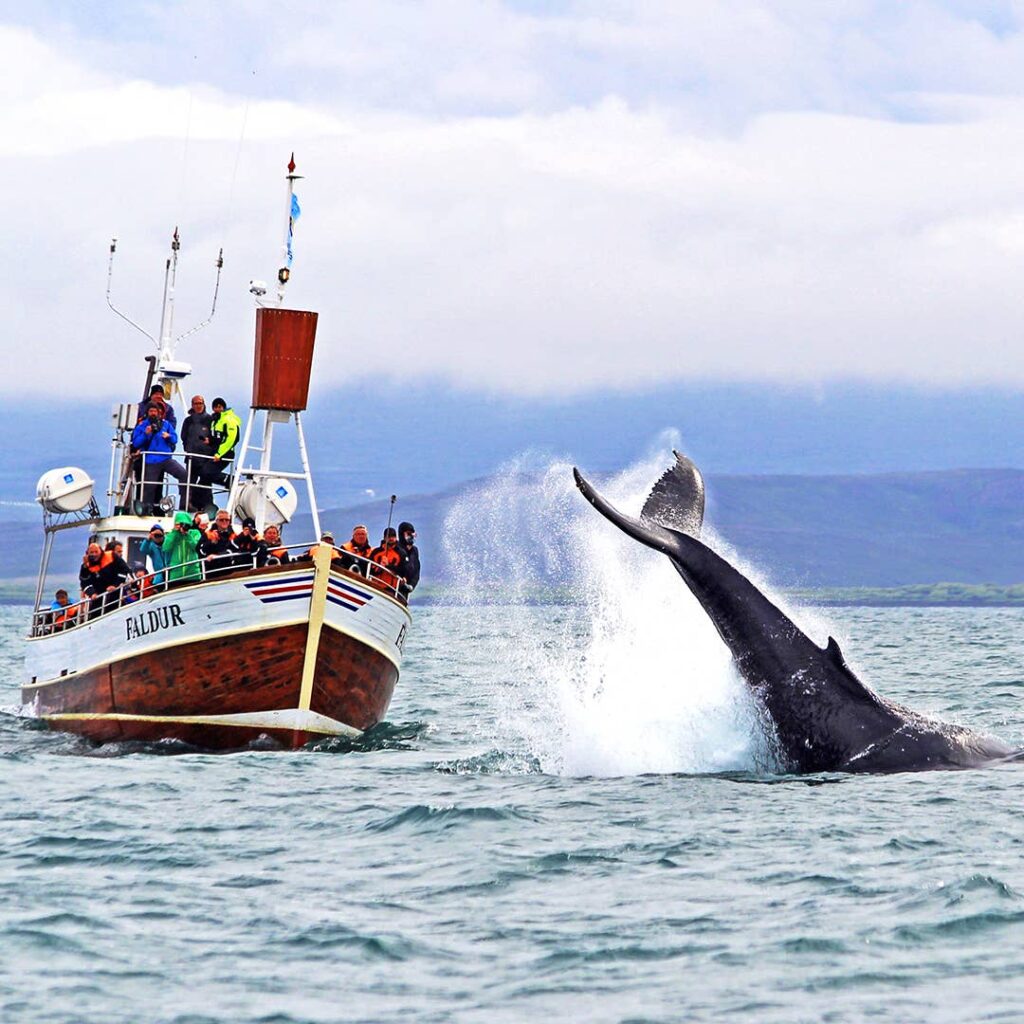
The 5 Best Whale-Watching Tours in Iceland
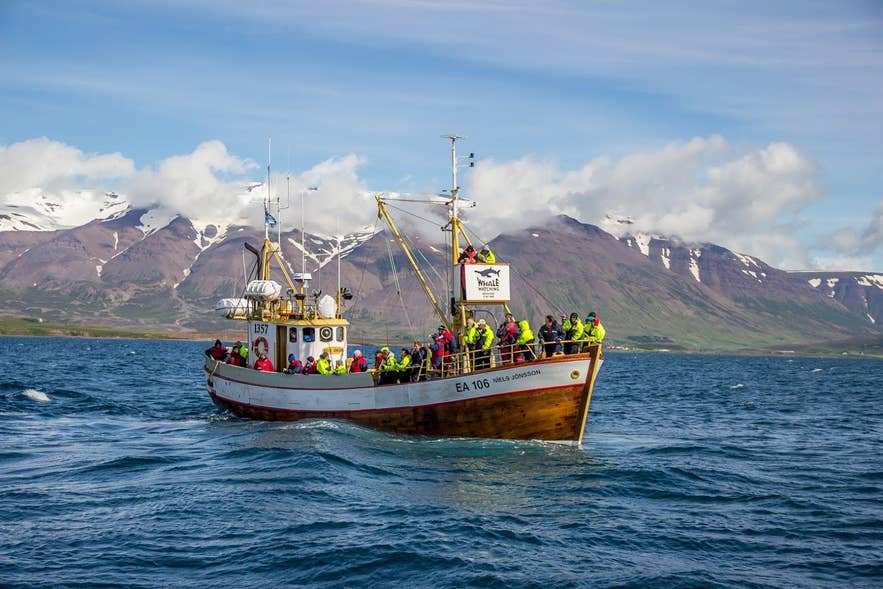
A whale-watching tour can be an unforgettable experience, and plenty of enticing options are available for all enthusiasts.
Check out this list of whale-watching tours to explore current options. From traditional Icelandic oak boats to modern rigid inflatable boats (RIBs), you’ll find tours ranging from a few hours to full-day experiences.
The Icelandic puffin, which nests in large colonies on offshore islands and coastal cliffs, is often spotted during whale-watching tours. This means you can enjoy both whale watching and puffin sightings in one adventure.
If you’re visiting during the warmer months, combine your whale-watching tour with other top activities in Iceland including scuba diving and snorkeling. Consider this combo 6-hour whale-watching and river snorkeling tour to get more out of your vacation.
Looking for more tour ideas? Below is a list of the most affordable Iceland whale-watching tours, sailing from the country’s main whale-watching ports.
Reykjavik Whale-Watching Tour
-
Price: From 92 USD
-
Chances of seeing a whale: 99 percent
-
Availability: Year-round
-
Common species: Minke and humpback whales, whale-beaked dolphins, and harbor porpoises
Husavik Whale-Watching Tour
-
Price: From 85 USD
-
Chances of seeing a whale: 99 percent
-
Availability: April to November
-
Common species: Humpback whales, minke whales, blue whales, and white-beaked dolphins
Akureyri Whale-Watching Tour
Olafsvik Whale-Watching Tour
Hauganes Whale-Watching Tour
The Best Places To Go Whale Watching in Iceland
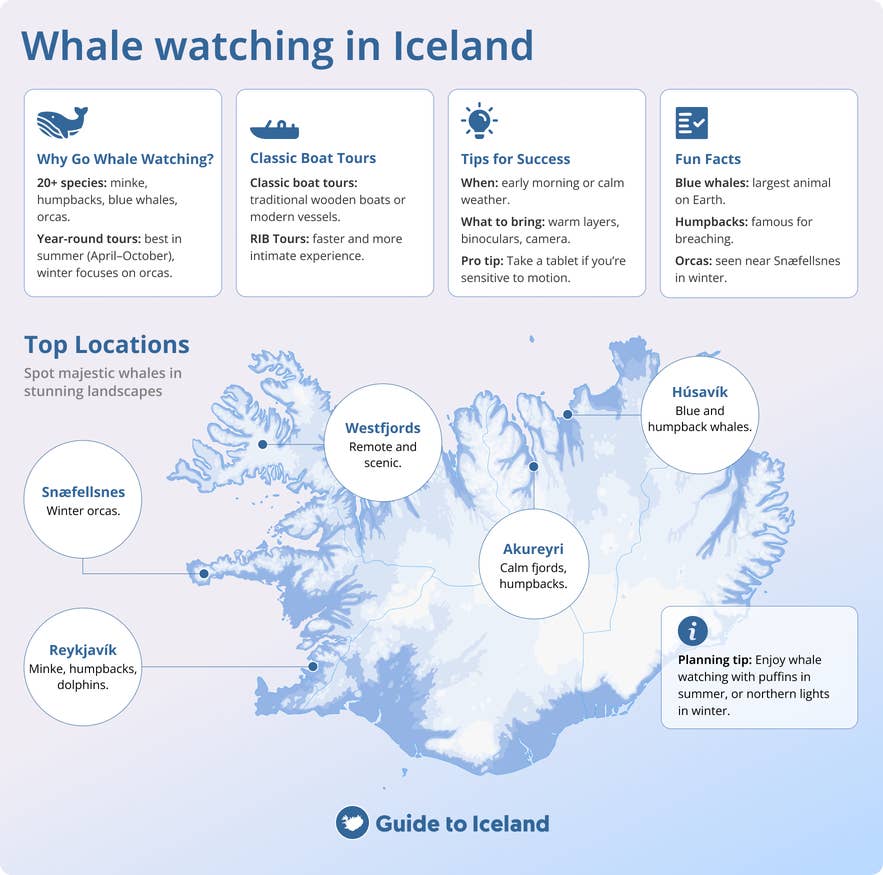
With Iceland being one of the premier whale-watching destinations, where exactly should you catch these adorable marine creatures? The answer depends on key factors, such as the:
-
Month you plan to visit
-
Types of whales you wish to see
-
Region you wish to explore
-
Type of whale-watching tour you wish to join
A good way is to identify the towns and cities hailed for their top-notch whale-watching adventures. Let’s take a look at the best ones below.
Whale Watching in Husavik
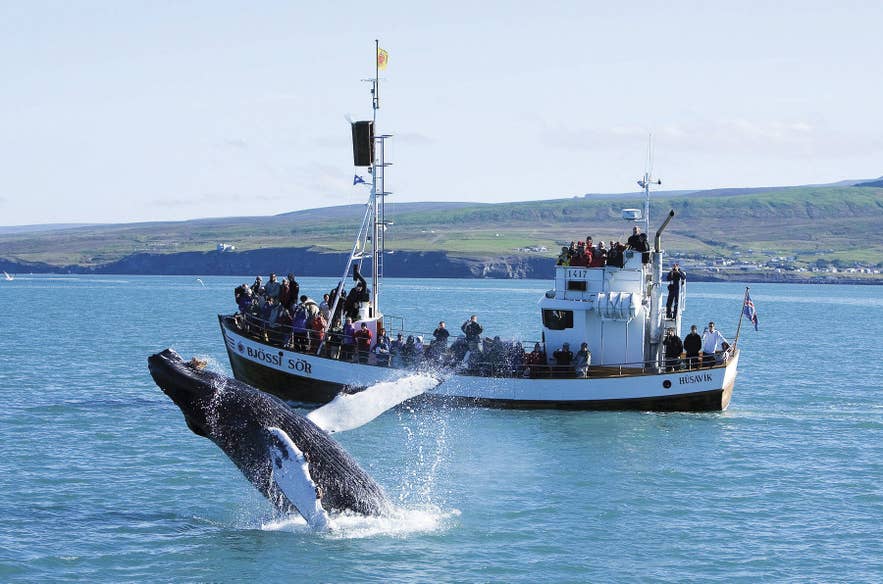 Husavik, often called the “Whale-Watching Capital of Iceland,” is a must-visit destination. Located on the northern coast of Iceland, this charming fishing town boasts a rich marine life in Skjalfandi Bay.
The nutrient-rich waters attract various whale species, including humpbacks, minkes, blue whales, and even orcas.
One of the most popular ways to explore Husavik’s waters is through guided boat tours like this family-run whale-watching tour. Traditional oak boats and modern RIB tours provide different options to suit your preference for a relaxed or high-speed adventure.
Husavik tours come with experienced guides who enhance the experience. They provide valuable insights into whale behavior, marine conservation, and the surrounding landscapes.
Additionally, Husavik is home to the fascinating Husavik Whale Museum. This educational stop offers in-depth information about the history of whale watching, the biology of these creatures, and the importance of sustainable practices.
Whale Watching in Reykjavik
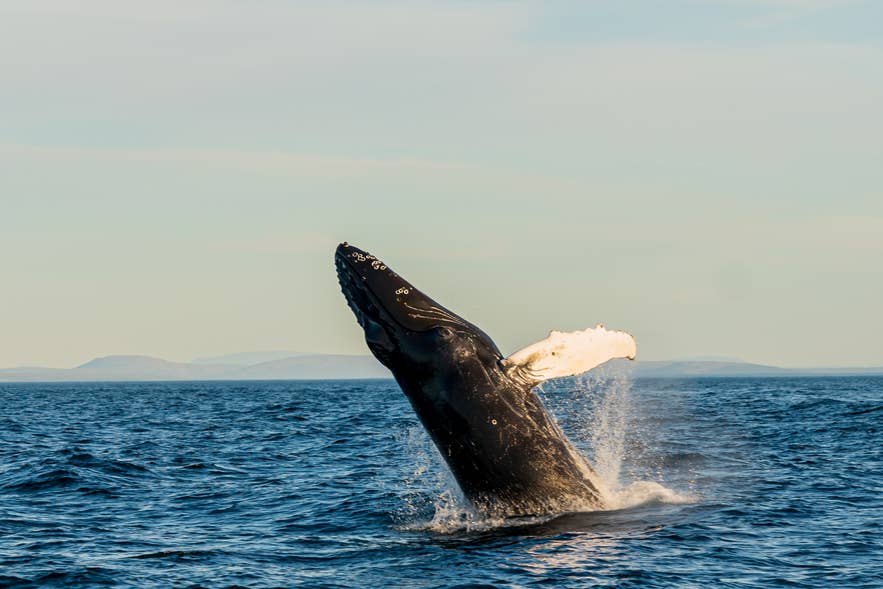 Iceland’s capital, Reykjavik, is also one of the most appealing destinations for nature enthusiasts who want to see whales and other marine wonders. Through Faxafloi Bay, Reykjavik is a prime location to observe some of the ocean’s most magnificent creatures in their natural habitat.
Tours typically depart from the city’s Old Harbor, just a short walk from downtown, making it easily accessible for visitors. The waters around Reykjavik are home to various whale species, including minke whales, humpback whales, and sometimes even orcas.
You’ll also often spot playful dolphins and curious porpoises, as well as various seabirds like puffins during summer. Hence, this whale and puffin watching combo boat tour from Reykjavik is a favorite among vacationers in the city.
Whale Watching in Akureyri
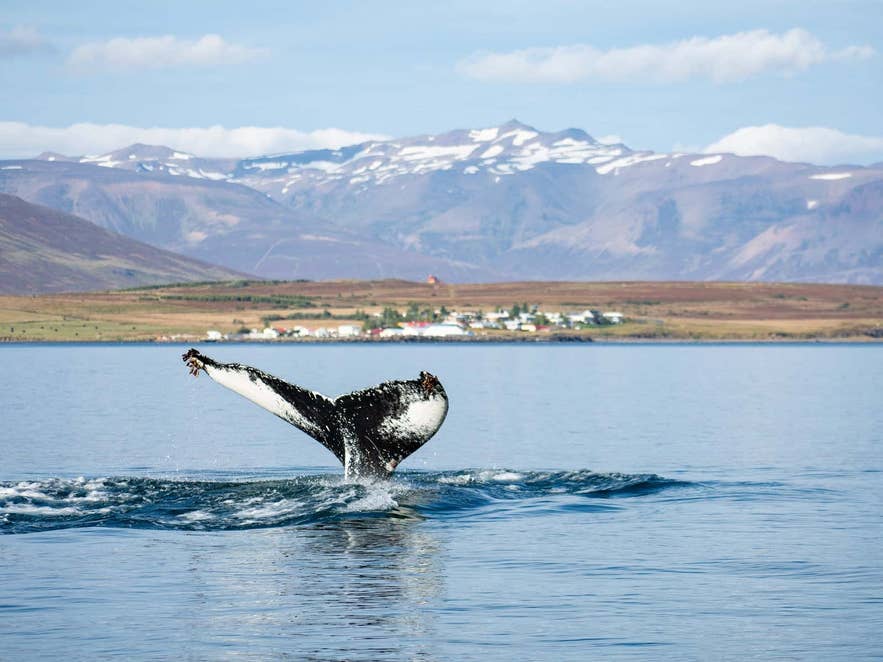
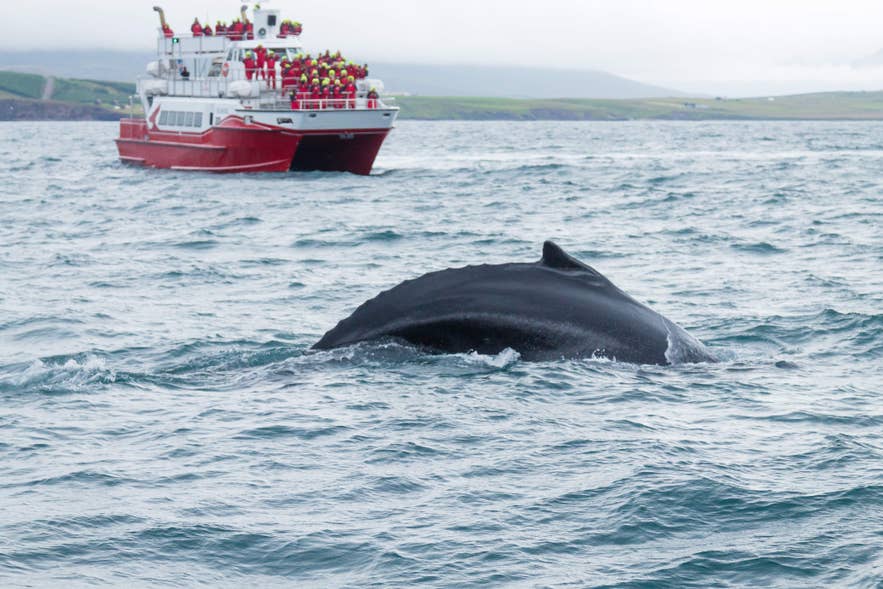 Known as the “capital of North Iceland,” Akureyri offers a unique whale-watching experience in Eyjafjordur, the country’s longest fjord. Its calm, sheltered waters are home to humpback, minke, and sometimes blue whales, providing smoother sailing conditions than open-ocean tours.
You can often find these magnificent creatures feeding, breaching, or playing near the boats, providing an awe-inspiring experience.
In addition to whales, you may encounter playful dolphins, seals, and a variety of seabirds, enriching the experience.
The fjord’s dramatic backdrop of snowcapped mountains and vibrant summer greenery makes every trip as visually captivating as it is exciting.
Whale Watching in Olafsvik
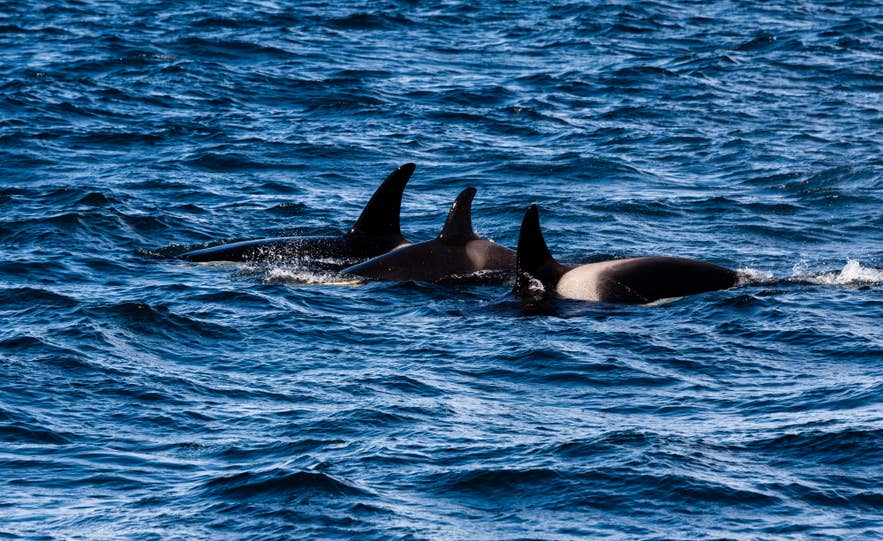 Olafsvik is a small fishing town with a rich marine ecosystem. Situated on the west side of the Snaefellsnes Peninsula, it is a prime location to spot an impressive variety of whales and other marine life.
One of the unique draws of Olafsvik is its frequent sightings of wild orcas, especially during the spring months. In addition to orcas, you may also see sperm and pilot whales. These nutrient-rich deep waters create an ideal feeding ground for these majestic creatures.
What sets Snaefellsnes Peninsula tours like whale watching in Olafsvik apart is the dramatic scenery. The towering Snaefellsjokull Glacier, volcanic peaks, and rugged coastline provide a stunning backdrop for your adventure.
Whale Watching in Holmavik
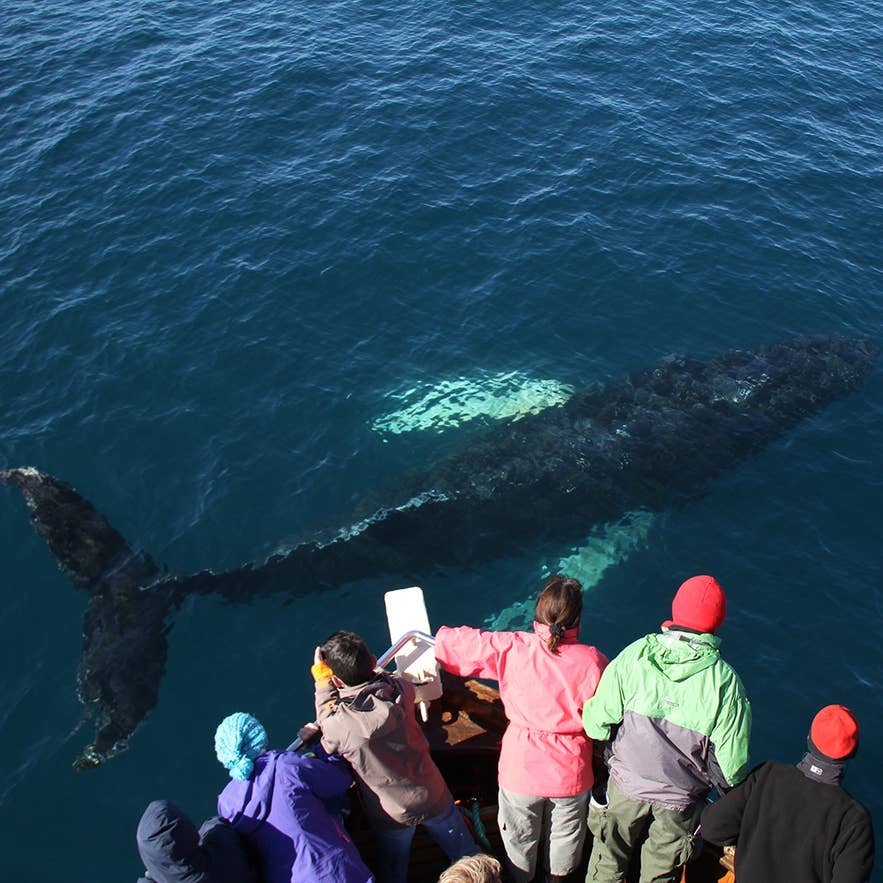 Whale watching in Holmavik is an unforgettable experience that connects you with the wonders of the North Atlantic. Nestled in the remote Strandir region in the Westfjords, Holmavik offers a peaceful setting to explore Iceland’s incredible marine life.
The pristine waters around this charming town are home to an array of whale species led by humpback and minke whales. You may even spot pilot, sperm, and killer whales if you’re lucky.
The calm fjords provide ideal conditions for spotting whales, often accompanied by dolphins and seabirds like puffins and arctic terns. The best time for whale watching in Holmavik is from May to September when the whales migrate to feed in the nutrient-rich waters of Iceland.
Tours like this 2-hour whale-watching adventure from Holmavik offer breathtaking views of dramatic cliffs and serene fjords. Local operators prioritize sustainability, ensuring minimal impact on marine life while providing an educational experience for visitors.
After your excursion, you can explore the quaint village of Holmavik, known for its fascinating Museum of Icelandic Sorcery and Witchcraft. Photography enthusiasts can capture the area’s stunning beauty on dedicated photography tours, making it a perfect stop on your day trip around Iceland.
Whale Watching From Hauganes
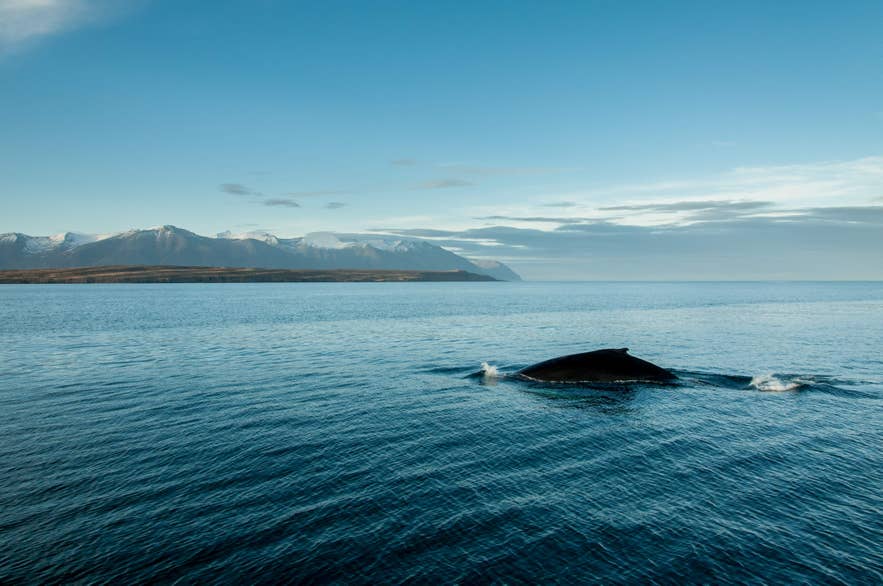 Nestled along Eyjafjordur, Iceland’s longest fjord, Hauganes provides a peaceful and picturesque backdrop for observing whales in their natural habitat. This charming fishing village is home to some of Iceland’s oldest whale-watching tours, renowned for their intimate, eco-friendly excursions.
The calm waters of Eyjafjordur are a haven for different whale species, including humpback, minke, and occasionally blue whales.
These gentle giants often surface near the boats, offering incredible opportunities for photographs and awe-inspiring memories.
Hauganes is also unique for its small-group adventures, like this exciting 2.5-hour whale-watching tour. After your adventure, you can savor the calming environment of Hauganes, stroll along the shoreline, or visit a local fish restaurant to sample Icelandic food.
Whales of Iceland
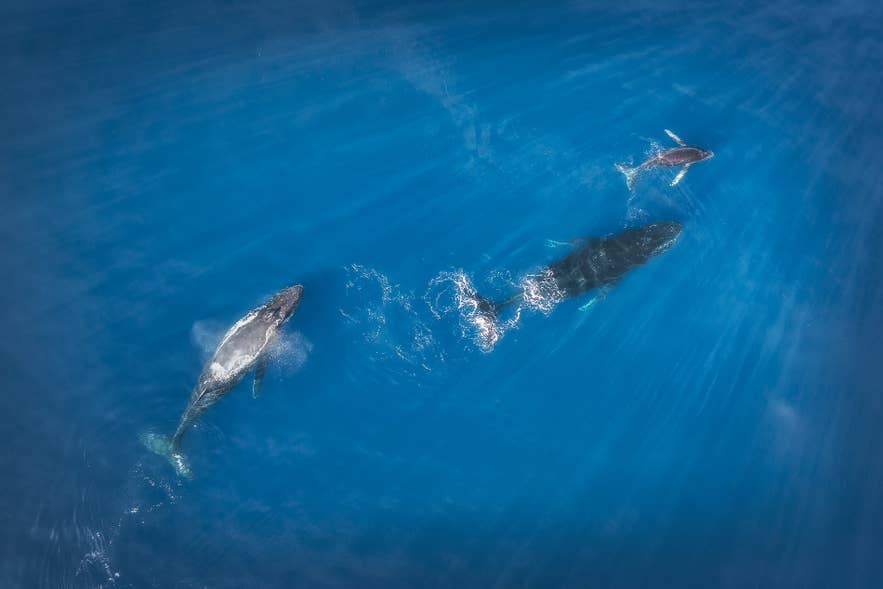
Iceland’s waters attract 24 whale species, from sperm whales to harbor porpoises, thanks to a mix of cold and warm sea currents. Minke whales are the most commonly spotted and appear year-round.
Whales have been an important part of Icelandic history for over 1,000 years. The word “hvalreki,” which means “beached whale,” also refers to an event that was once seen as beneficial, as these whales provided a valuable food source for local communities.
Minke Whales
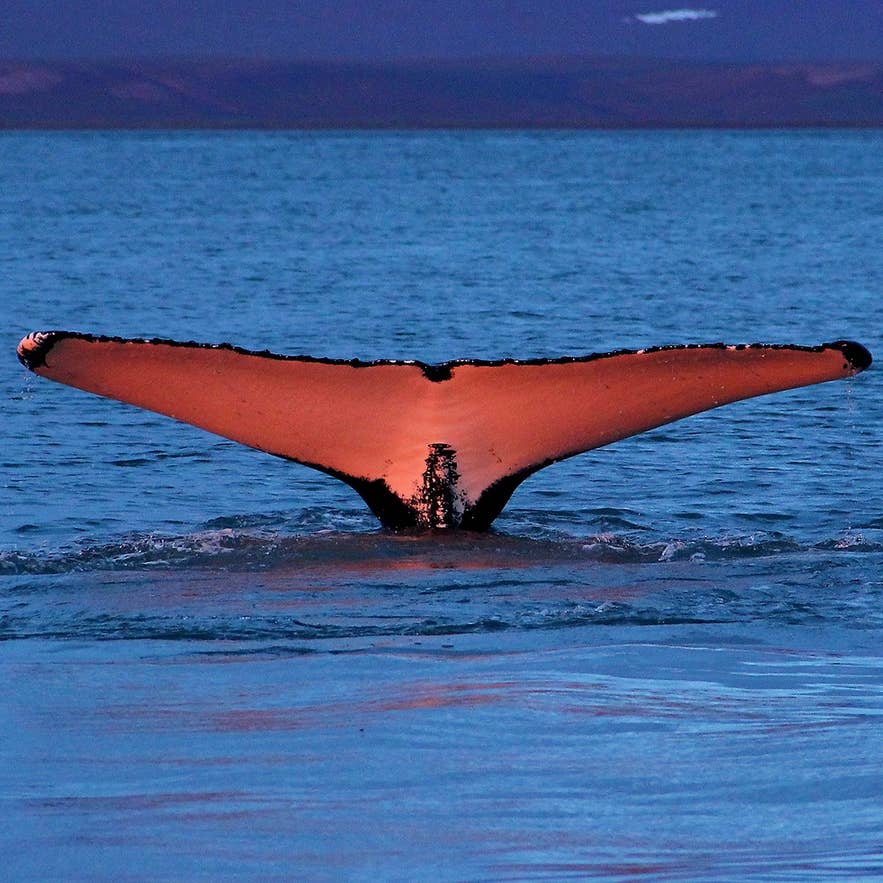
Minke whales are the most common whales in Iceland’s waters, with many migrating here throughout summer and a few lingering through the winter months.
They’re small compared to other species but can still exceed 30 feet (9 meters) in length. Their behavior is usually rather shy, but due to their numbers, you can regularly see them from almost all whale-watching ports, including Reykjavik.
Humpback Whales
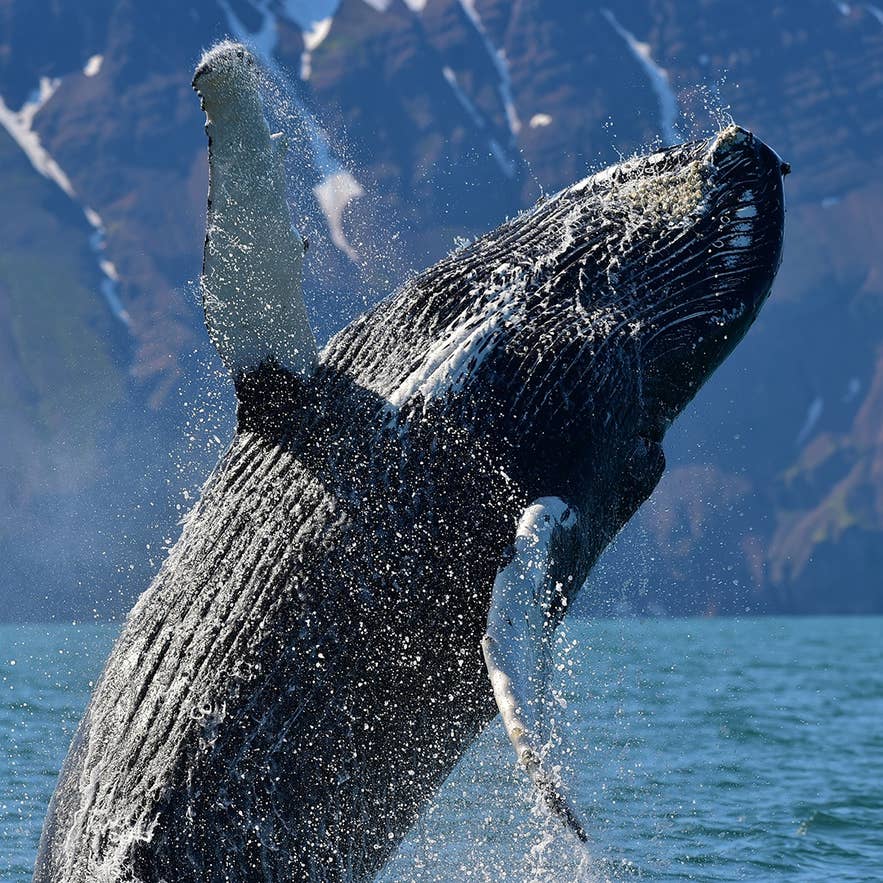
Humpback whales can be seen in Iceland during the summer months, making it a great opportunity to plan summer tours in Iceland.
Unlike minke whales, humpbacks are renowned for their gregarious and acrobatic behavior. You could say that humpback whales are the attention-seeking divas of the whale world.
They are a common sight on whale-watching tours, breaching, feeding, or slapping their tails and flukes.
Tour operators from northern towns, such as Akureyri and Husavik, have had seasons in which they have spotted at least one humpback on every excursion.
White-Beaked Dolphins
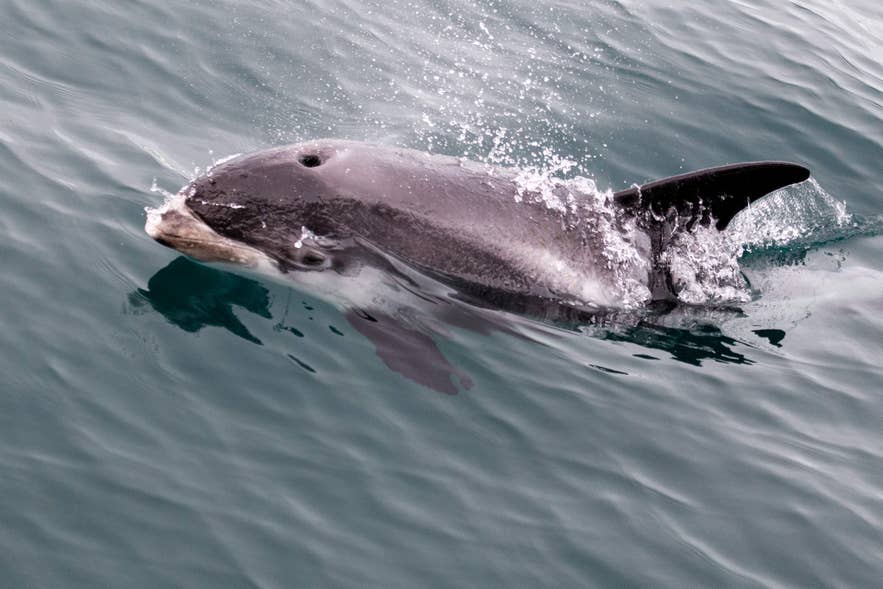 White-beaked dolphins are the most commonly seen dolphins around Iceland, staying close to the shore throughout the year.
They live in pods ranging from a few individuals to a hundred, and though a bulky species, you can often see them bow-riding, breaching, and playing at the surface.
Not only can you see these dolphins swimming in Iceland’s waters, but they can also be seen on Icelandic currency, specifically the 5-krona coin. So if you’re lucky enough to see them on your whale-watching tour, you can keep the coin as a (rather cheap) souvenir.
Harbor Porpoises
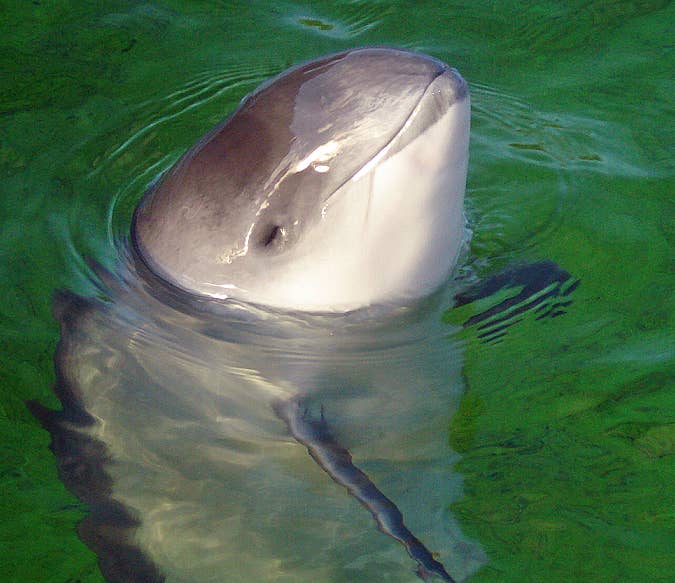
Photo from Wikimedia Commons Library. No edits made.
The adorable harbor porpoise is one of the smallest whale species. It can be seen widely in Iceland’s waters throughout the year. However, you might need someone with a trained eye to point them out.
They’re small and shy and usually only appear at the surface, alone or in small groups, for moments at a time. When feeding or threatened, they can race across the surface while splashing their tail, in a behavior known as roosting. It’s a dramatic and eye-catching display and would make any whale-watching trip memorable.
Orcas
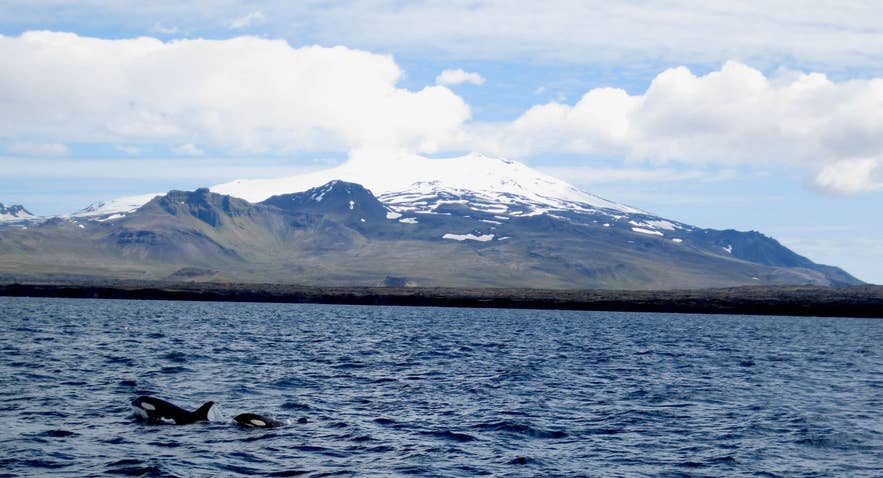
Despite being called killer whales, orcas are the world’s largest dolphin species. About 5,000 of them live around Iceland throughout the year, coming closer to the shore during the summer months.
Orcas can appear on whale-watching trips but are not as easy to find as other species due to their transient nature. However, their great size and occasional acrobatic behavior make them a favorite among whale watchers.
Orcas, sometimes called the “wolves of the sea,” are voracious eaters and require 400-750 pounds (175-350 kg) of food every day. In Iceland’s waters, they mainly feed on herring and capelin.
If you’re eager to go orca watching in Iceland, they’re most common in the Eastfjords’ rich herring grounds, around the Snaefellsnes Peninsula, and along the South Coast.
Orcas are especially beloved in Iceland because of Keiko, a well-known orca that was born in Iceland’s waters and later became a star of the silver screen!
The species above are the ones you’re most likely to see on a whale-watching tour in Iceland. However, a wide array of Icelandic whales can occasionally appear in the island’s waters. Below is a list of other species that the most fortunate will have the opportunity to see.
Blue Whales and Fin Whales
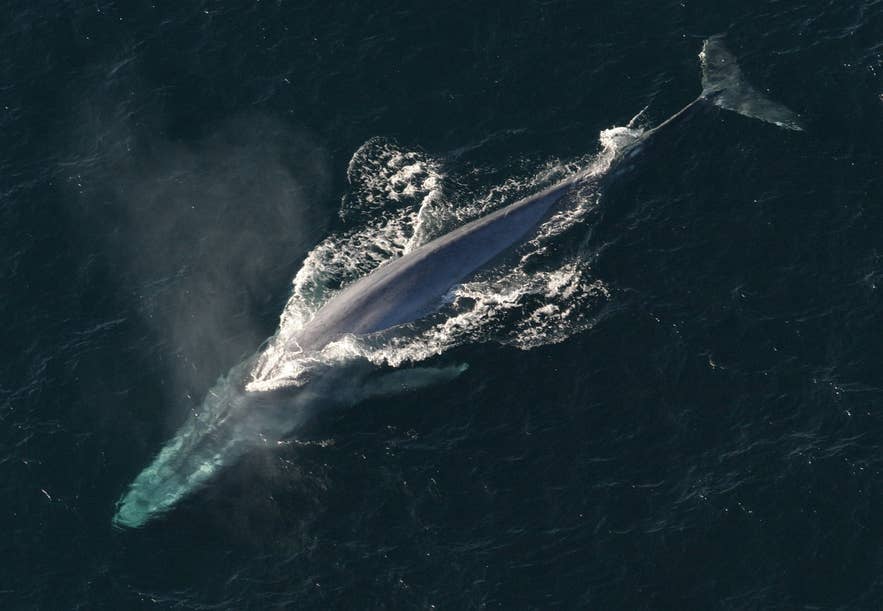
Humpback and minke whales are the most common baleen whales in Iceland’s waters, but they aren’t the only ones you might spot.
Blue and fin whales, the two largest animals on Earth, also occasionally appear during the summer.
-
Blue whales: These giants can grow up to 100 feet (30 meters) long and weigh up to 165 tons (150 tonnes). Despite their size, they feed almost exclusively on krill. Their life span is similar to humans, averaging 80 to 90 years.
-
Fin whales: The second largest creatures on Earth, fin whales average 65 feet (20 meters) in length and weigh 36.29 to 45.36 tonnes. They appear more often than blue whales, with 30,000 to 40,000 living in the North Atlantic.
Sperm Whales
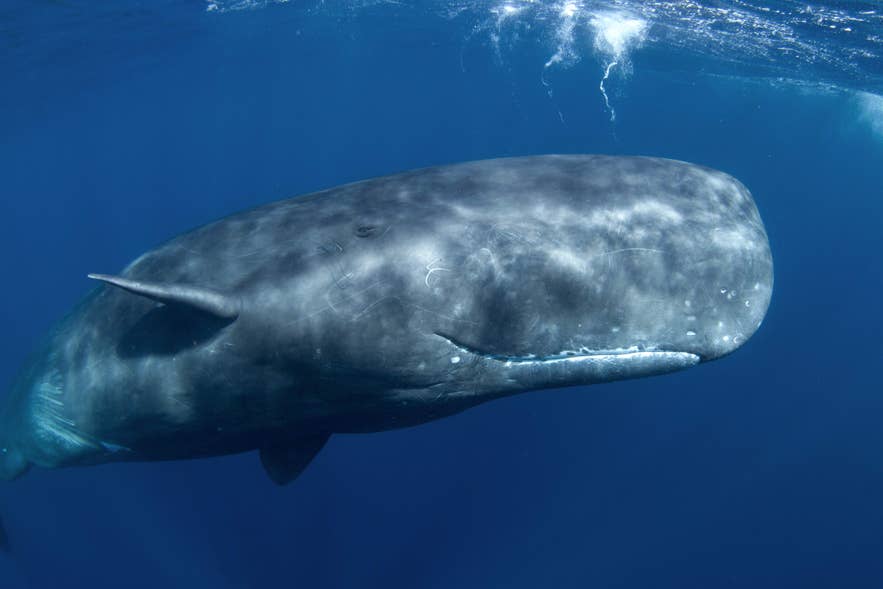 Sightings of the largest toothed whale, the mighty sperm whale, are not uncommon off Iceland’s West Coast in spring and summer. There are about 23,000 individuals in the sea around Iceland and the Faroe Islands.
Despite the relatively large size of its population, they are rarely spotted since they can hold their breath for an extraordinarily long time. The sperm whale can hold its breath for up to two hours, surfacing only once or twice during a whale-watching tour in Iceland.
Beluga Whales and Narwhals
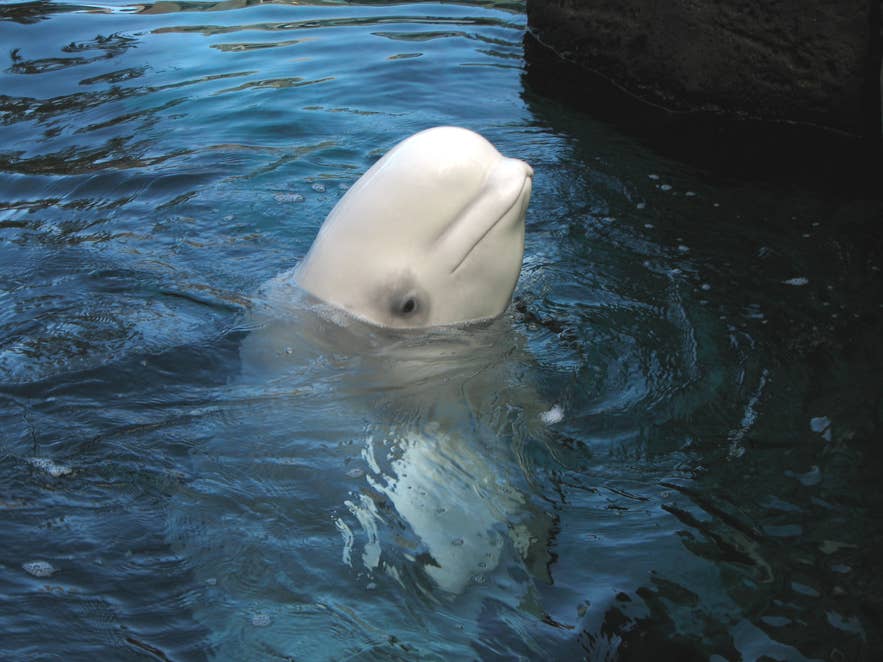
Photo from Wikimedia Commons Library. No edits were made.
Groups of belugas and narwhals have occasionally appeared in northern Icelandic waters even though their usual habitat is around Greenland, within the Arctic Circle.
Narwhals are famous for the male’s tusk, which is, in fact, a long canine tooth. The long tusk is not necessary for survival and serves a similar purpose to the antlers of a stag or the feathers of a peacock as an assessment of hierarchical status.
Beluga whales are closely related to narwhals and belong to the same family of whales. Similar to narwhals, beluga whales spotted in Iceland are stragglers as their natural habitat is further north in the Arctic Circle.
The Westman Islands are home to the world’s first beluga whale sanctuary, where visitors can meet two female whales, Little White and Little Grey, in their new home in SEA LIFE Trust Beluga Whale Sanctuary.
Long-Finned Pilot Whale
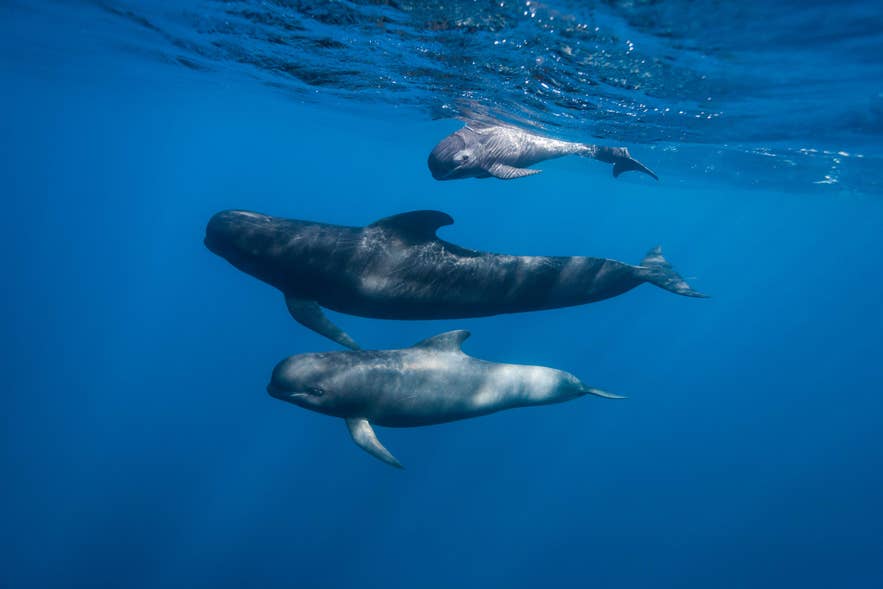 Despite its name, pilot whales are actually a species of large dolphins. They are noticeable for their unusually long pectoral fins.
There are about 350,000 pilot whales in the North Atlantic alone. However, they are a very transient species that spend most of their time offshore, so they are not seen in Iceland’s waters as much as you might expect.
When Is the Best Time for Whale Watching in Iceland?
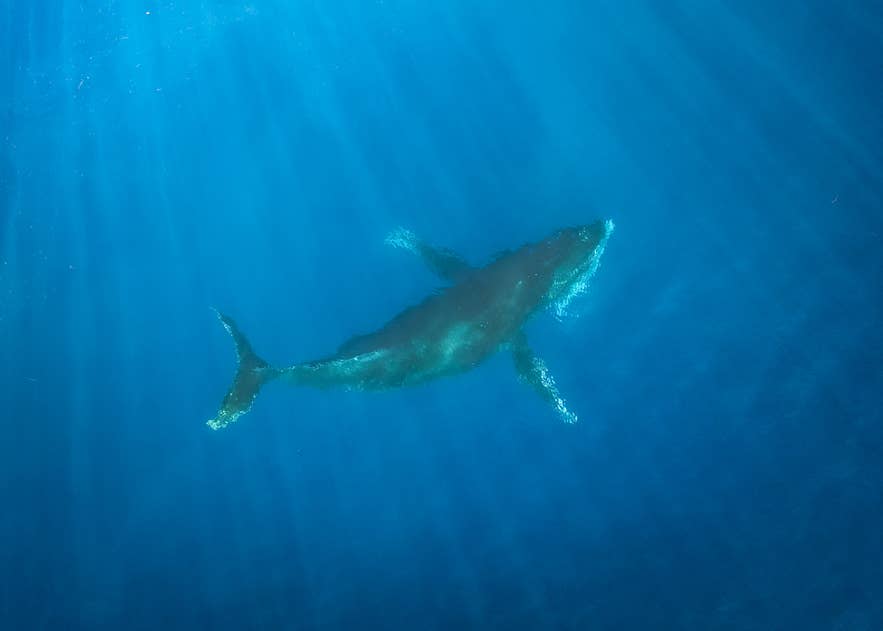
You can enjoy whale-watching tours throughout the year, but the experience can differ depending on the whale-watching season.
There are advantages to Iceland whale-watching in summer over winter, and vice versa, that you should consider before booking your trip. Let us break it down for you.
Whale Watching in Iceland in Summer
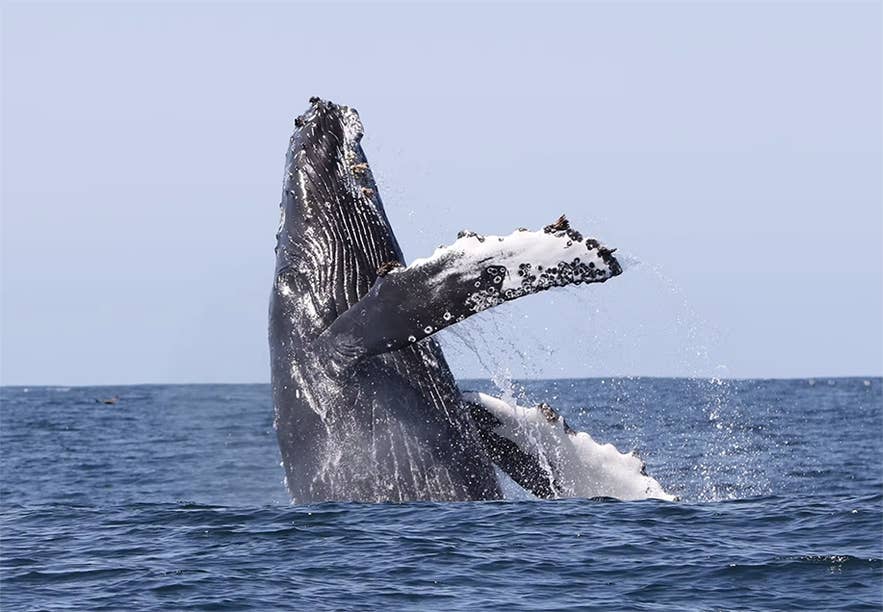 Whale watching in summer has one obvious appeal over whale watching in winter—the weather in Iceland is better.
With calmer winds, fewer storms, and clearer skies, whale-watching tours have fewer cancellations, and your chances of seeing cetaceans breaking the flat surface of the water are much higher.
Furthermore, standing on the deck for the tour’s duration is a lot more enjoyable.
However, the balmier weather is not the only reason whale watching in summer has advantages over whale watching in winter. The second main draw is the greater diversity of marine life.
The migratory baleen whales of the world’s oceans tend to spend their winters around the equator breeding and summers closer to the poles to feed.
As a result, between April and October, you can expect to see some of the world’s largest creatures on your whale-watching tour in Iceland.
No matter the port you leave from in summer, you have an excellent chance of seeing minke and humpback whales.
Though they prefer deeper water than those in Faxafloi Bay, sperm and northern bottlenose whales are also more commonly found in Iceland in summer.
You can often see sperm whales in Breidafjordur Bay, where the water is deep enough for them to hunt. Northern bottlenose whales are more randomly distributed offshore but occasionally come into shallower seas when pursuing prey.
However, these are not the only whale species that come to Iceland in summer, making each whale-watching tour spectacular.
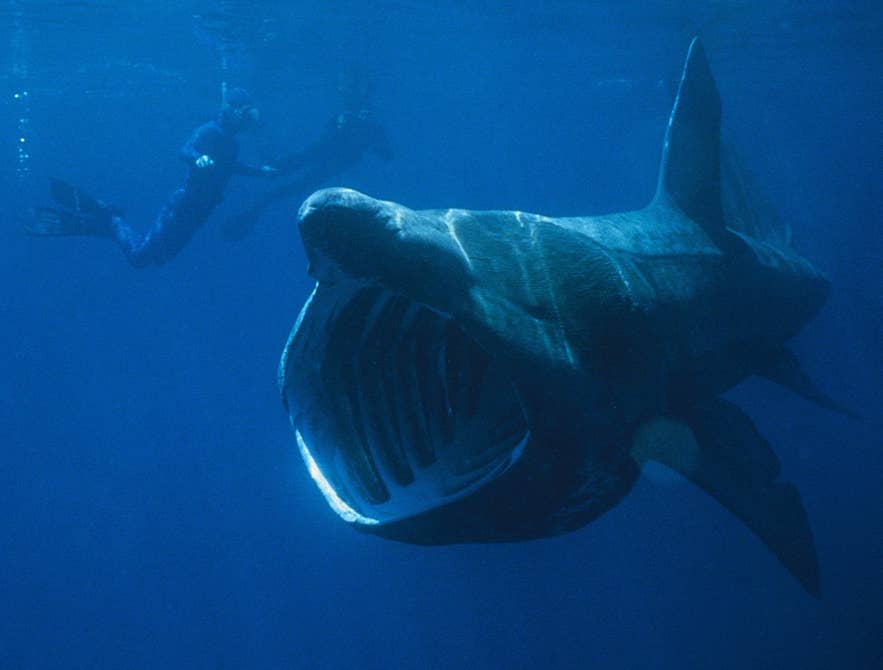
Basking sharks, the second-largest fish species, also occasionally cruise near the surface during this season.
These enormous, prehistoric creatures move slowly and have a very calm nature, meaning sightings often last longer than with the whales, who dive to feed.
In addition to whales, you can see birds such as arctic terns, great skuas, and puffins on tours from Reykjavik, Akureyri, Husavik, and the Snaefellsnes Peninsula. They’re frequently spotted bobbing on the water’s surface, circling overhead, or diving for fish.
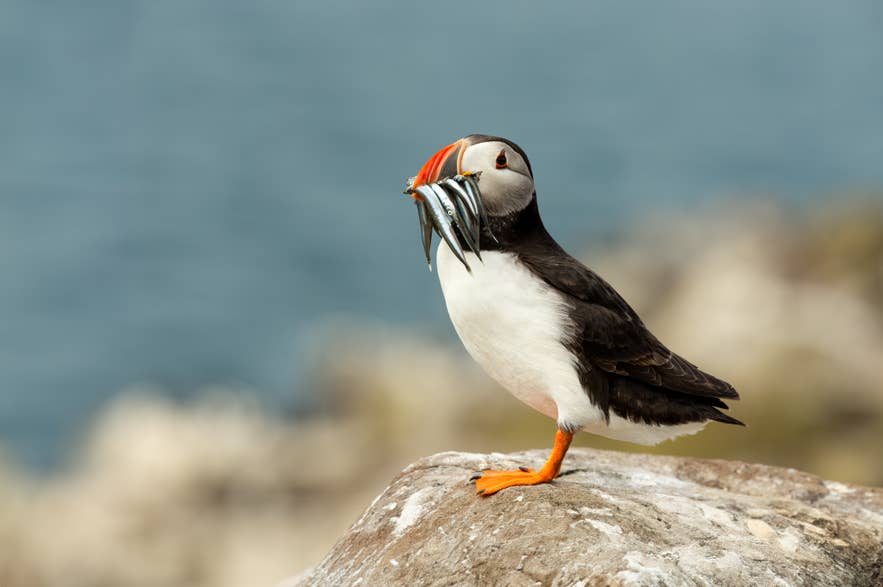
Another advantage of whale watching in the summer is that you can partake in a smaller vessel, such as a RIB, for a much closer, more personal encounter. If you want a RIB boat experience, the best options depart from Reykjavik or Husavik—like this 2-hour puffin and whale-watching boat tour from Husavik.