
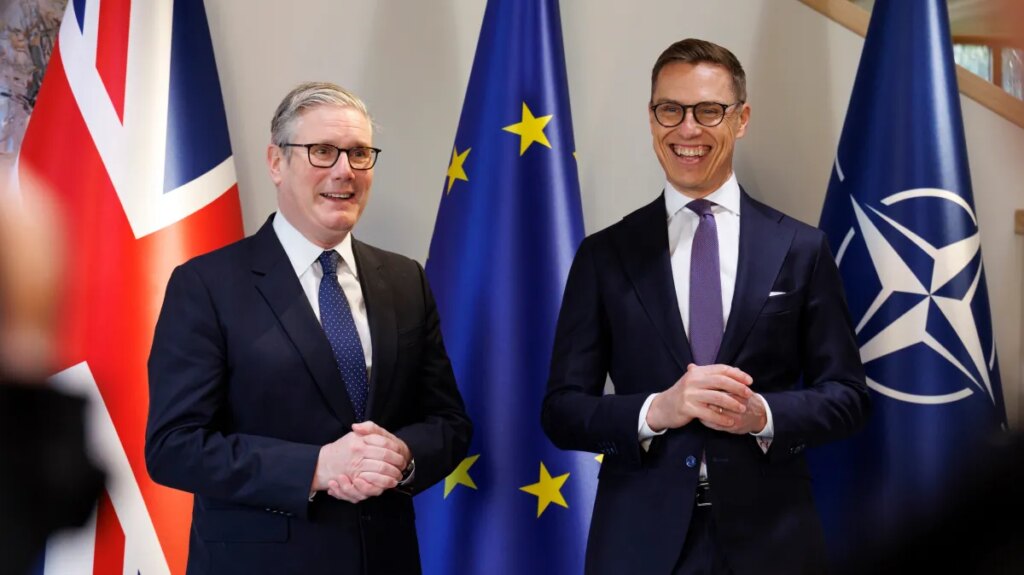
Alexander Stubb’s schedule was packed during his recent visit to London. The president of Finland met the King, lectured at London School of Economics, jogged through Hyde Park with the prime minister of Canada, and said Brexit was “like amputating your leg for no reason” in a Chatham House speech.
Stubb also made sure to spend quality time with Sir Keir Starmer. After joining the Labour leader and President Zelensky for talks at 10 Downing Street, he kicked back with Starmer and switched on the football.
“Keir and I are in contact on a weekly basis and we had a chance to spend a lot of time together in London: first with Zelensky, and then with our spouses while watching Arsenal beat Leverkusen, which was an upside,” the president said in an interview with The Times.
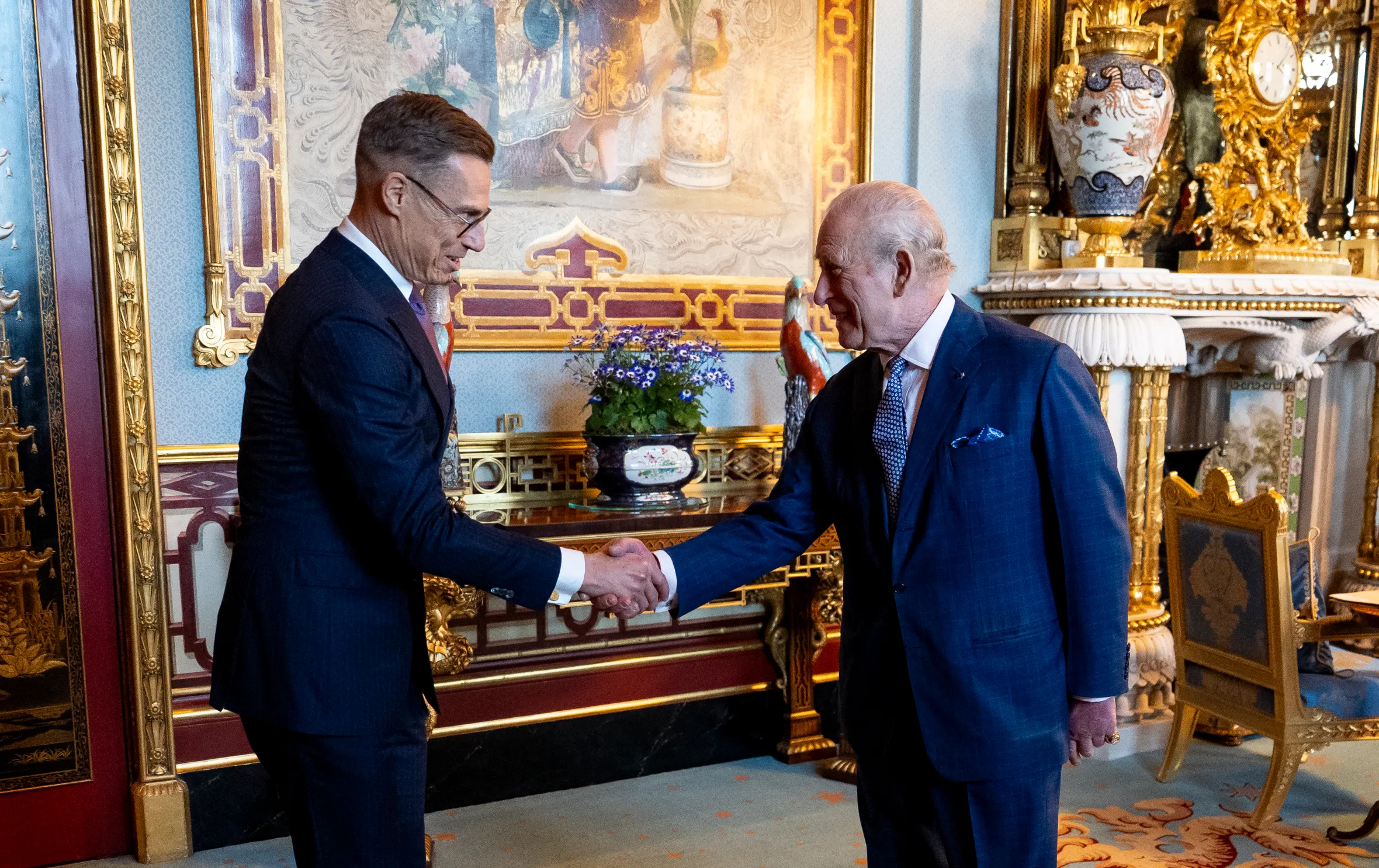 The King held an audience with Stubb at Buckingham Palace on March 17aaron chown/PA
But far more serious matters than the game were discussed. Among the issues that arose in their conversations was “our preparedness”, Stubb said, referring to Finland’s famed readiness for war.
The Nordic nation, which shares a 1,340km border with Russia, is arguably the most prepared Nato member for a major armed conflict because of its belligerent neighbour.
Despite having a small population of 5.5 million, it boasts one of the largest militaries in Europe. About a sixth of all Finns are trained to fight under its comprehensive conscription programme.
Finland has also spent decades building a vast network of nuclear bunkers beneath its cities and suburbs, which can shelter 87 per cent of citizens should the country come under attack.
Everyone from schoolchildren to company chief executives are on standby to switch to a war footing as soon as a threat is detected.
All live by a 72-hour concept, preparing them to survive for three days without electricity, heat, water and food. Residents are told to stock bunkers under their homes with essentials such as canned food, matches, iodine pills, battery-powered torches and portable stoves. Others can access larger public shelters dug deep below bustling city streets.
Finnish companies form an industrial reserve of their own and are obliged to have plans in place to restore essential services within hours of an invasion.
The country’s “whole society” approach to defence will be difficult to emulate elsewhere. But for the sake of its own security, and that of the wider region, it is eager for Nato allies to learn these lessons fast.
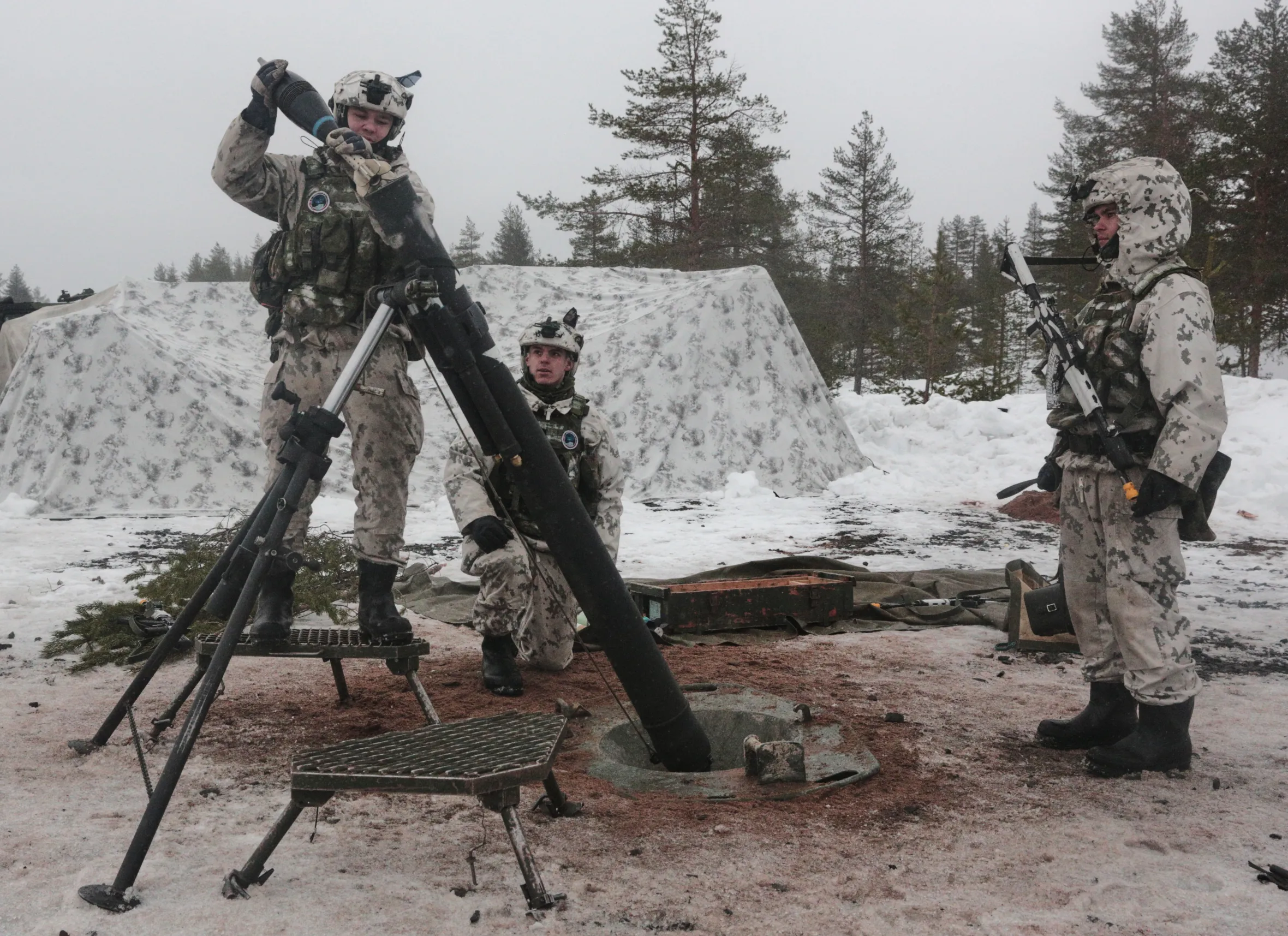 Finnish soldiers load heavy mortar during Nato Arctic exercises in Rovaniemi, Finland, on March 17Aino Vaananen/AP
Stubb, who spoke to The Times at his presidential residency, days after returning from his trip to London last week, said: “There is no magic formula for how you do it … We can just give our best practices to the UK, and anyone else, but these things take time to build up.”
Finnish resilience has been cultivated since the Second World War, when, abandoned by Britain and France, it stood alone to fend off a Soviet invasion. Nearly 100,000 Finns died in the Winter War against Russia and subsequent conflicts between 1939 and 1945, ten times the US losses during the conflict, when adjusted for population.
Over the following decades, and throughout the Cold War, Finland developed a self-sustaining spirit and impressive martial skills, particularly in Arctic warfare, that were eventually brought into Nato. Seeking greater strength in numbers after the Russian invasion of Ukraine, it joined the military alliance in 2023.
Stubb said: “For Finns, resilience comes from history and experience … from between your ears.
“You have to have the cognitive capacity to sustain some discomfort. That’s why I always say that you fight wars on the battlefield, but you win them at home.
“These are the types of things that I discuss with a lot of my colleagues, including Keir Starmer.”
Conscription, the president believes, is a “strength” that binds populations together while preparing them for the realities of war. Rather than resisting the draft, Finns view it as a “social glue”.
Military service is mandatory for men, and voluntary for women, though they too are expected to face some sort of draft soon.
Other European nations are going in the same direction amid the growing threat from Russia and increasingly “turbulent” transatlantic relations with America, Stubb said.
Sweden brought back conscription in 2018, Latvia reintroduced it in 2023, and Poland announced plans to make all men undergo military training last year. France and Germany are taking cautious steps to establish voluntary military service programmes.
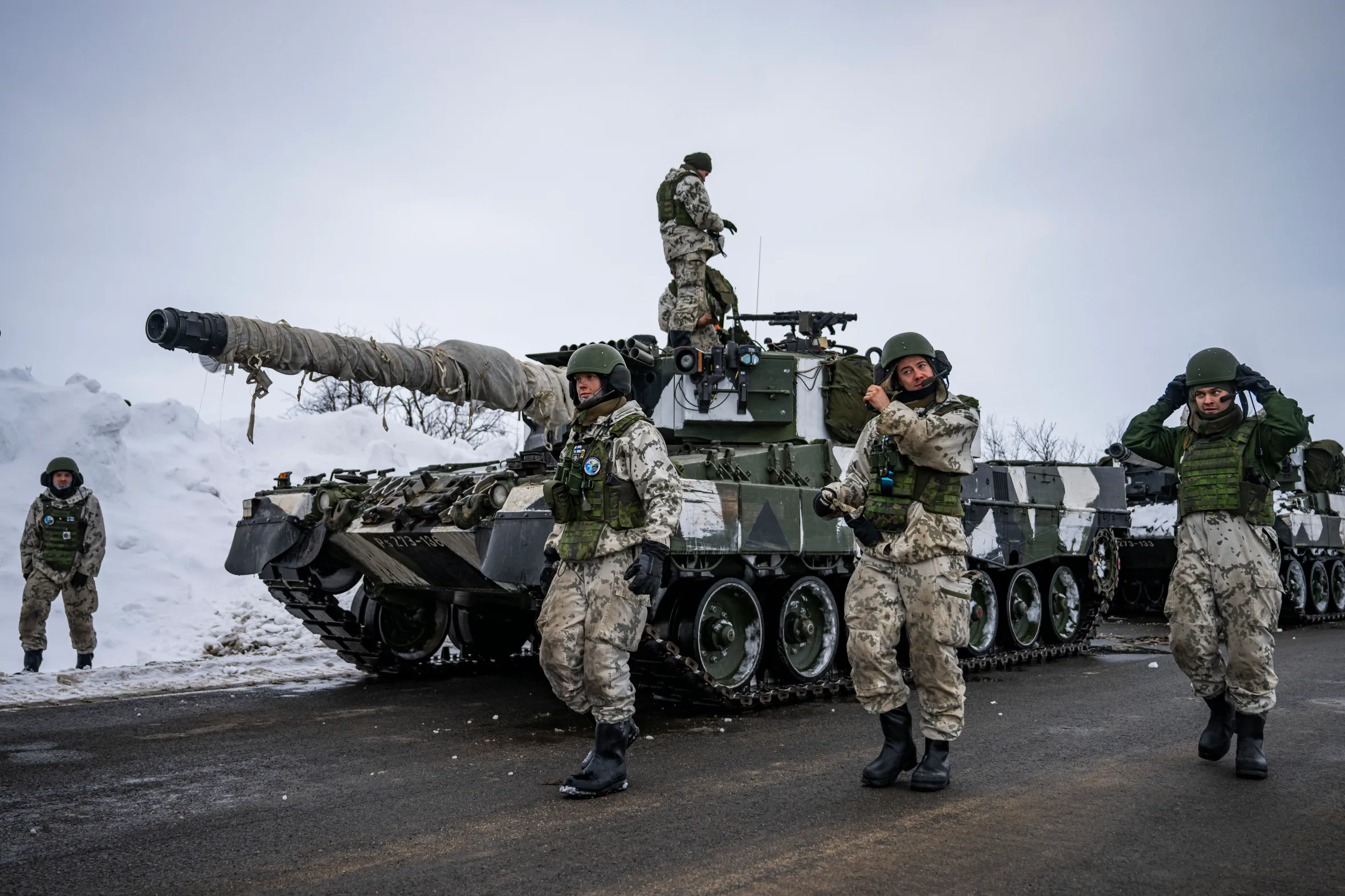 Finnish soldiers after a demonstration of border crossing by Swedish and Finnish troops in 2024JONATHAN NACKSTRAND/AFP/Getty Images
In the UK the mere mention of conscription courts controversy. “I remember doing my military service in 1988-89, towards the end of the Cold War and was sort of thinking, why am I doing this?” Stubb said. “My son did his two years ago. You don’t have to ask the question any more.”
Finland’s population has by far the highest willingness in Europe to fight for their country, at more than 80 per cent, while Britain lags behind on 35 per cent.
The UK’s ability to fight is another matter. Last month a former general warned that the British Army was so depleted it could only seize a small market town “on a good day”. The serving First Sea Lord said this week that the Royal Navy would not be ready for war until the end of the decade.
However, Stubb, a former London School of Economics student, who has a British wife and children with dual nationality, warned that the UK capital faced the same risks from Russia as his own.
“In modern warfare, it’s as easy for Moscow to hit London as it is to hit Helsinki,” he said. “Even in terms of time, when it comes to ballistic missiles or to drones.”
World events could quickly change the British public’s attitude to preparing for war, the president predicted, as European allies face “two fronts”: in the Middle East and Ukraine.
Souring relations with the US is another major factor. President Trump has threatened to withdraw America from Nato over its lack of support for his war with Iran.
“This will probably incite feelings among the general population, both in the UK and on the Continent,” Stubb said. “You add on to that with what’s going on in Iran, and people are starting to understand that there are basic values that you believe in and that you want to defend.”