
Hungary’s 200-year-old national anthem is a “woe is me” tale, lamenting centuries of suffering and misfortune at the hands of 13th-century Mongols and 15th-century Turks, while praying for a better future and a return to the glory days.
The country has a chance to answer its own prayers (and the silent ones of the European Union) on 12 April, when Hungarians vote in the most pivotal election since the fall of communism in 1989. The outcome will be a watershed moment for the EU’s geopolitical landscape.
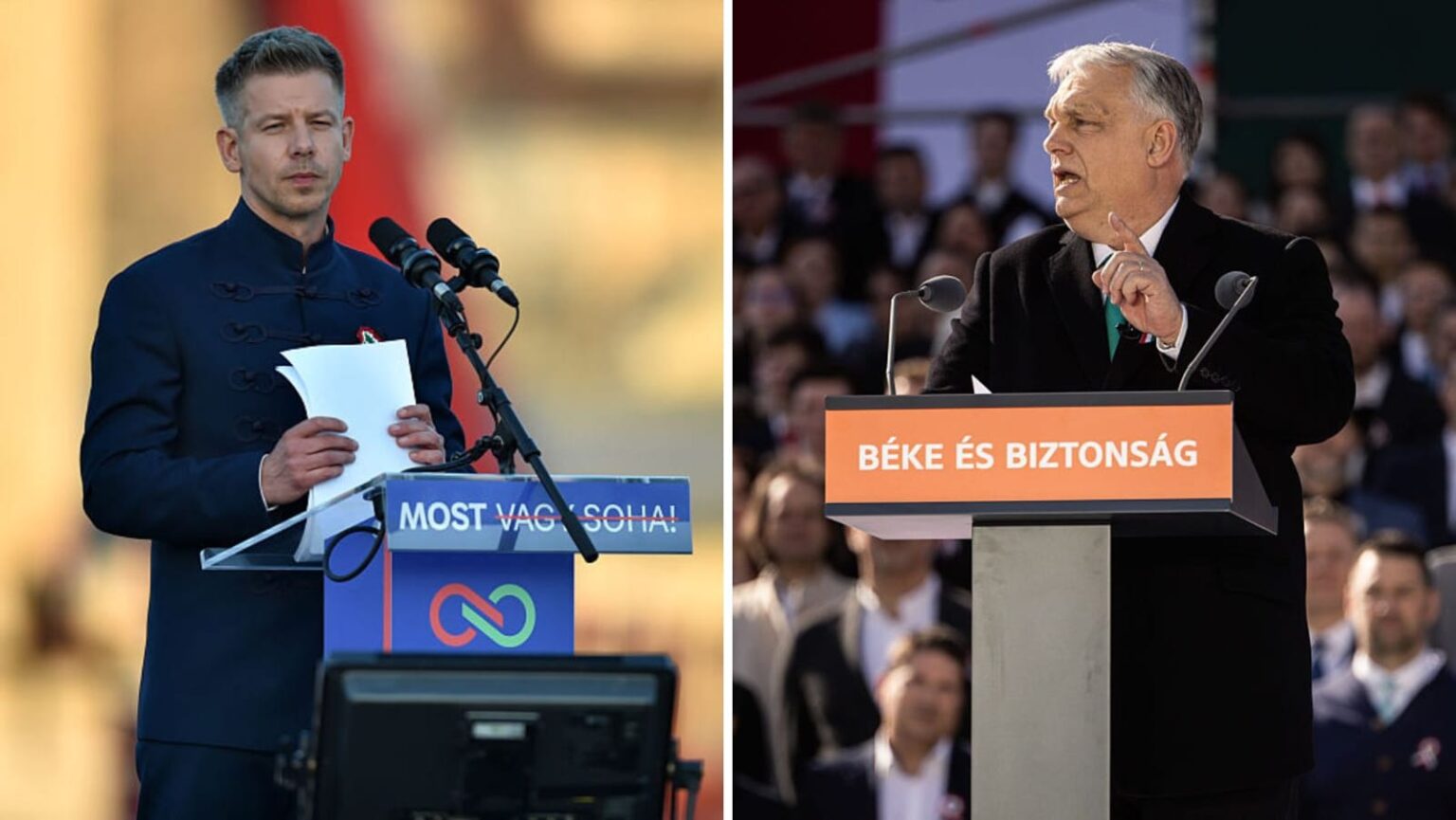
Polling shows Hungarians are mightily fed up with their basket-case economy, rising living costs and the hotbed of corruption. Many are itching to topple Viktor Orbán’s 16-year reign, and opposition leader Péter Magyar’s Tisza Party leads Orbán’s Fidesz by double digits in most polls. Magyar has been campaigning hard in the impoverished countryside, among voters who might not be reflected in polling because many are too poor to own mobile phones. He’s hitting five to six villages a day.
There are signs Orbán knows he’s in trouble, as smear campaigning and disinformation ramp up.
There is bruised national pride because Central European neighbours’ economies have overtaken a stagnating Hungary. The unexplained wealth of Orbán’s inner circle, who swan about at luxurious villas, aboard yachts and private jets is also a source of anger. According to Transparency International’s 2025 Corruption Perceptions Index, Hungary “remains the most corrupt member state of the European Union for the fourth consecutive year”. Magyar has promised to crack down on graft, fix schools, hospitals and potholes, but most importantly, convince Brussels to release €18 billion in frozen EU funding blocked over corruption and rule-of-law issues.
But if past elections (2022, 2018 and 2014) are to go by, strong opposition polling does not easily translate to political change because of rigged electoral rules, gerrymandering, a media landscape controlled by vested interests and vote buying in rural areas.
There are signs Orbán knows he’s in trouble, as smear campaigning and disinformation ramp up. Orbán, widely seen as a model for Donald Trump’s efforts to undermine American democracy, has been hosting a steady stream of the who’s who of the global far right/MAGA movement. The strongman has also collected video endorsements from the likes of Italian PM Giorgia Meloni, France’s Marine Le Pen and Israeli Prime Minister Benjamin Netanyahu. And US cheerleading of a backsliding democracy has extended to Trump social media endorsements, US Secretary of State Marco Rubio hailing a “golden era” of US-Hungarian relations and a last-minute cameo by Vice President JD Vance.
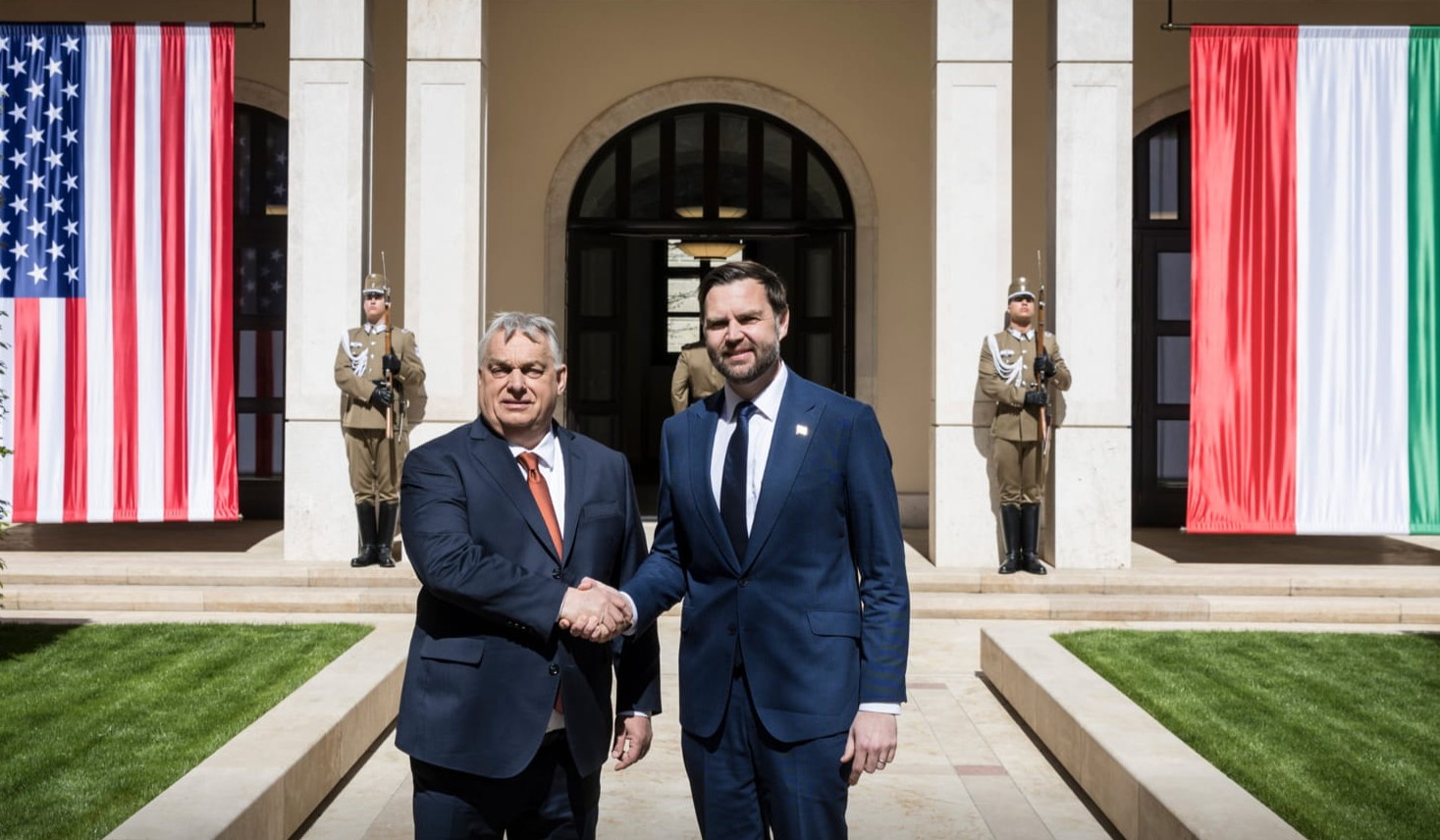
US Vice President JD Vane with Hungary’s Viktor Orban in Budapest in the days leading up to the election (@PM_ViktorOrban/X)
Orbán’s also got Moscow in his corner, with the Kremlin reportedly sending a crack team of manipulators to Budapest. It is in Russian leader Vladimir Putin’s interest for Orbán to remain in power. Hungary has been acting as Moscow’s mole within the EU, according to leaked phone calls between Hungary’s top diplomat Péter Szijjártó and Russia’s Foreign Minister Sergei Lavrov. Szijjártó reportedly said in one conversation: “I am always at your disposal”. The investigative journalist who broke the story faces criminal charges.
The Atlantic has dubbed the election the “first post-reality political campaign” as Orbán incessantly talks up a delusional threat of a Ukrainian military attack on Hungary. He’s trying to tap into anger about the poor treatment and discrimination of some 50,000 ethnic Hungarians living in Ukraine. Many Hungarians are still spewing about losing two-thirds of the nation’s territory under the post-First World War Treaty of Trianon.
The government’s focus on making Ukraine the big bogeyman may fail to win over voters struggling with bread-and-butter issues. Should Magyar pull off a miraculous election victory, it could be a turning point in relations between Budapest and Brussels, with a likely softer tone and greater cooperation. However, the task of governing could be tricky – Orbán will have left behind booby traps via a network of allies embedded in top posts across society.
The EU will need to be prepared to pull the gloves off if Orbán’s party retains power, continues to govern with a potential kingmaker, the far-right party Our Homeland, stages a coup or calls off the election under the pretext of foreign interference from Ukraine. (The latter scenario may have kicked into gear over Easter. Serbian authorities found a cache of explosives at a pipeline that brings Russian natural gas to Hungary. Orbán was quick to label it a sabotage plot and hint that Ukraine was behind it. Magyar dismissed the incident as a “false flag”.)
If the EU fails to neutralise Orbán’s “wall of no”, the bloc risks falling into a pit of irrelevance amid a world in chaos. Toilet diplomacy will not be a sustainable strategy to get critical votes passed, including striking a €1.8 trillion budget deal or getting urgent assistance to Ukraine.
Options being bandied about include greater financial pressure, more reliance on “coalitions of the willing” and suspending Hungary’s voting rights. EU expulsion is considered unrealistic because there is no legal mechanism to boot countries out of the bloc.
Regardless, serious out-of-the-box thinking will be needed to circumvent Orbán’s blackmail tactics. Perhaps the EU should seek inspiration from ASEAN’s ban on Myanmar’s military coup makers attending leaders’ summits.
Back in Hungary, the atmosphere is tense and deeply divided, says Brussels correspondent Thomas Lauritzen, who is on the ground covering the campaign for Danish media outlet Altinget.
“I’ve been talking to a lot of people in Budapest who hope this is the end of the old Orbán era … they are afraid to hope too much,” he said.
As the national anthem goes: “God bless Hungarians, with joy and abundance.” Indeed.