
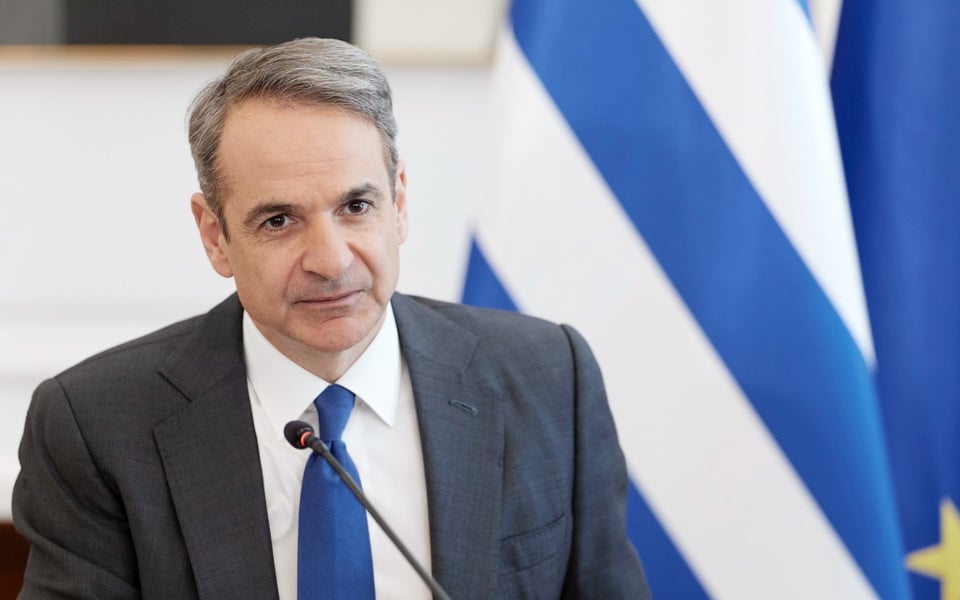
Prime Minister Kyriakos Mitsotakis has proposed concerted action across the 27 European Union countries to adopt a uniform ban on children under 15 accessing social media platforms and standardize online age-verification tools by 2027.
In a letter to European Commission President Ursula von der Leyen Wednesday, the day he announced plans for a national ban effective January 2027, Mitsotakis argued that while protecting minors from internet addiction might prove a tough regulatory battle, it was worth fighting.
“National action alone will not suffice,” he wrote, according to a copy released by his office. “A unified European framework must be in place by the end of 2026 in order to complement and strengthen necessary national initiatives for the protection of minors.”
Several fellow European Union members are planning similar action to restrict young people from using social media. Outside the EU, Australia was the first country to ban under-16s from social media platforms, while Britain’s government is also planning restrictions.
The prospect of bans has angered US officials and America’s powerful major technology firms that control social media.
Calling for a “coordinated and swift response,” Mitsotakis added: “Sharing your view that Europe must choose its regulatory battles wisely, I am convinced this is one to be waged with dedication.”
Mitsotakis said the EU should set 15 as the digital age of majority, below which users would not be allowed to use social media.
His proposals included a fully harmonized EU-wide age verification framework to be implemented by the end of 2026, and forcing social media platforms serving users aged under 15 to use that mechanism – with biannual age verification updates.
Mitsotakis also called for “a streamlined EU-level coordination and enforcement mechanism, enabling Member States and the European Commission to jointly assess incidents and accelerate the imposition of penalties for non-compliant companies.”
Addressing Greek youngsters in a TikTok video earlier Wednesday, Mitsotakis conceded that the ban might seem unfair, but insisted that it was necessary on health grounds.
“I am certain that many of you who are younger will be angry with me. If I were your age I might have felt the same,” he said. “But the addictive design of some apps, the profit model that’s based on your attention – on how long you spend in front of your mobile phone screen – and takes away some of your innocence and freedom, must end at some point.”
He said the proposals will be tabled in Parliament in the summer, with a view to coming into effect on January 1, 2027.
Mitsotakis’ conservative government has already banned use of mobile phones at primary and secondary schools.