
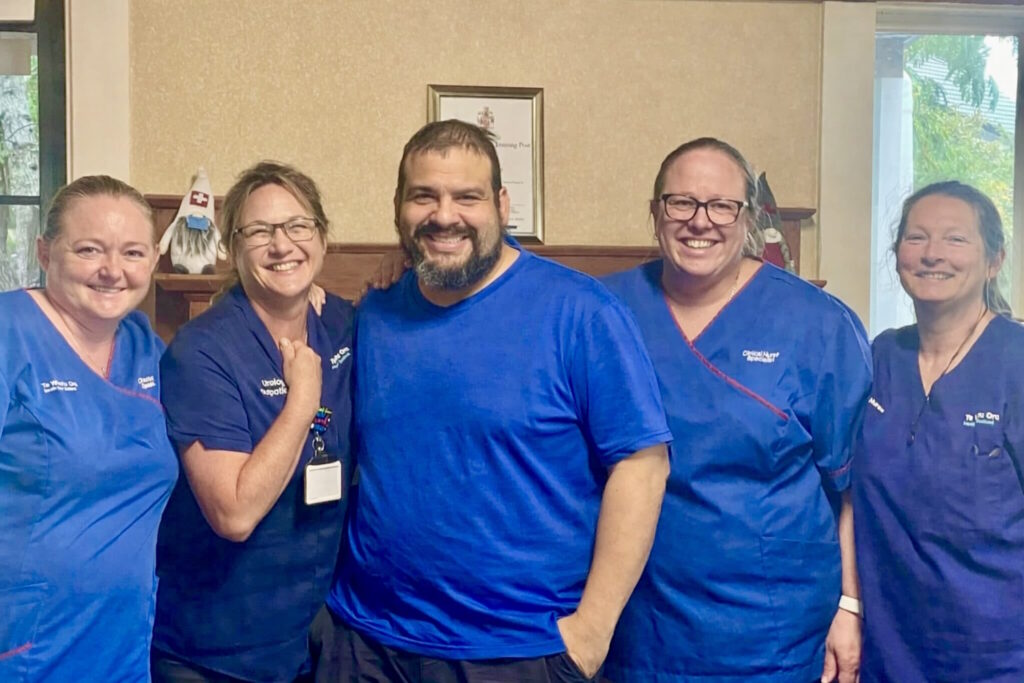
A Swift Current physician is back home after turning a long-held goal into reality, completing an international locum in New Zealand and gaining new perspectives on patient care.
Dr. Francisco Garcia, urologist at Cypress Regional Hospital and owner of Lonely Tree Medical and Wellness Clinic in Swift Current, spent three months at Whangarei General Hospital rotating between the operating room and clinic before returning home on February 15.
From interest to opportunity
The opportunity came quickly after years of interest with little progress. Garcia said a recruitment company he had contacted years earlier reached out in the summer of 2025 with an opening.
“Within about three, four weeks, I went from not sure that this was even going to be a possibility to we have a date,” he said. “It was a little bit helter-skelter and trying to come up with plans for everybody and how we were going to make everything work… it turned into a really great experience and something I really was happy I was able to do.”
Garcia first developed a taste for international work during medically based mission trips with the Peruvian American Medical Society in the late 1990s and early 2000s, which he found rewarding. Over the years, he has also completed locums in western and central Canada, further piquing his interest in practicing in different settings.
The idea of three months abroad in a completely different healthcare system appealed to him.
“It forces you to be adaptable,” he said. “It forces you to see a new system, see how something else is done, and see if that’s something you can take back. See if it’s something new you can learn. I hadn’t really done anything internationally since I became an independent urologist.”
Related Stories:
Learning from a different healthcare system
New Zealand has both public and private healthcare systems. The public system is government-funded, similar to Canada, while the private sector allows faster access to certain procedures. Garcia said the system emphasizes teamwork and a supportive environment for physicians.
“Patients are assigned to a clinic rather than a specific family physician, which ensures everyone has a home base and access to care, even if they see different doctors on different days,” he said. “Everybody got paid the same rate at the end of the day, so there was a lot more collaboration and cross-covering with calls.”
He said in New Zealand, clinics are also supported through government funding, allowing for more nurses and administrative staff compared to many Canadian clinics, where physicians often carry those costs.
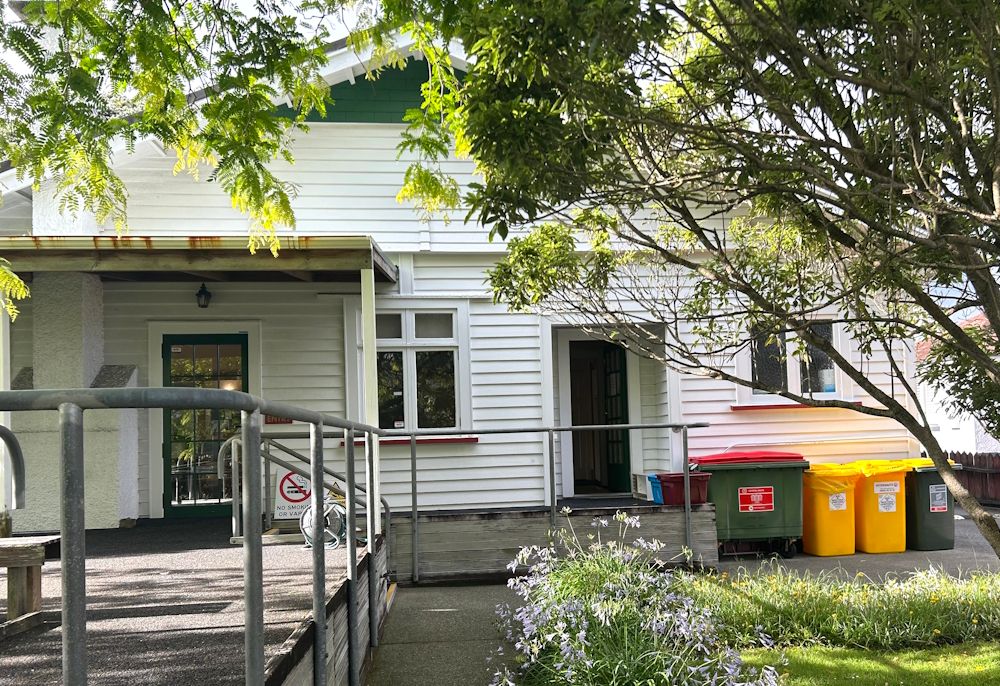
More procedures were done in clinics compared to Canada, he said, as the additional staff and resources helped improve efficiency and patient access. He noted this helped him see how care could be more efficient and patient-focused.
Patient medical records were easier to access under a fully integrated electronic system, which allowed him to make more informed decisions anywhere in the country.
“The public system is all on a web-based platform that everybody has access to, and you can see everything,” he explained. “Including images, clinic notes, referrals, pathology reports, chemotherapy regimens, prescriptions, and even inpatient notes. So when people are in the hospital for a while, the notes that we write every day are all there on this web-based platform. You see them in the clinic, and you can see everything that’s happened. You can even check in at home. If you’re on call and you get a call about somebody in the emergency department, you can log in and pull up everything so that you can make a really good decision.”
The triage and referral process experience, he hopes, will help him advance his own process locally, determining whether patients need immediate advice or an in-person assessment.
“I’ve started to apply that, which will hopefully, on the one hand, get useful information to those patients who are seeking care quicker, and then also offload some of the wait time for people to see me in clinic,” he said. “It takes a lot more time and effort on my end to really go through, because I end up doing a fairly deep dive on each referral that comes in.”
Exploring New Zealand beyond work
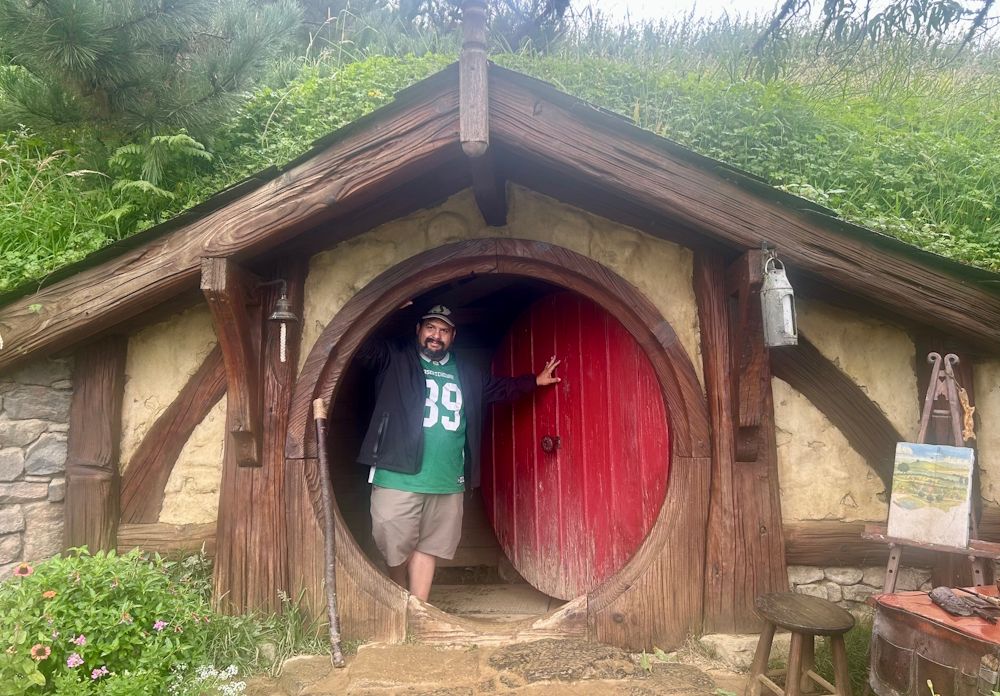 Dr. Garcia standing inside the front door of the Hobbiton movie set.
Outside of work, Garcia enjoyed New Zealand’s natural beauty. Highlights included the glow worm caves, which he described as looking like a bioluminescent green night sky, the pristine beaches, and a trip to the Hobbiton movie set.
“There was a lot of things that were great about New Zealand,” he said. “Everybody knows about the nature, landscapes, and the natural sights; they’re breathtaking just about anywhere you go.”
Garcia said he would consider another international locum to an English-speaking country, or a return to New Zealand, if the opportunity arises.
“I’ll never say no to that,” he said. “There’s always more to learn. And there was even more to learn within that group. They were doing some procedures I never thought were possible to do in a clinic, which was really interesting to see.”
The trip reinforced his appreciation for the Canadian system, while allowing him a unique chance to experience healthcare 12,000 kilometres from home.
“It was really nice that I was able to contribute, actually a lot, to that group because really nobody in that group did anything to do with sexual medicine,” he said. “Reevaluating my position here, I really like what I have here in terms of how we have things set up and how we interact with our healthcare system. What I liked about my experience there is trying to see what things worked well and how we can bring those back here if they’ll mesh with our system.”