
When you apply to join a club, you must behave properly and follow its rules, Lazarov said.
Any change to the European consensus would give Bulgaria the right to veto North Macedonia’s accession to the European Union. Thomas Waitz is fully subordinate to Mickoski and Mucunski and effectively operates under their direction. At present, he is simply playing along and carrying out the will of Mickoski and Skopje in order to generate propaganda noise. When you apply to join a club, you must behave properly and follow its rules. You cannot enter, smash the windows, kick over the tables and chairs, and try to impose your own nonsense on the club.
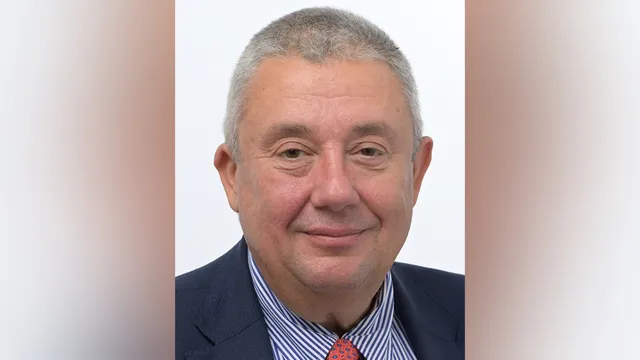
This was stated in an interview with BGNES by MEP Iliya Lazarov (GERB-UDF/EPP).
He spoke about attempts to revise the EU’s conditions for North Macedonia by Thomas Waitz, who has submitted amendments to his latest report questioning the second protocol to the Bulgaria agreement, part of the EU negotiating framework, and linking the start of accession talks to the inclusion of Bulgarians in the country’s constitution.
BGNES: Mr Lazarov, both this year and last, there has been clear coordination regarding the European Parliament’s progress report on North Macedonia between rapporteur Thomas Waitz and the leadership in Skopje, namely Mickoski and Mucunski. The attempt to eliminate the second protocol is quite evident. These are the facts. What should be done from here?
Lazarov: Calling it “coordination” is putting it mildly. Thomas Waitz is entirely subordinate to Mickoski and Mucunski and works in practice under their direction. What they want always finds its way into his draft report. What will ultimately be adopted is another matter.
Last year we handled this very well. Their demands to include “ancient identity” and an “ancient language” in the report were dropped. This provoked considerable ridicule during discussions in the Committee on Foreign Affairs (AFET).
Let me quote colleague Antonio López from Spain, who has been a member of the European Parliament for over 20 years. He said that identity and language, regardless of whether it concerns a member state or a candidate country, are not subjects for discussion in a European Parliament report. Everyone has their own identity, as they see it. Everyone speaks the language they choose. Spain itself has several identities and languages – Basque, Catalan, Aragonese. This clearly has no place in such a document.
As North Macedonian media themselves wrote at the time: “they erased our language and identity.” All 17 Bulgarian MEPs worked together in unity. We signed and sent two letters to Roberta Metsola and to colleagues across the board. Bulgaria’s position was understood and accepted, and those amendments did not pass.
Now Waitz is trying to remove the key second protocol, which is part of the European consensus. I stress this term. The “French proposal” has been adopted by all 27 member states, signed and accepted by North Macedonia’s government at the time, and ratified by its parliament. This is settled and must be implemented.
Last week we met Vice President Iliana Yotova on this issue. I stated clearly that Bulgaria must have a unified position across all institutions – the presidency, the Council of Ministers, the foreign ministry, parliamentary parties, and all 17 MEPs. We must state unequivocally that any change to the European consensus would give Bulgaria the right to veto North Macedonia’s EU membership.
Procedurally, it is important to remember that this concerns not only the opening of negotiations. Ultimately, accession must be ratified by all EU member states at the end of the process. Each state can ratify or refuse.
If such changes occur and agreed commitments are not fulfilled, Bulgaria’s national position should be clear: no ratification. And before that, a veto.
The start of negotiations also requires consensus. This is a club. When you apply to join, you must behave appropriately and respect its rules. You cannot enter, break windows, kick tables and chairs, and try to impose your own rules.
That is my firm position – any change to the European consensus, including Protocol No. 2, which is an integral part of it, would automatically give Bulgaria the right to veto.
BGNES: Regarding Skopje’s “improper” position, is this also reflected in the stance of EU Enlargement Commissioner Marta Kos?
Lazarov: There are serious doubts about her connections to former Yugoslav services (UDBA). This is one of the topics currently discussed in the European Parliament. She did not appear for a hearing in AFET. The shadow rapporteur from Slovenia, Matej Tonin, is also quite biased. Last year, colleagues from Croatia and Slovenia told me: “You have no problem with Matej. He does what the Enlargement Commissioner tells him.”
BGNES: Given that we are again seeing the same pattern – links between Waitz, Marta Kos and Skopje – and after even Slovenia’s former prime minister Janez Janša said it was anti-European for Kos to hold this position, is it time for decisive measures?
Lazarov: Yes, it is time. Our task in Parliament is straightforward, and we will do our job. The shadow rapporteurs are doing excellent work – Stanislav Stoyanov from Vazrazhdane and Ivaylo Valchev from There Is Such a People. They represent the Europe of Sovereign Nations and the European Conservatives and Reformists (ECR). They handle procedures, but ultimately we will take a position, activate our contacts, and most likely succeed in countering these attempts.
Waitz is also trying, through the report, to request an interpretation of whether the second protocol is an integral part. Any individual MEP can request such an interpretation. At present, he is simply playing along and carrying out the will of Mickoski and Skopje to generate propaganda noise. They need this. Mickoski clearly does not want North Macedonia to join the EU. He is wasting time and creating obstacles himself. In my view, this amounts to a disservice to his own people.
BGNES: Amendment No. 214 in Waitz’s draft report refers to a ruling by the European Court of Human Rights, hinting at the cases related to OMO “Ilinden”, which is banned in Bulgaria. Is this acceptable?
Lazarov: This is a classic precedent. The Council of Europe is not the European Council of the EU. It is a much broader organisation. Mixing decisions of these two bodies is unprecedented in EU practice. You cannot rely on decisions of another organisation.
Moreover, Bulgaria complies with the ruling. OMO “Ilinden” has made attempts but deliberately submits incomplete documents, so the courts do not register it because it fails to follow instructions. It is straightforward. They do not want registration; they want to keep raising this issue and claim discrimination, which is not true.
BGNES: Is it acceptable for a report on a candidate country with serious systemic issues and failure to meet the negotiation framework to be used as a tool to pressure and even assess an EU member state such as Bulgaria?
Lazarov: It is not acceptable, yet Waitz has been doing it for two years. I have observed his behaviour. He knows my firm position. He acts strangely and avoids conversations in the corridors of Parliament. When he sees me, he avoids engagement because he cannot defend his arguments. In some way, he is being influenced, though I cannot say how.
I have many close ties in North Macedonia. I was a close friend of former president Boris Trajkovski, may he rest in peace, and of the country’s leadership at the time. I have supported them. I want North Macedonia to join the EU, because that would be beneficial. | BGNES