
Serbian-Russian Center receives over two million euros from Serbia’s budget

Express newspaper
09/04/2026 11:13
The Serbian-Russian Humanitarian Center has been allocated almost 2.3 million euros from Serbia’s budget over the past ten years, a research by Radio Free Europe/Radio Liberty’s Balkan Service shows.
However, there are no explanations as to how that money was or is being spent.
Authorities in Belgrade and Moscow have not answered questions for years about the work and financing of this joint center, located in Niš, southern Serbia, and established to provide assistance in emergency situations.
REL, through a request for access to information of public interest, has provided the first data on Serbia’s annual allocations for this center.
Since 2014, the center has had a special account that is used to transfer funds from the budget.
The response from the Treasury Directorate at the Serbian Ministry of Finance shows that more than 268 million dinars, or 2.29 million euros, have been deposited into this account.
As of the publication of this article, the Center, the Russian Embassy, the Serbian Government and its ministries did not respond to REL’s questions regarding its role and finances.
The Serbian-Russian Center was established 14 years ago by agreement between the two states.
Moscow describes it as “the most important in the Balkans” for responding to emergency situations and natural disasters.
Firefighting equipment, vehicles and training ranges are located near the second largest airport in Serbia.
According to the rule, the Center responds to calls from the Ministry of Internal Affairs (MIA) of Serbia.
However, Western countries have expressed doubts that this is an attempt to create an intelligence and military base, noting the Center’s proximity to the NATO military base in Kosovo.
How was the Center paid for?
The Treasury Department’s response states that the Serbian-Russian Center was paid money from the budget of the Serbian Ministry of Internal Affairs.
Although the Center’s account has been active since 2014, the submitted reports do not show payments for the first two years.
The first data is for 2016.
The annual amounts vary and they increased drastically in 2024, when the Center was paid about 55 million dinars, or 470 thousand euros, from the Serbian budget.
The following year, in 2025, she received 48 million dinars, or 410.000 euros.
The purposes for the payments are listed as “trade in goods and services”, “other capital grants to international organizations” or “other transactions”.
But, there are no more detailed explanations – for example, is this state fund spent on salaries, equipment purchases, Center activities, or something else?
There are no public reports on her work either.
“Such a high level of lack of transparency regarding the financing, management and status of the institution that uses public funds raises questions about the legitimacy, accountability and proper oversight of its activities,” Maja Bjellosh, from the Center for Security Policy in Belgrade, tells Radio Free Europe.
Who finances the Serbian-Russian Center?
According to the 2012 intergovernmental agreement, the Serbian Ministry of Internal Affairs and the Russian Ministry for Civil Protection and Emergency Situations are responsible for the Center.
It would have to be registered as a non-profit intergovernmental humanitarian organization.
But public databases in Serbia do not show whether such a thing was actually done.
The center has its own unique and tax number, but it is not listed in the database of the Serbian Business Registers Agency.
Here one could see whether the Center truly has the status of an intergovernmental organization.
The agreement by which Belgrade and Moscow established the Center states that its work can be financed from state budgets, grants and donations, or from the income the Center generates by providing services, such as training.
In addition to the account at the Treasury Office, which is used for transferring state money, the Serbian-Russian Center also has 16 bank accounts.
They were opened on the same day, February 15, 2023, at the private bank Aik.
From a check of the Central Bank of Serbia register, REL confirmed that all of them are active.
It is not known whether these accounts serve to provide additional funding for the Center, who sends the money, and for what reasons – although REL requested clarification from the Center.
Earlier, REL found that Serbia has financed the complex near Niš airport with $1.8 million, where the Center has been located since 2012.
The Serbian-Russian Humanitarian Center stated at the time that the Russian side had invested $41 million.
But, as to how employees, equipment and other expenses are paid today, REL has not received an answer from either the Center or the authorities in Serbia and Russia.
Also, there is no official data on how many employees the Center has.
Only the names of the director and his deputy, from the Serbian and Russian sides, are available on its website.
There are no official decisions regarding their appointments.
Who is trained at the Serbian-Russian Center?
The official goal of the Serbian-Russian Humanitarian Center is to provide support in emergency situations, such as accidents and natural disasters.
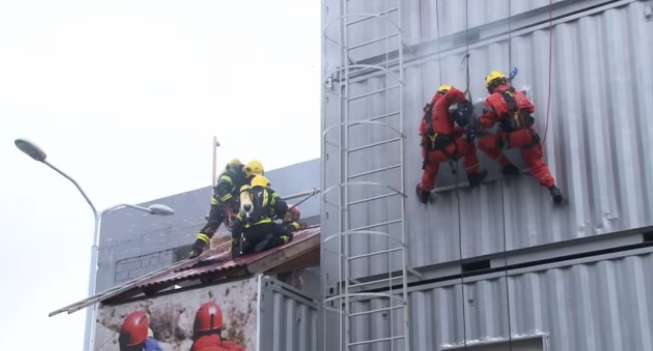
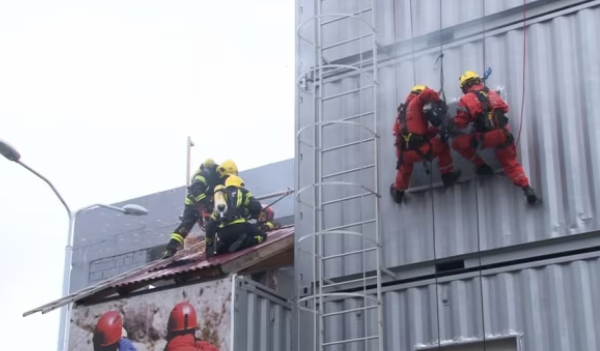
According to press releases and posts on social media, the focus is on training firefighters and rescuers from Serbia, students and pupils, volunteers and climbers.
According to the Center’s report for 2025, around 1.300 people have participated in these trainings.
The instructors, many of whom come from the Academy of the Russian Ministry of Civil Defense, have trained them in the prevention, response, and management of emergency situations.
Among the participants were mainly members of the Emergency Situations Sector of the Serbian Ministry of Internal Affairs.
The Center also trained firefighting units of the Serbian Oil Industry, which has been under US sanctions since January 2025 due to its predominantly Russian ownership.
Members of the Republican Civil Protection Administration of the Republika Srpska entity in Bosnia and Herzegovina also participated in the training.
“Due to the lack of transparency regarding activities and results, it is difficult to reliably assess the real size and contribution of the Center to civil protection,” Bjellosh assesses.
During 2025, the Center put into operation a new training range for firefighters and rescuers.
REL has not provided answers as to how much it cost and who paid for it.
The Serbian-Russian Humanitarian Center was visited by delegations from the Serbian Ministry of Internal Affairs and the Russian Ministry for Emergency Situations, led by senior Russian officials.
Over the past two years, members of the Center have also participated in training in Russia and Belarus.
Who is demanding answers about the Center’s work?
The European Union has also asked Serbia what the Serbian-Russian Humanitarian Center is doing.
In a response to REL, Brussels recalls that since 2023 it has requested that Serbia provide information on the activities of the Center in Niš.
“It is important to ensure that the Center’s activities are fully in line with the EU Civil Protection Mechanism, of which Serbia is a member, as well as with Serbia’s broader obligations in the framework of EU accession negotiations,” the institution’s response states.
Centers like the one in Niš, based on the intergovernmental agreement with Russia, do not exist in European Union member states.
While Serbia, as a member of the European Civil Protection Mechanism, has used EU assistance several times – for example during the coronavirus pandemic, or due to the devastating floods of May 2014.
The Serbian civil protection sector has so far received more than 250 million euros in aid from Brussels, according to data from the EU delegation in Serbia.
The European Union, in its response to the REL, emphasizes that it wants to count on Serbia as a reliable partner.
“As we have repeatedly stressed, relations with Russia and Vladimir Putin’s regime cannot be ‘business as usual’ while Russia wages an aggressive, unfounded and unjustified war on European soil in Ukraine,” according to the EU.
Despite calls from Brussels, Serbia has refused to impose sanctions against the Kremlin since February 2022.
Close relations between Belgrade and Moscow officials have not been interrupted.
Over the past few years, Russia’s demand that Belgrade grant diplomatic status to the staff of the Serbian-Russian Center has attracted particular attention.
It is a special status that brings certain privileges, such as freedom of movement not only in Serbia, but also in the region, as well as immunity in the event of committing any criminal offense on the territory of Serbia.
So far, the authorities in Serbia have not approved such a status for the Center, but have not provided an answer to REL about what is happening with that request.
Former Serbian diplomat, Sreqko Djukic, recalls that the West was categorically against the Center receiving diplomatic status, due to suspicions that its role goes beyond its humanitarian mandate.
“They think it’s an intelligence nest of the Russian Federation in the Balkans, a center of intelligence services. That’s how they treat it,” he tells Radio Free Europe.
These accusations have been denied over the years by both the Center and the authorities in Serbia.
The closure of the Center in Niš has also been requested by part of the opposition in Serbia, calling for the repeal of the intergovernmental agreement on the basis of which it was established.
Djukic does not see any willingness among the Serbian authorities for such a step.
“They are neither capable nor courageous to abolish it. The center does not hinder them, and may even serve as support, because the authorities’ ties with Russia deal with extremely sensitive issues, such as relations with Kosovo and the energy sector – oil and gas,” says Djukic.
He believes that the existence of the Center is also important for Moscow, especially at a time of confrontation with the West, following the invasion of Ukraine.
“For Russia, it is very important that the Center remains, from a political and security perspective. Because, by definition, the Center is part of the security sector, which is quite sensitive, flexible and can be used in different situations,” says Djukic.
Similar emergency centers exist in other countries with which Moscow has good political relations, such as some former Soviet republics.
Armenia is among the countries where Moscow has had a center for ten years, which cooperates with the one in Serbia. /REL/