
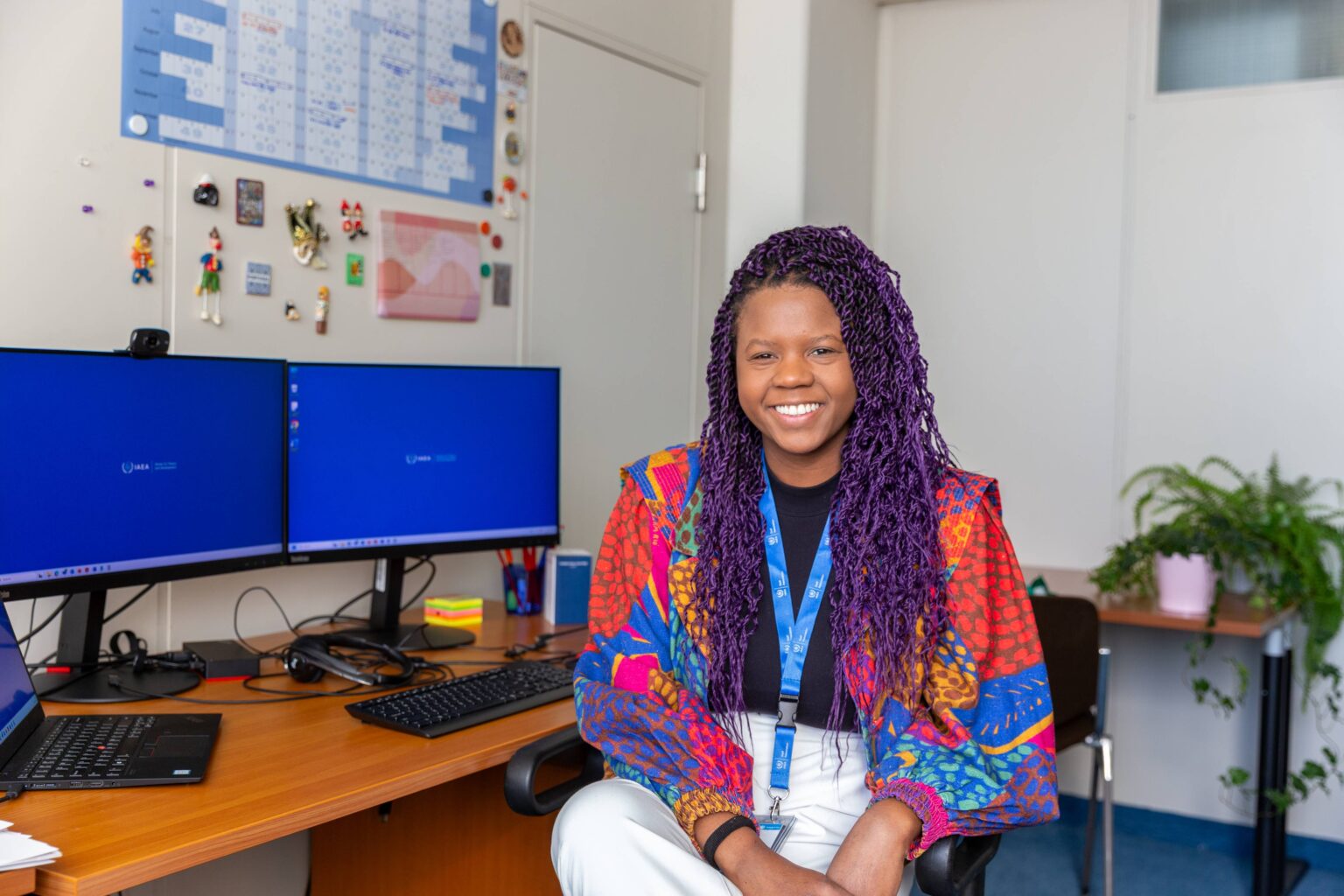
In 2016, she applied to study abroad in France, a country with one of the highest shares of nuclear in its electricity mix and the third-largest producer of nuclear power in the world with 57 operating reactors. There was only one obstacle, she did not speak French.
After months of self-study, she met the language requirements to pursue a master’s degree in mechanical systems engineering at the Institut National des Sciences Appliquées de Toulouse, one of the leading engineering universities in France.
Systems engineering, a methodology she felt had been missing from her earlier studies, gave her a broader view and understanding complex systems, their interfaces and lifecycle. It also helped her better understand issues around industrialization, commercialization, and long‑term deployment at an early project stage.
“I was fascinated by how nuclear engineering blends multiple disciplines, including physics, chemistry, geology, mathematics, biology, and even sociology and the humanities,” she reflects.
During her studies, she was offered a position as a nuclear engineer at Framatome, a French nuclear reactor company with over 65 years of experience designing, building, and maintaining nuclear power plants around the world.
From there on, she made the career transition to the IAEA.