
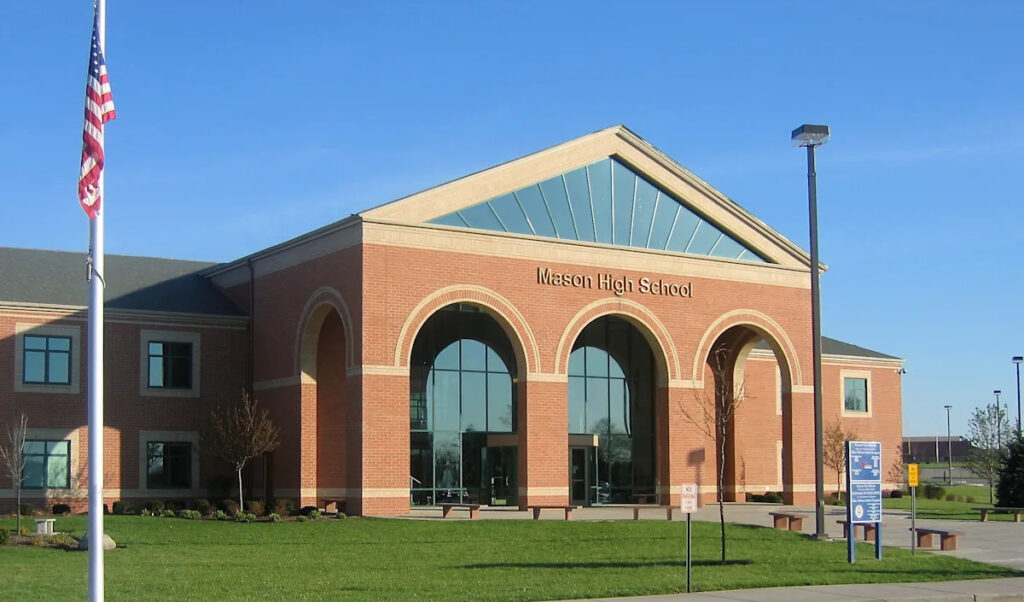
Questions linger for Mason High School students one week after a classmate was arrested for having dozens of sexually explicit images of minors.
In the days after the arrest, the district emailed families addressing the use of artificial intelligence to generate inappropriate content.
While law enforcement and school officials have yet to confirm how or whether AI was used in the high schooler’s images, a Mason junior who spoke with The Enquirer said she and other students are worried about becoming a target.
“For all we know, it could be a school photo or public record, (a) solo shot on a sports team,” the 17-year-old student, who asked to remain anonymous for her privacy, said. “With AI, you can generate anything with anything.”
The news rocking the Cincinnati-area district comes amid growing concern nationwide about deepfakes, which are photos, videos, or audio altered or created by AI that appear real, often without the person’s consent. The proliferation of generative AI tools has brought these illicit images and videos a few clicks away. And state laws have yet to catch up.
Mason parents who spoke with The Enquirer on the condition that their names be withheld said they had conversations with their children this week about the dangers of generative AI images. But parent intervention is a small part of a complex problem, they said, with concrete AI regulations not yet finalized among some school districts, like Mason City Schools.
Warren County’s largest district is still developing its AI policy ahead of the state’s July 1 deadline and in time for the 2026-27 school year, Mason’s public information officer Tracey Carson said.
“Recent events have reinforced the importance of clear expectations,” Carson said. “We are reviewing state and national guidance and model language (that) … recognize both authentic and AI-generated non-consensual intimate imagery as serious concerns that can harm students.”
The district does have policies for sexual harassment, bullying and student conduct, Carson said, and these could be put in motion for creating or distributing sexually explicit AI images of another student.
Like the schools, lawmakers are still catching up with new online threats.
Gap in state law leaves child deepfakes ‘murky’
A federal law passed in 2025 enables prosecutors to charge people who use AI to make sexually explicit images and post them online. The law specifically targets deepfake revenge pornography and requires social media platforms to remove the content within 48 hours notice from a victim.
However, Ohio laws, when children are involved, may not provide much relief.
State Sen. Louis Blessing III, R-Colerain Twp., said there are gaps in the law that make child pornography created with AI “murky.”
“It’s tragic and it’s horrifying, but to some degree it’s not surprising in this day and age with AI,” Blessing said of the teen’s recent arrest. “This isn’t the first and unfortunately won’t be the last incident like this.”
Last year, Blessing co-sponsored Senate Bill 163, which specifically tightens the law to restrict artificially generated sexual depictions of minors, among other things.
The bill has been sitting in legislative committee for over a year. Blessing says the holdup is because of a provision that would let victims sue the tech companies involved in generating the content.
The business community has expressed concerns with how regulations on AI could overburden them with lawsuits, but Blessing believes fighting for the provision in the bill is important to hold them accountable.
“They couldn’t do this without these tech tools. There has to be some kind of culpability involved,” Blessing said.
Students at Mason schools are demanding action, too.
“We need to see our community leaders and community representatives doing something about this,” the Mason junior said.
Police learned of Mason students’ images last fall
The Mason High student, 17, faces 51 counts of felony pandering sexually oriented matter of a minor. The Enquirer generally does not name minors charged with a crime.
An arrest report does not detail what kind of imagery was found. The report says the crime occurred in June 2025 and was later reported to police in October.
The teen is expected in Warren County Juvenile Court next on May 6. Court records show he has been placed on parent-monitored house arrest, still able to go to school as long as he’s transported by a parent.
In the meantime, some students say the ordeal has withered their sense of safety at school.
“Upon the initial shock,” the 17-year-olld Mason High School student said, “I felt like my experience as a student and my right to feel comfortable in my learning environment was taken away from me.”
This article originally appeared on Cincinnati Enquirer: Mason High concerned about AI deepfakes following classmate arrest