

Finland has signed a follow-on contract with the Republic of Korea’s Hanwha Aerospace for the procurement of 112 additional K9 self-propelled howitzers and associated spare parts, in a deal valued at approximately EUR 546 million. Deliveries are scheduled to begin from 2028, according to information released by the company.
The latest order significantly expands Finland’s K9 fleet, which was first introduced in 2017 through the acquisition of 48 units sourced from the Republic of Korea Army. With successive follow-on procurements, Finland’s total inventory is set to exceed 200 systems, placing it among the largest K9 operators within NATO.
The Finnish Army has already integrated the K9 into its core artillery structure, allowing the newly ordered systems to be absorbed without major organisational changes. Existing maintenance, logistics and training frameworks are expected to support the expansion.
Hanwha Aerospace did not disclose whether the newly ordered systems will be newly manufactured platforms or sourced from existing stocks. Finland’s initial K9 acquisition in 2017 consisted of former Republic of Korea Army vehicles. The configuration standard of the systems — including whether they will reflect baseline K9, K9A1 or a more advanced K9A2 configuration — was also not specified. No details were provided regarding industrial participation, local support arrangements, or potential offset agreements linked to the contract. Similarly, the scope of long-term maintenance, repair and overhaul (MRO) support remains undefined in the announcement.
The K9’s tracked configuration is a key factor in its suitability for Northern European operating environments. Unlike wheeled artillery systems, which can face mobility constraints in snow, mud and soft terrain, tracked platforms offer superior off-road performance and stability under harsh conditions. In Finland’s case, where extreme winter conditions and challenging terrain are a defining feature of military planning, many wheeled artillery alternatives are inherently disadvantaged. This operational reality significantly narrows the range of viable systems and helps explain the continued preference for a tracked solution such as the K9.
Türkiye, which operates the K9 platform under the locally produced Fırtına programme, has pursued further developments on the system, including work on hybrid propulsion concepts aimed at reducing fuel consumption and thermal signature. However, hybrid solutions introduce their own operational trade-offs. In extreme cold-weather environments such as those found in Northern Europe, battery performance can degrade significantly, potentially affecting system reliability and endurance. While hybrid propulsion concepts are being explored in Türkiye, controlled cold-weather testing environments do not fully replicate the sustained, system-level strain encountered in real-world Arctic conditions. In this context, conventional diesel-powered configurations — as used in baseline K9 systems — may offer a more robust and predictable solution for prolonged operations in sub-zero conditions.
The K9 is a 155mm/52-calibre tracked self-propelled howitzer designed to deliver high-volume indirect fire at ranges exceeding 40 kilometres, depending on ammunition type. The system has seen widespread adoption across Europe in recent years, particularly among NATO members seeking to rebuild artillery mass and readiness following Russia’s invasion of Ukraine. Beyond Europe, Egypt has also selected the K9 system and is expected to produce the platform locally under a technology transfer arrangement, further expanding the system’s global industrial footprint.
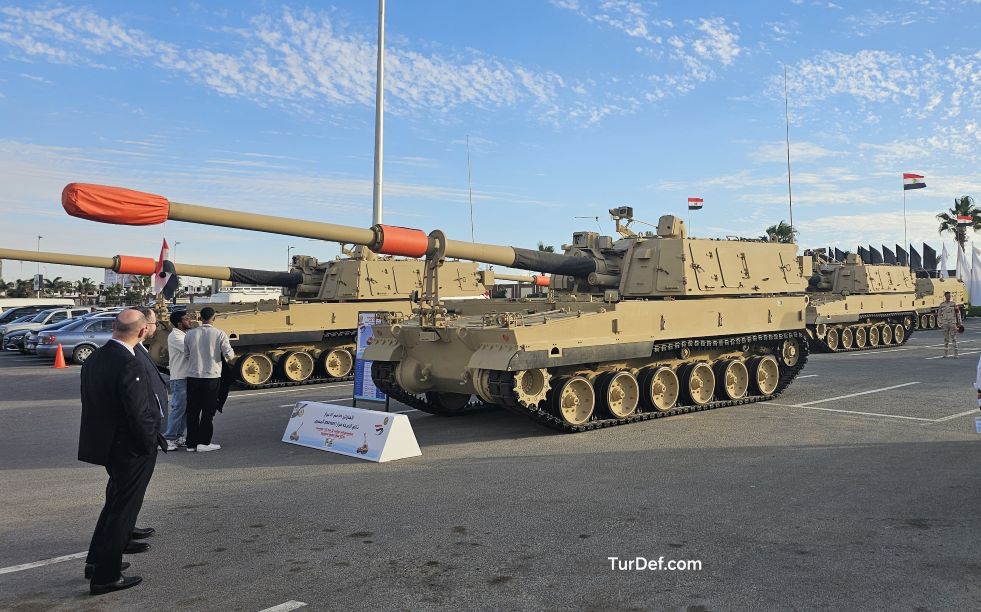
Finland’s continued procurement reflects sustained confidence in the platform after several years of operational use in northern conditions. However, the announcement does not clarify whether this order is intended to replace older systems, expand total force structure, or support the establishment of additional artillery units.
With this latest contract, Hanwha Aerospace further strengthens its position in the European artillery market, where the K9 has become a common solution among NATO countries. Beyond Finland, the system is currently in service with Türkiye, Poland, Norway, Estonia and Romania.