
Norwegian officials confirm that both Norway and the UK mounted “a coordinated military operation” in recent weeks to fend off three Russian submarines suspected of “hostile activity” in the North Sea and North Atlantic. They succeeded in getting the Russian subs to retreat.
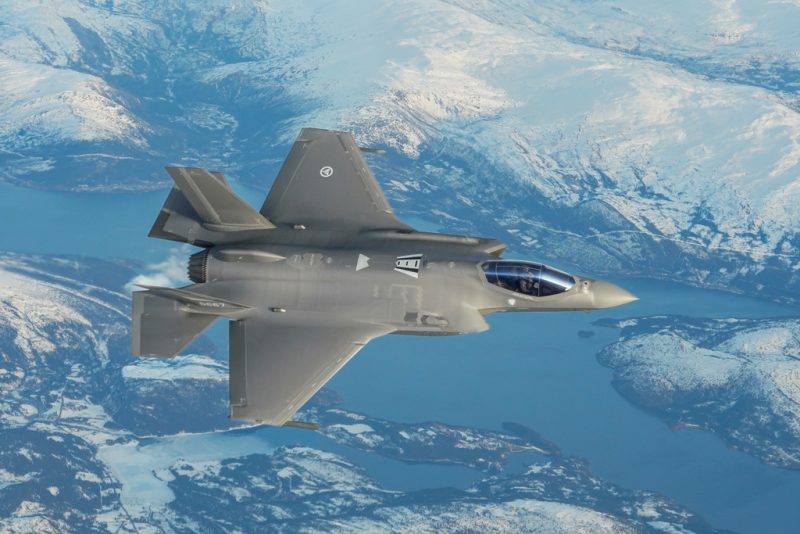 Norway is constantly patrolling its Arctic areas, like here during the recent NATO exercises Cold Response. Defense Minister Sandvik said the recent surveillance of Russian submarines involved the maritime patrol aircraft P8. PHOTO: Morten Hanche / Forsvaret
It’s the latest incident involving Russian military operations that are believed to be aimed at both gathering information about undersea cables and pipelines and potentially damaging them. Both the British- and Norwegian continental shelves are home to oil and gas pipelines and cables used for data transmission.
Norwegian Defense Minister Tore O Sandvik told news bureau NTB that “we have used maritime patrol aircraft and a frigate in the operation” to “clearly” let Russia know that “they can’t operate secretly in our waters.” Both Norway and the UK are convinced that deepwater submarines were dispatched by the Russian research and defense entity GUGI, which is based on Russia’s Kola peninsula not far from the Norwegian border.
“This is a reminder that Russia is developing its ability to chart and sabotage critical western infrastructure at great depths,” Sandvik said. Norwegian defense forces have long been known as “the eyes and ears of NATO” in the far north, and Sandvik is especially concerned with defending NATO’s Arctic areas. He thinks Russia’s recent operation is tied to its alleged ambitions to threaten Norway’s interests and those of other allies, not least the UK, with which Norway has a new and expanded bilateral defense agreement.
 Norwegian Defense Minister Tore O Sandvik (left) is shown here with his British counterpart John Healey in Norway last winter. PHOTO: Forsvarsdepartementet
British Defense Minister John Healey said at a press conference in the UK on Thursday afternoon that the frigate, aircraft and “hundreds” of military personnel had both a Russian attack sub and two other subs used for spying under surveillance for several weeks. All three vessels were picked up by Norwegian and British surveillance, prompting Healey to send what he called a message to Russian President Vladimir Putin: “We see you. We see your activity over our cables and our pipelines, and you should know that any attempt to damage them will not be tolerated and will have serious consequences.”
Healey said the attack sub soon left UK waters after it was monitored and returned to Russia, while the two GUGI vessels remained even though their operations were being watched. “We were able to track them, we dropped sonar buoys to demonstrate to them that we were monitoring every hour of their operation,” Healey said.
His Norwegian counterpart wasn’t quite as dramatic, but Sandvik said the major surveillance operation was mounted “to clearly let Russia know that they can’t operate covertly in our waters.” He said the operation was meant to both scare away the Russian subs and defend Norwegian and British infrastructure.
Sandvik repeated the standard Norwegian message to Russia that “Norway isn’t threatening anyone.” He added that Russia “is aware of our peaceful intentions, and no one has any interest in increased tensions in the northern areas.”
At the same time, Sandvik stressed that “we have let Russian authorities know on several occasions that any attempt to damage our critical undersea infrastructure will be revealed and will have consequences.”
Russian officials, meanwhile, used the Tass news agency to deny claims that their submarines were threatening underwater infrastructure. Nor, they claimed, were they “using aggressive rhetoric in this regard.”
For Norway, the incident occurred in the weeks leading up to the dubious anniversary of its invasion by Nazi Germany on the 9th of April, 1940. Oslo newspaper Dagsavisen editorialized on Friday that the country has “never been closer to war since,” given Russia’s invasion of Ukraine, its US ally’s recent attacks on Iran and high international tension.
What’s worse, Dagsavisen noted, is how “our ally the USA is no longer a stabilizing factor, but the most destructive power in the world.” Its use and threatened use of military power “has sunk to an unacceptable level,” claimed Dagsavisen, “and when the USA doesn’t care about international law, other nations’ integrity or innocent peoples’ lives, then we’re in a very dangerous situation where there no longer exists limits on the super-powers’ use of force.”
Closer allies like the UK have become more important than ever: “We must understand that the world order with the USA as our most important ally can be over,” wrote Dagsavisen. “We must seek closer defense cooperation in Europe and the Nordic areas.”
NewsinEnglish.no/Nina Berglund