

1 / 3
Show Caption +
Hide Caption –
Students, faculty, and allied attendees listen during a…
(Photo Credit: Saar, Raido, Photographer, Baltic Defence College)

2 / 3
Show Caption +
Hide Caption –
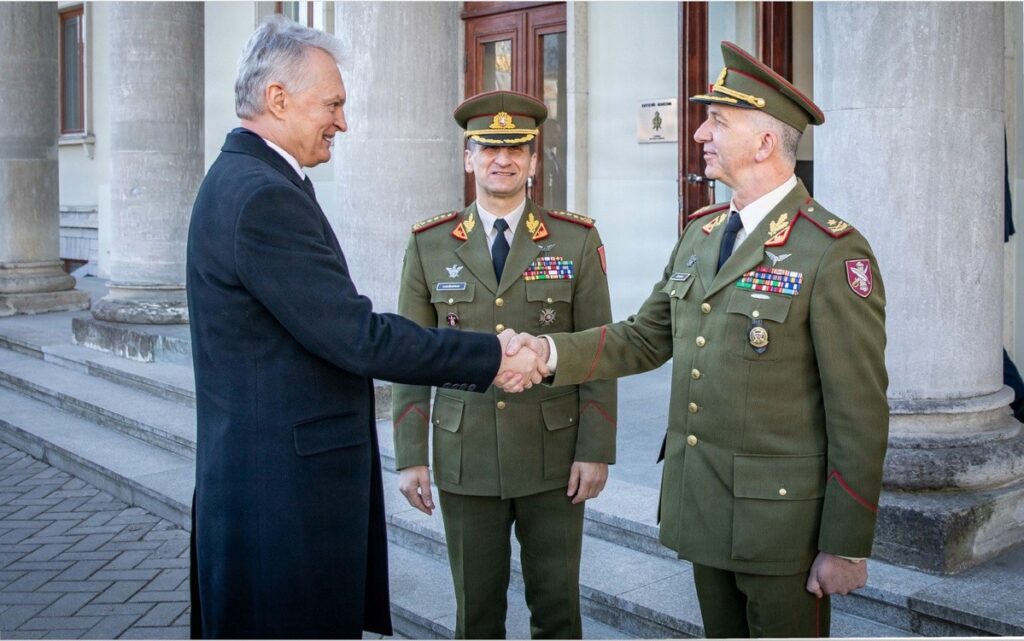
Gitanas Nausėda, President of the Republic of…
(Photo Credit: Saar, Raido, Photographer, Baltic Defence College)
3 / 3
Show Caption +
Hide Caption –
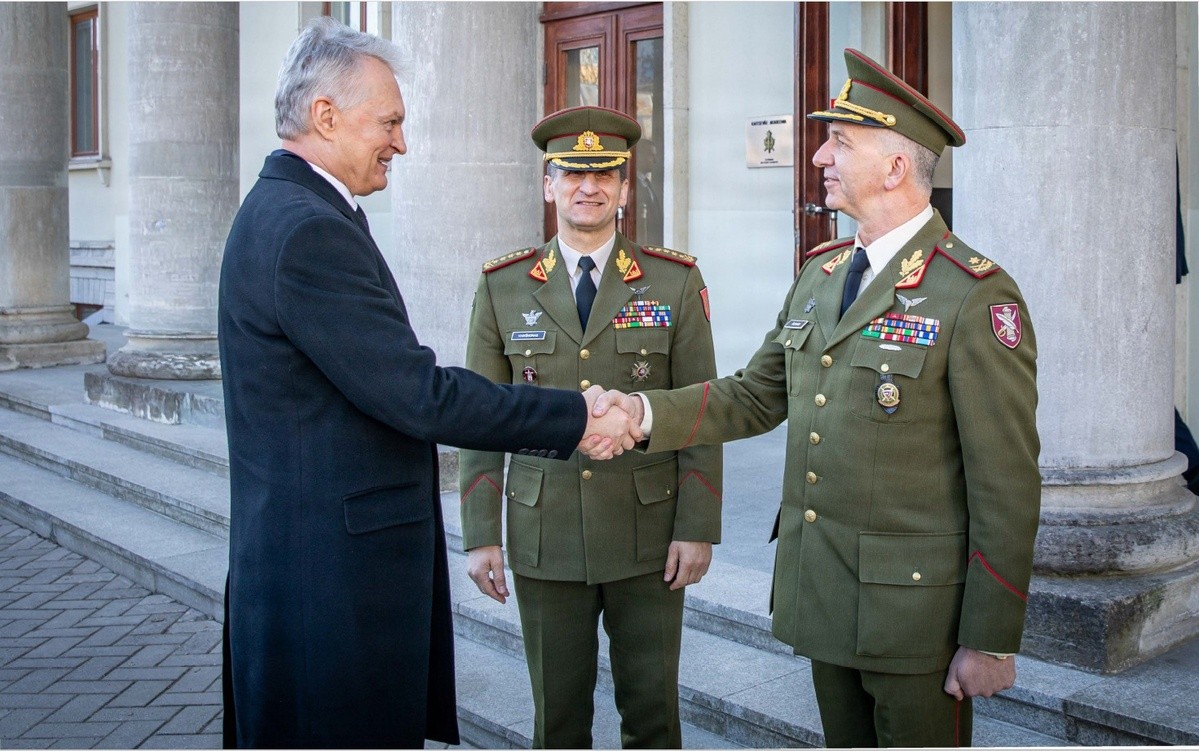
Gitanas Nausėda, President of the Republic of…
(Photo Credit: Saar, Raido, Photographer, Baltic Defence College)
TARTU, Estonia — Against the backdrop of NATO’s strengthening eastern flank, Lithuanian President Gitanas Nausėda visited the Baltic Defence College (BALTDEFCOL) on March 27, just 50 kilometers from the Russian border, to reinforce the critical nature of the U.S.-Lithuanian strategic partnership.
Speaking on bilateral relations, Nausėda emphasized Lithuania’s long-term view of the transatlantic relationship and its central role in national and regional security.
A Cornerstone of Transatlantic Security
“The transatlantic bond with our closest ally— the United States—remains central to the security and future of the Baltic states. We must maintain a productive, mutually beneficial relationship that will continue to strengthen our defense, cooperation, and national resilience. I believe this partnership can grow even stronger, not only in the military sphere but also in economic and energy cooperation.”
He highlighted energy diversification as a concrete example of transatlantic cooperation, noting that 70% of Lithuania’s liquefied natural gas imports are delivered through the Klaipėda LNG Terminal, sourced from the United States.
Discussing military cooperation, Nausėda underscored the deterrent value of rotational U.S. forces training in Pabradė, located in Lithuania, officially known as the General Silvestras Žukauskas Training Area.
Deterrence through Presence
“Looking ahead, military cooperation is crucial. The presence of U.S. battalions deployed at the Pabradė Training Area is one of Lithuania’s key deterrents, and we wish to keep American troops here for the foreseeable future.”
Nausėda also described his direct engagement with U.S. leadership, noting that he had personally spoken with U.S. President Donald Trump to express Lithuania’s readiness to provide host-nation support to American forces and to reaffirm the strategic partnership.
During the guest lecture, Nausėda framed the Baltic Defence College’s mission within the broader context of global competition, technological change, and economic security.
“The world is in fierce competition for technological supremacy, recognizing that technological superiority leads to geopolitical domination.
We also face challenges with economic security and critical supply chains, especially in the critical minerals sector.”
He emphasized that future challenges require intellectual flexibility beyond traditional doctrine and highlighted the college’s role in developing operational‑and strategic‑level thinking.
Nausėda encouraged students to embrace three priorities during their time at the Baltic Defence College:
- “Do not be afraid to challenge conventional wisdom and accepted solutions; the battlefield of tomorrow requires innovative thinkers.
- National power is whole-of-society power—a combination of military, diplomatic, economic, and societal resilience tools.
- The relationships you form here with fellow students will become the backbone of future collaboration; networking remains essential and opens many doors.”
He concluded by recognizing the yearlong commitment made by students and nations alike.
“This intensive, rewarding academic journey is a significant investment in your personal growth and in the future readiness of your armed forces.”
Shaping the Next Generation of Leaders
U.S. students at the Baltic Defence College reflected on how the college’s multinational environment builds practical skills for modern operations.
“I spend my days here working through operational problems with colleagues while integrating different doctrines, planning cultures, and national perspectives, ” said Maj. Scott Guthrie, U.S. Air Force Medical Corps. “It has been a year of learning how to think and communicate in a joint, multinational environment, and it has been a fantastic opportunity to forge lasting friendships with our NATO allies.”
Maj. David Thompson, U.S. Army, emphasized the regional insight gained through engagements with senior leaders.
“The fall study trip to Riga, Vilnius, and Tallinn, which included discussions with ministers, chiefs of defence, and members of parliament, offered unique insight into the region’s strategic priorities. Most importantly, the relationships built here will mature into enduring partnerships that strengthen NATO and U.S.–European relations.”
United States Army Security Assistance Training Management Organization (SATMO) Commander Col. Thomas H. Melton emphasized the strategic importance of professional military education and the U.S. commitment to allied development.
“I see firsthand how professional military education and security assistance training strengthen alliances, and the Baltic Defence College is a clear example of that impact. Through SATMO support, the United States helps ensure Allied officers develop the strategic thinking and multinational perspective required for modern operations.”
From a senior-level strategic education perspective, the Baltic Defence College also offers a unique opportunity for officers to study, teach, and engage directly with allies while immersed in the security dynamics of NATO’s eastern flank.
The Baltic Defence College currently includes two full‑time U.S. Army instructors provided by the SATMO, three U.S. students, and one U.S. Army War College Fellow, reflecting sustained U.S. institutional support for professional military education in the region.
—————————————————————————————————————Lt. Col. Jeffery M. Fritz is currently assigned to United States Army, Security Assistance Training Management Organization (SATMO); Instructor, Baltic Defence College