
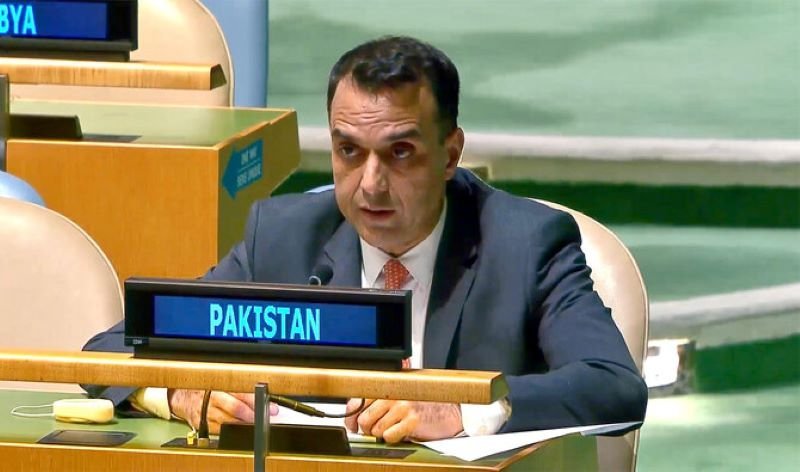
New York (TDI): Pakistan has urged Kosovo and Serbia to build mutual trust and strengthen dialogue in order to achieve lasting peace and stability in the Balkan region.
Speaking at a UN Security Council debate on the UN mission in Kosovo, Pakistan’s Deputy Permanent Representative, Usman Jadoon, said the situation in the region remains complex and sensitive, requiring careful handling to prevent tensions from escalating.
He emphasized that both sides must avoid divisive rhetoric, hate speech, and actions that could inflame inter-communal tensions. Instead, he called for sustained and meaningful engagement, along with full implementation of existing agreements between the parties.
Pakistan reiterated its support for the European Union’s efforts to facilitate dialogue between Belgrade and Pristina, expressing hope that both sides would continue to build on progress and avoid unilateral steps that could undermine stability.
The envoy stressed that the Balkans have experienced enough conflict in the past and must now choose a different path focused on reconciliation, mutual respect, and peaceful coexistence.
Read More: Pakistan Calls for Continued Dialogue Between Kosovo and Serbia
Kosovo declared independence from Serbia in 2008, but Serbia has not recognized it. The European Union has been mediating talks between the two sides to address ongoing political and administrative disputes.
UN officials also briefed the Security Council on the situation in Kosovo, noting that while recent elections saw broad participation, political progress remains fragile and incomplete. They highlighted ongoing challenges such as administrative gaps, language barriers, and delays in forming key institutions.
Read More: Uzbekistan Key to Central Asia’s Stability, Development: Ex-Serbian President
Despite financial constraints facing the UN mission, officials stressed that continued engagement is essential to maintain dialogue and support community-level cooperation.
Overall, the discussion underscored that trust-building between communities and institutions remains central to achieving long-term peace in the region.
