
Americans heading to Europe starting today are urged to bring paper documents, such as print-outs of their previous visits to the Schengen Area, to avoid the same experience as a British traveler, who was mistakenly banned from traveling again to any Schengen country for another 180 days.
Michelle O’Gorman, a UK passport holder, wrote to Gill Charlton of The Telegraph, asking for advice about her travel experience in Portugal, one of the Schengen countries in Europe. O’Gorman narrated that a border control officer mistakenly tagged her as an “overstayer” for exceeding 90 days in Portugal.
The European Entry/Exit System (EES) is an automated IT system for registering non-EU nationals who travel for short stays in the 29 Schengen countries. It registers the traveler’s biometrics, such as face scans and fingerprints, and is valid for three years.
Americans Advised To Bring Print-Outs Of Their European Visits To Avoid Airport Mistakes
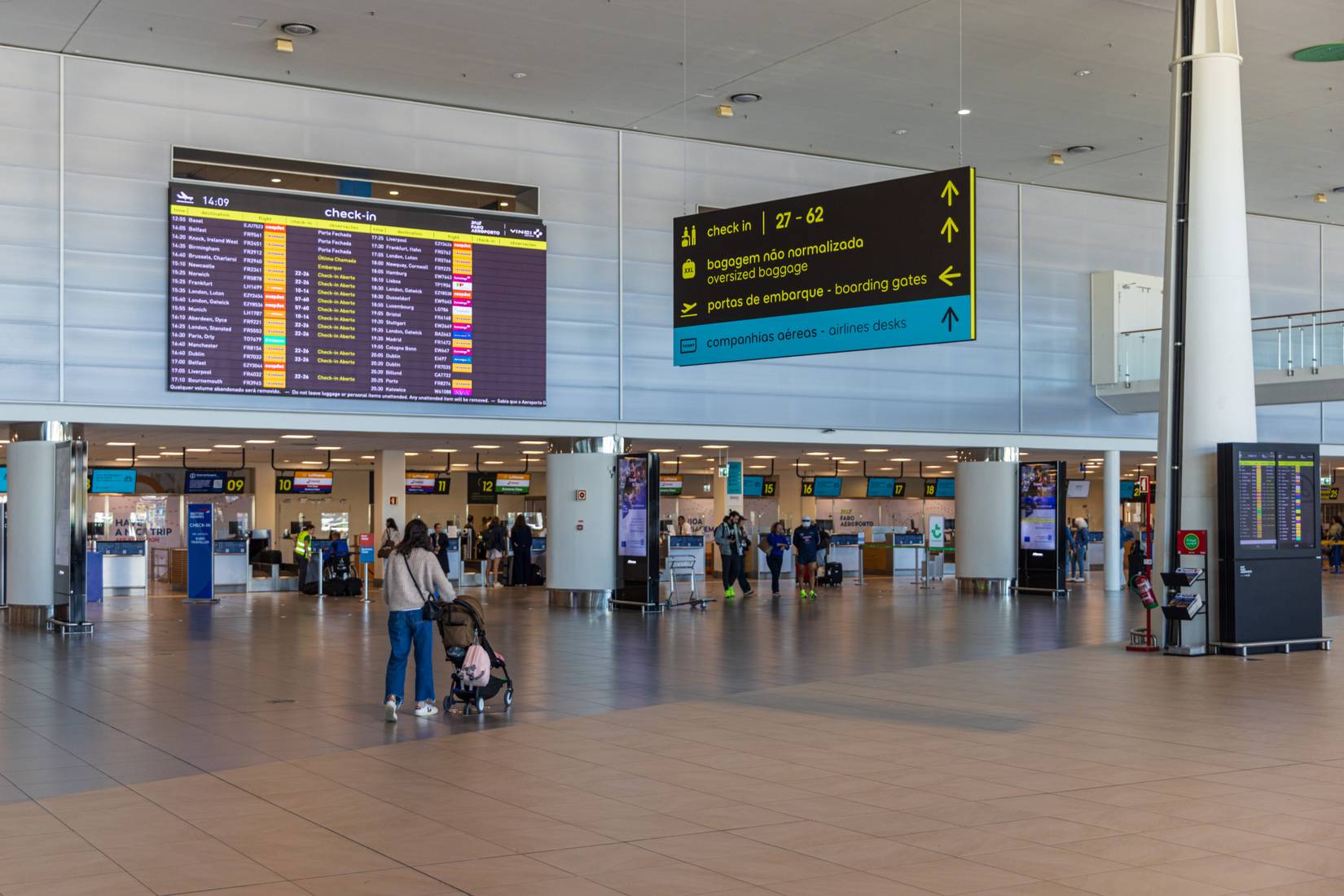
Departure Terminal of Faro International Airport FAO in Portugal.Credit: Shutterstock
Michelle O’Gorman stayed only 61 days in Portugal. She exited through Faro International Airport on March 28 and submitted her biometric data for Europe’s new EES. However, the border control officer told her she had exceeded the 90-day maximum stay in Portugal, despite her passport’s entry and exit stamps during her previous visits.
The new EES was introduced in October 2025 for all non-EU nationals, including Americans and Canadians. The digital tracking system was fully rolled out on April 10, and American travelers have been warned of possible hours-long airport delays in the Schengen Area.
O’Gorman said she wasn’t given anything in writing about her alleged “overstay” in Portugal, so she wrote to Gill Charlton in an attempt to overturn the decision. Charlton then reached out to the Portuguese consulate in London with O’Gorman’s passport stamps, who also asked to send O’Gorman’s scanned copy to the Public Security Police and the Agency for Integration, Migration and Asylum.
According to Charlton, the Border Security Police in Lisbon, Portugal, immediately returned her email with a list of O’Gorman’s entry and exit activities in Portugal, totaling 61 days, and confirmed she was now free to travel to Europe.
Due to the error in the system, Charlton strongly advised non-EU travelers to bring paper documents, such as printed records of their past stays in Europe generated by the short-stay calculator, to avoid being wrongly tagged in the new EES.
“It appears that mistakes do happen, even following the introduction of the new digital EES, which replaces passport stamps. Until glitches in the system are resolved, I would advise frequent travelers to keep a print-out of previous visits recorded on the EU’s “short-stay calculator,” Charlton wrote.
O’Gorman’s case may have been overturned immediately, but as Charlton advised, errors happen with the newly rolled out EES, so it’s important to be ahead of the risk of more delays at the border checkpoint.
American travelers can find out more about the Entry/Exit System by visiting the EU’s EES website. The “short-stay calculator” also provides information on whether a traveler’s next EU visit complies with the 90/180 rule.
Michelle O’Gorman’s experience in Portugal highlighted a growing concern over potentially costly errors in the new EES. Americans and Canadians who traveled to Europe’s popular ski and snowbird destinations have recently faced three-hour airport lines upon arrival due to the new system.
Travelers Brace For Hours-Long Airport Delays At European Destinations
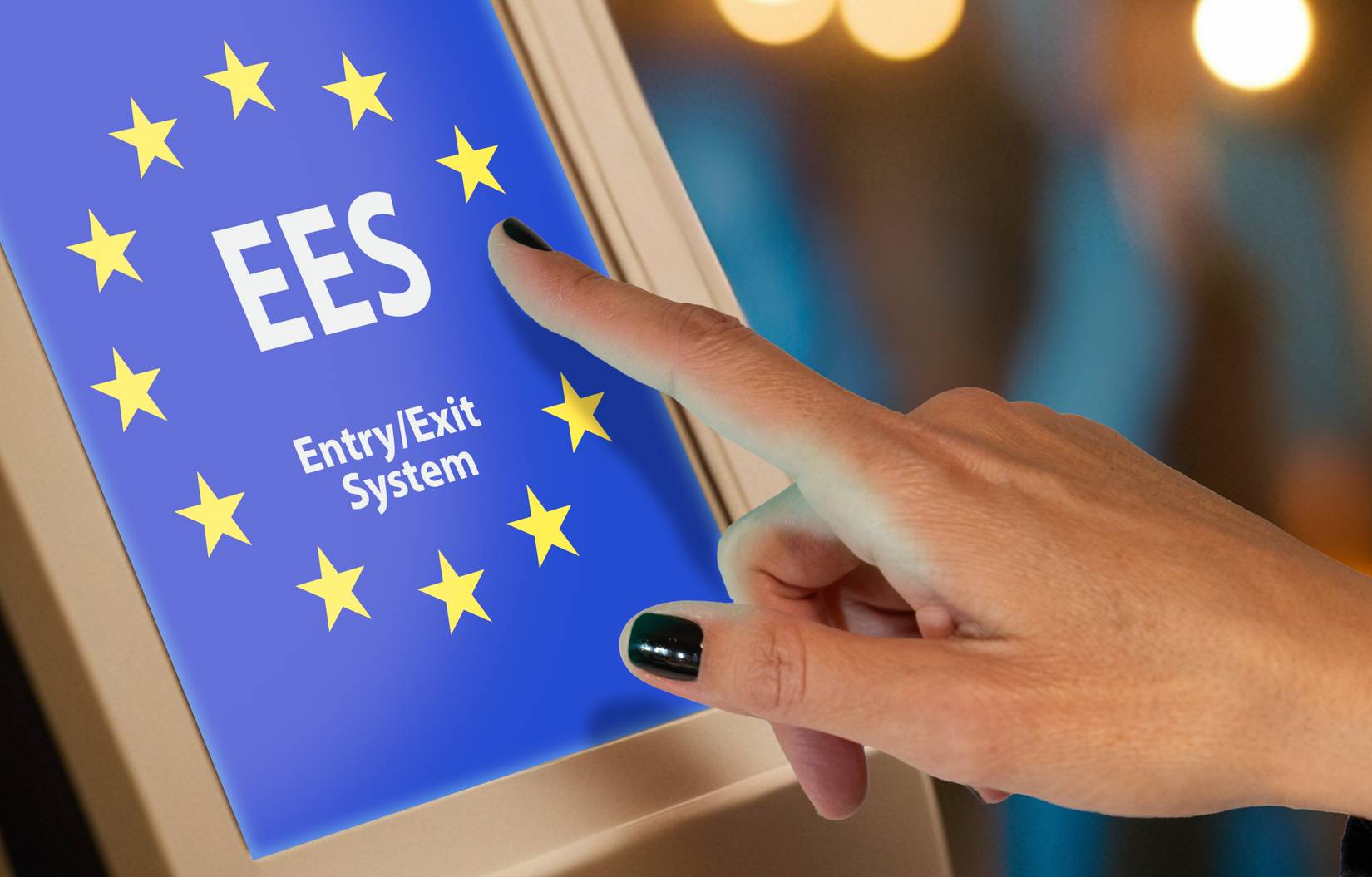
A woman using an automated self-service kiosk, activating the Entry/Exit System (EES) at the European Union border control.Credit: Shutterstock
When the EU’s EES was rolled out in October 2025, travelers, including Americans and Canadians, were warned about the long airport lines that the new border rules may cause (especially since it was in time for the holiday season).
Now that it is fully operational, many travel experts fear that European airports might be more chaotic with long lines amid the new border checkpoint.
There have been reported inefficiencies of the EES, including Michelle O’Gorman’s case, who regularly visits Portugal. In December 2025, Airports Council International (ACI Europe) urged the European authorities to review the EES, as airports and travelers grapple with operational issues that caused major delays in security checkpoints.
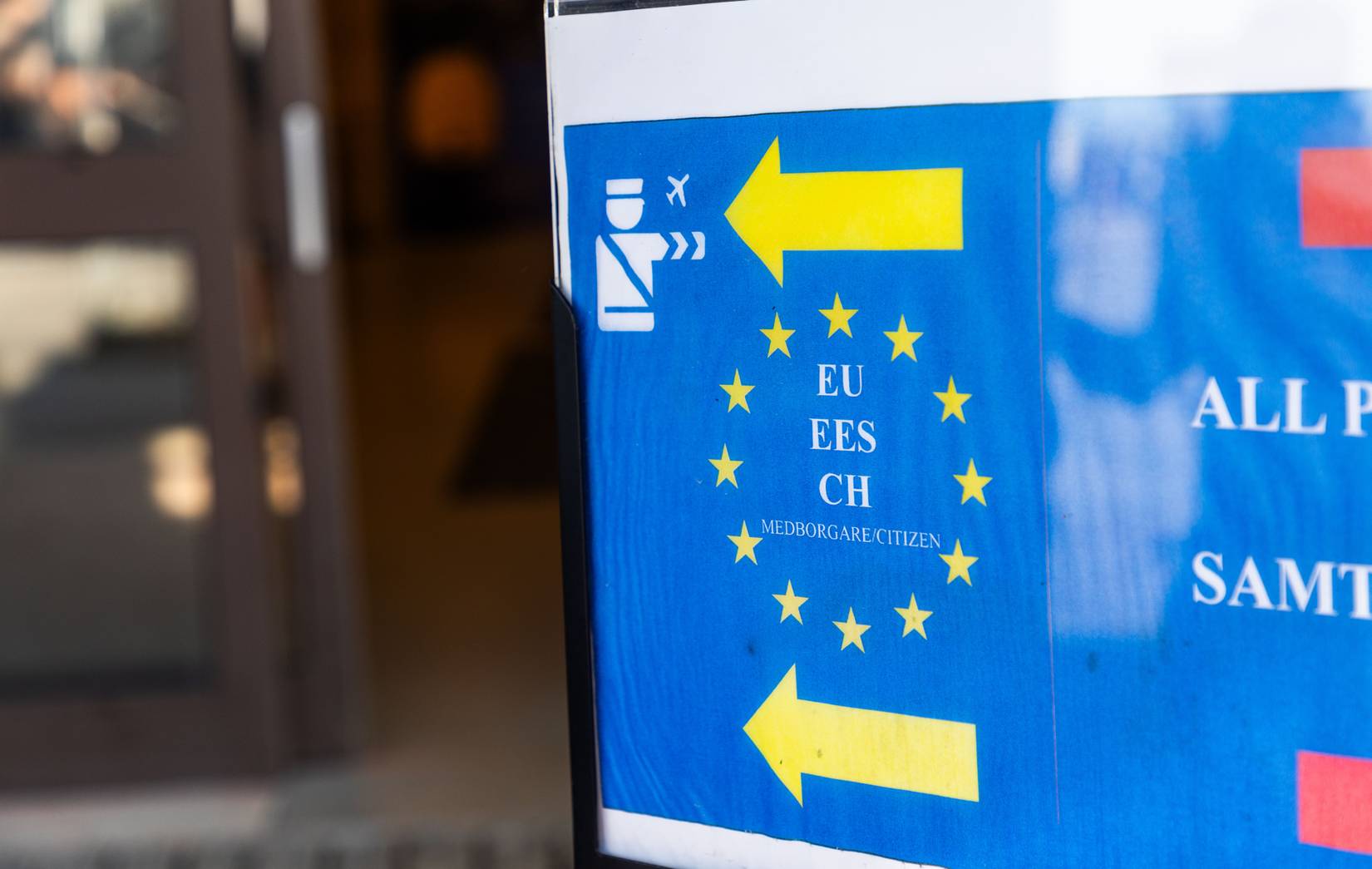
Airport symbols and passport control in Örebro Airport, SwedenCredit: Shutterstock
According to Olivier Jankovec, Director General of ACI Europe, the implementation of the Entry-Exit System has caused border control processing times to rise by up to 70%, with peak-period waits increasing to three hours.
Ourania Georgoutsakou and Thomas Reynaert, top officials of Airlines for Europe (A4E) and International Air Transport Association (IATA), respectively, joined Jankovec in February 2026 in appealing to Internal Affairs and Migration to immediately review the EES ahead of peak summer months.
In a joint statement, the top travel officials said that the inconvenience and serious delays at airports “must come to an end,” and they need to be realistic with what’s expected to happen, especially in the summer months.
“There is a complete disconnect between the perception of the EU institutions that EES is working well, and the reality, which is that non-EU travelers are experiencing massive delays and inconvenience. The rollout of EES must be flexible to react to operational realities,” their statement read.
They added that reliability and flexibility are an “absolute prerequisite” for the EES’ success, and to safeguard the reputation of the EU “as an efficient, welcoming, and desirable destination.
European Airports Called For EES Suspension
Just in February, several airports called for the suspension of new EES, which may allow travelers, including Americans, to escape the hours-long airport lines, especially in the summer. Aéroports de Paris (ADP), which manages Paris-Orly (ORY) and Charles-de-Gaulle (CDG) airports in Paris, the French capital, requested to suspend the EES from June to August, during the peak summer season.
Euro News reported in January about the suspension of the EES at Humberto Delgado Airport in Lisbon, Portugal, for three months due to “serious deficiencies” in border security control after the European Commission found that wait times reached seven hours long.
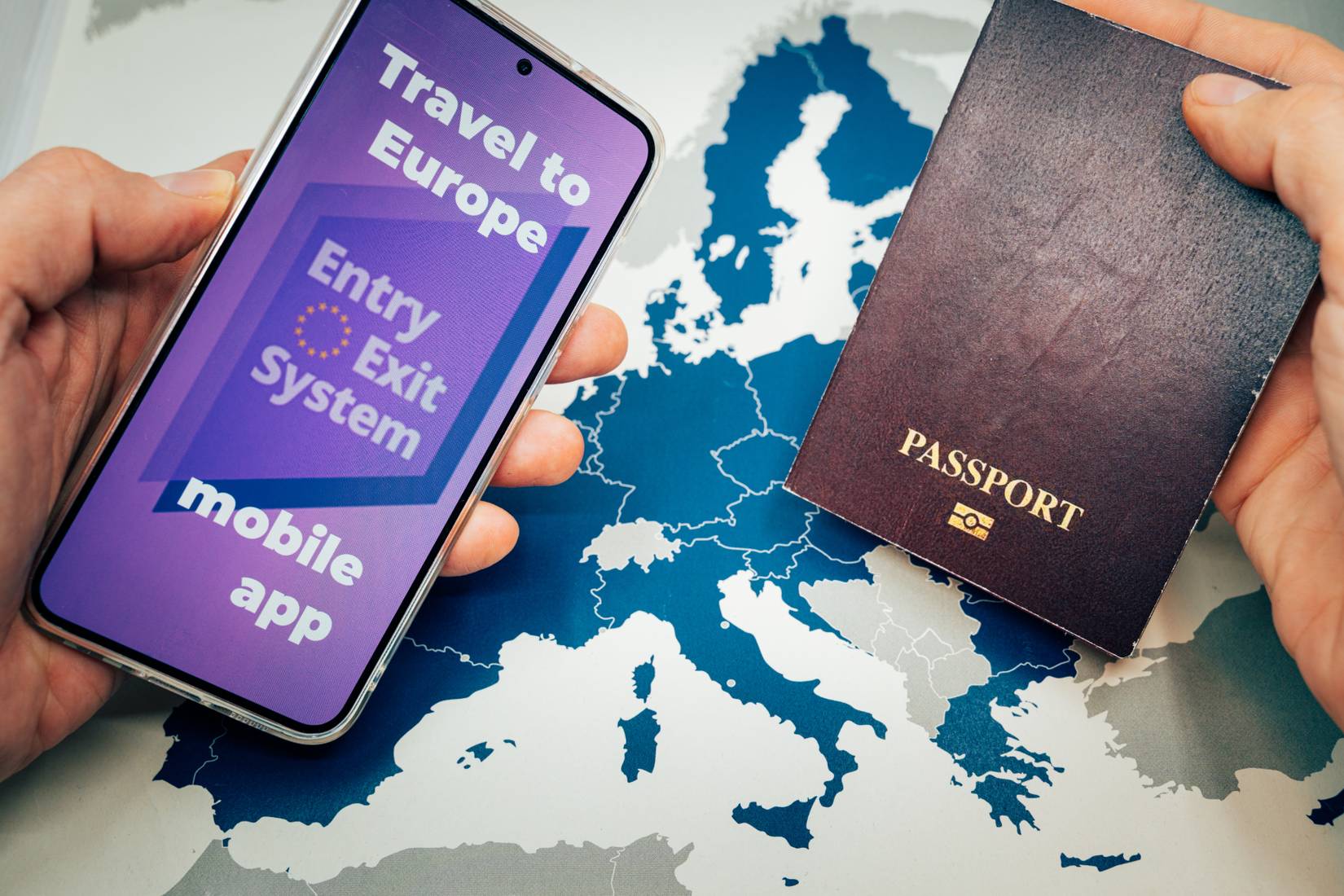
Hands placing a passport and a smartphone with the Entry Exit System (EES) mobile app on a map of Europe, a new requirement for non-EU travelers entering the Schengen Area starting in 2025Credit: Shutterstock
Markus Lammert, spokesperson for the European Commission, told The Local in February that after the full deployment of the new Entry/Exit System, the member states can “partially suspend EES operations where necessary during a period of an additional 90 days with a possible 60-day extension to cover the summer peak.”
This allows the participating countries to manage possible long airport lines as soon as the summer months kick in.
What Is The Entry/Exit System And What It Means For American Travelers
The Entry/Exit System, Europe’s new border control, was rolled out on October 12, 2025, for third-country nationals entering the 29 Schengen Area, including four of the non-European Union member states: Iceland, Norway, Switzerland, and Liechtenstein.
These third-country nationals, including Americans and Canadians, will have to go through the new digital tracking system, which collects their personal records, such as fingerprints, facial scans, passport details, and entry and exit dates. The new EES replaces passport stamps and is valid (or stored) in the system for three years.
Progressive Implementation Start Date:
October 12, 2025
End Date:
April 9, 2026
Full Operation Start Date:
April 10, 2026
This might be a major overhaul for Americans traveling to Europe, or to the Schengen Area, but there are no extra fees that travelers should worry about.
Schiphol Airport, Amsterdam, The NetherlandsCredit: Shutterstock
The new border rules allow future entries to the Schengen countries to be processed more quickly without repeating the same information at each visit. No advanced action is required for American travelers, but they should expect longer processing times upon arrival when they enter Europe for the first time under the new digital tracking system.
Entry/Exit System’s Potential Questions At Airports’ Border Security In The Schengen Area
At ports of entry in the Schengen Area, the passport control officers will scan the travelers’ facial image and fingerprints, but there are also self-service kiosks at airports or at any border crossing point to do it, or through the EES mobile app when available in the country of destination.
Using the self-service kiosk, the system will ask travelers to place their passports at the reader for scanning, take their facial image, and their fingerprints. Possible questions or required documents (at the kiosk) are the following:
- Proof of accommodation (like hotel bookings)
- A return ticket
- Sufficient funds (cash or credit cards)
- Medical insurance
After answering all the questions at the kiosk, travelers will be asked to show their travel documents at the border crossing point.
The European Union’s Entry/Exit System may be an added layer of complexity for Americans and other third-country nationals entering Europe, but as a way to modernize the borders, the process delays for first-timers under the new system could rise significantly. So it’s important to prepare print-outs and add extra time to avoid disruptions at European airports.