

April 11, 2026
By Nehal Malik
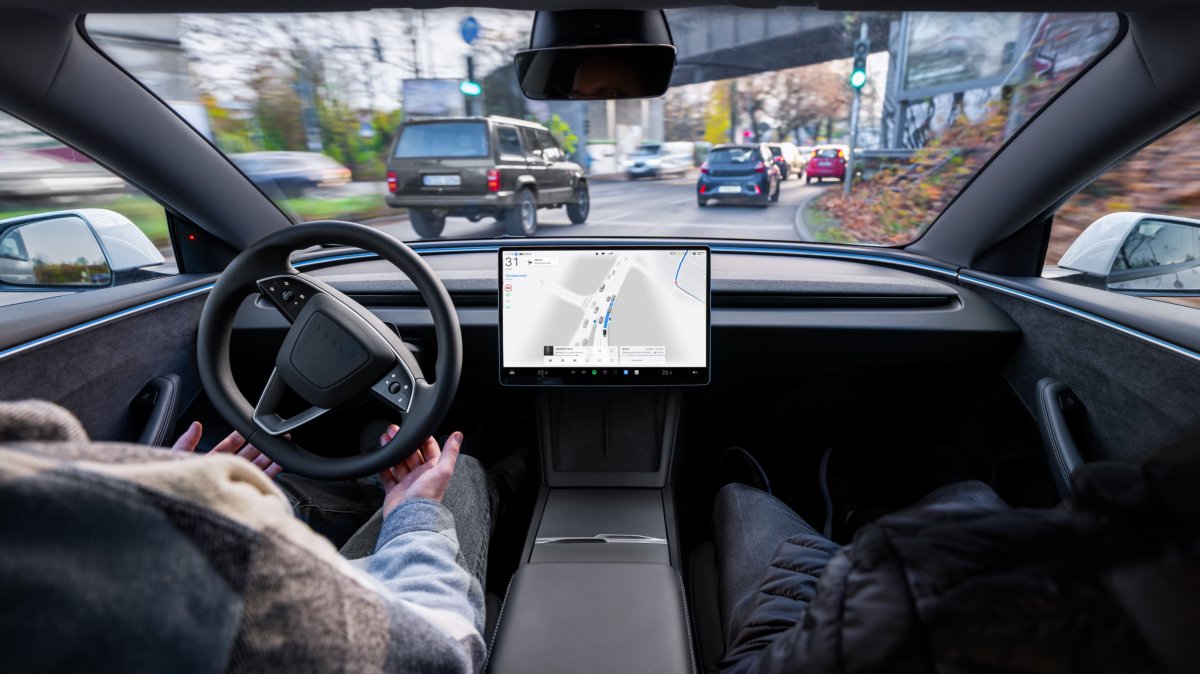
Tesla is wasting no time bringing its advanced driver-assistance tech to the European continent. Just one day after official approval was announced by the Dutch Vehicle Authority (RDW), Full Self-Driving (Supervised) has officially begun rolling out to Tesla owners in the Netherlands.
The update, arriving as part of software version 2026.3.6, is currently hitting a select group of early public testers. For now, the release appears limited to vehicles equipped with Tesla’s latest AI4 (Hardware 4) computer. This monumental launch represents the first time true FSD has been legally allowed to operate on public roads within the European Union, breaking through years of strict regulatory red tape.
Last updated: Apr 10, 3:04 pm UTC
The First Domino Falls in Europe
For a long time, European Tesla owners were stuck with a watered-down version of Autopilot due to United Nations Economic Commission for Europe (UNECE) rules. By securing approval in the Netherlands, Tesla has proved its vision-based system can meet the rigorous safety standards of the EU. This is widely expected to trigger a domino effect across the bloc as other countries look to the Dutch RDW’s lead.
De toekomst van mobiliteit is aangebroken
FSD Supervised has been approved in the Netherlands 🇳🇱 & will begin rolling out in the country shortly!
Trained on billions of kilometers of real-world driving data, it can drive you almost anywhere under your supervision – from… pic.twitter.com/M5Vv02YHUE
— Tesla Europe, Middle East & Africa (@teslaeurope) April 10, 2026
The release notes for the Dutch rollout emphasize that FSD can now “drive your Tesla almost anywhere. It will start from a parked position, make lane changes, select forks to follow your navigation route, navigate around other vehicles and objects, make left and right turns, and stop at your destination.” While FSD v14.3 is the latest version in North America, it’s currently unclear which iteration is making its way to the Netherlands. Tesla might start its Dutch fleet off with a slightly older branch, perhaps v14.2, that had already been tailored for the European market and was used during the local validation and testing phase.
Unique Requirements for Dutch Drivers
Because of the strict local laws, the European experience includes several unique UI features and safety indicators not seen in other regions. One of the most significant hurdles for new users is a mandatory educational component. The release notes state: “To use the feature, first watch the tutorial and take the quiz, available in the new Self-Driving App or in Control > Self-Driving.”
Tesla is clearly being cautious with this expansion, reminding drivers that the system “does not make your vehicle autonomous. Do not become complacent.” By requiring a quiz, the company ensures that users understand the “Supervised” nature of the software, stressing that they must remain fully attentive and ready to take over at any moment.
A New Era for Global Expansion
The arrival of FSD in the Netherlands is a massive win for Tesla’s global roadmap. While North American owners have been testing the end-to-end neural networks for years, the European environment presents unique challenges — like tight city streets and complex roundabouts — that will provide Tesla with invaluable new training data.
As the rollout expands beyond the initial wave of AI4 testers, we expect to see the software eventually reach older HW3 vehicles as well, likely with an older or cut-down version of the architecture. For now, Dutch drivers are at the forefront of the future of mobility in Europe. Tesla’s aggressive speed in moving from approval to rollout shows just how ready the company is to blanket the rest of the continent with its autonomy suite.
April 11, 2026
By Nehal Malik
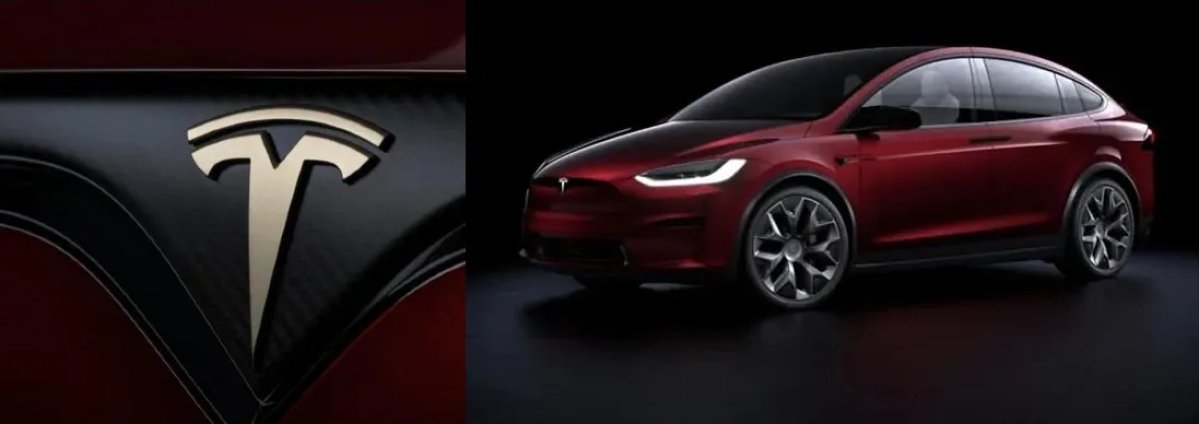
Tesla is giving its original flagship duo a legendary send-off. After closing custom orders for the Model S and Model X at the end of March, the automaker is now inviting a select group of fans to purchase an ultra-limited “Signature Edition” run of the Plaid siblings.
According to IGN Senior Executive Editor Ryan McCaffrey, who broke the news on X, Tesla is producing just 250 units of the Model S Plaid and 100 units of the Model X Plaid (exclusively in the six-seat configuration) for this final series. The release is invite-only, meaning if you didn’t receive the specific email from Tesla, you likely won’t be able to get your hands on one.
A Premium Look for a Final Farewell
These Signature Edition units are designed to be immediate collector’s items, featuring aesthetic upgrades that aren’t available on any other Tesla. The exterior is finished in a new “Garnet Red” paint, accented by gold Tesla “T” badges on the front and a gold Plaid badge on the rear.
The interior is equally bespoke, featuring a white theme with Alcantara accents, gold piping, and a gold Plaid seat badge. To cement their status, each car will include signature-marked door sills and a dash badging plate with a unique numbering sequence (e.g., 1/250). Other unique touches include gold Plaid puddle lights, a special interior lighting sequence, and a Signature Edition key fob.
While the Model S version comes with carbon ceramic brakes and gold calipers, the Model X version keeps the regular red Plaid calipers but sits on massive 22-inch Machina wheels. Both vehicles include the “Luxe Package,” which bundles together Full Self-Driving (Supervised), Free Supercharging, four years of Premium Service, and Free Premium Connectivity for the life of the vehicle.
The Price of a Legend
Ownership of these final units comes with a heavy price tag. The order page for the Model X Signature Edition shows an estimated purchase price of $160,810 (including destination fees). This represents a massive jump from the current inventory pricing, where a standard Model X Plaid sits at $129,990 following a recent $15,000 price hike.
Tesla’s U.S. inventory has essentially been cleared of brand-new Model X units, leaving only a few demo cars behind. For those who want the absolute pinnacle of what these era-defining cars can offer before the discontinuation is complete, the $30,000 premium is the cost of admission.
A Sunset Celebration in May
To mark the end of this 14-year manufacturing journey, Tesla is planning a formal celebration event in May. Musk originally teased this “last call” event when orders closed, and McCaffrey noted it will fittingly take place at sunset. While the exact date and location haven’t been shared yet, we expect it to be a sentimental look back at the cars that proved electric vehicles could be both luxury status symbols and performance monsters.
As Tesla prepares to pivot its Fremont production lines to the Optimus humanoid robot and upcoming mass-market projects, the Model S and X will leave a massive hole in the high-end market. For the 350 people who manage to secure a Signature Edition, they’ll be driving the final exclamation point on the era that started it all.
April 11, 2026
By Karan Singh
“How much does it cost to charge a Tesla?” is one of the most common questions from prospective buyers. Answering it usually involves comparing a complete zero to 100 percent battery charge to filling a gas tank from empty to full. However, to determine the true cost, several regional and technical factors must be taken into account.
We’ll break that down into an easy-to-understand guide that shows exactly what it costs to charge your current or future EV and how it compares to a gas vehicle.
Regional Fuel Factors
Before doing any math, we need to consider the cost of fuel or electricity, which varies widely from region to region. For example, in North America, the average residential electricity rate sits around 12 to 18 cents per kilowatt-hour (kWh), while regular gasoline is currently at $4.00 to $4.40 at the time of writing. Even within the United States, those numbers can vary drastically. States like California pay premium rates for electricity and gasoline, while states like Washington pay significantly less for both.
In Europe, the landscape is very different. The average electricity price is roughly €0.29/kWh, and gasoline is significantly more expensive at roughly €1.61 per liter, which is equivalent to over $6.00 per gallon.
These prices can also vary immensely based on Time-of-Use, EV Charging Incentives, and other electricity rate plans that can bring your costs down to a static $40 a month in Texas, or to 5 cents in some states or Canadian provinces at ultra-low overnight rates.
Drawing the Comparison
To make a truly fair comparison, we need to evaluate similar vehicles so that the relative efficiency is grounded in reality. We also need to determine the cost based on a standard driving distance, such as a 300-mile road trip, or a per-mile rate, since battery pack capacities and physical fuel tanks vary widely in size.
The Tesla Model Y is currently the best-selling vehicle in the world, so let us use the Long Range variant to determine the baseline cost.
The Cost to Charge – Commuting
The Model Y Long Range features an approximately 80kWh battery. Most owners will do the vast majority of their charging overnight at home. The average individual in the United States drives roughly 40 miles per day. At the Model Y’s average efficiency, that daily commute requires about 10kWh of energy.
Using the North American average of 15 cents/kWh, replenishing that daily commute at home costs just $1.50 per day. Over a standard 30-day month, your entire commuting fuel bill sits at an incredibly low $45.00.
If you’re using overnight rates, that drops down even further to approximately $0.80 per day, with an average monthly cost of just $24.00.
Charging Scenario (Model Y)
Daily Energy Required
Cost per kWh
Daily Cost
Monthly Cost (30 Days)
Standard Average Rates
10 kWh
$0.15
$1.50
$45.00
Ultra-Low Overnight Rates
10 kWh
$0.08
$0.80
$24.00
The Cost to Charge – Road Tripping
When you take a road trip, you rely on public fast chargers like the Tesla Supercharger network. Because you are paying for high-speed convenience, commercial electricity rates are higher than residential rates. The average Supercharger currently costs between 35 and 40 cents per kWh
During a typical road trip, drivers rarely charge from 0% to 100%. Instead, they charge from 10 percent to roughly 80 percent, which takes about 56kWh of energy to fill. At 35 cents per kilowatt-hour, a standard Supercharger stop will cost around $19.60, providing you with over 200 miles of highway driving.
Road Trip Charging (Model Y)
Range Added
Energy Required
Supercharger Rate
Total Stop Cost
10% to 80% Battery Fill
~200 Miles
56 kWh
$0.35 / kWh
$19.60
The Cost to Fuel Up
To find the gas-station equivalent, we need to look at a similarly sized crossover vehicle, such as a Toyota RAV4 or a Honda CR-V. These popular SUVs typically achieve a combined efficiency of roughly 30 miles per gallon.
Using an average of $4.20 per gallon, that same 40-mile daily commute uses 1.33 gallons of fuel, costing roughly $5.58 a day. Over a 30-day month, commuting in a gas SUV costs $167.40, nearly four times the cost of home charging.
If you take that gas SUV on a road trip, driving the same 200 miles requires 6.6 gallons of fuel. At $4.20 per gallon, the gas station stop costs approximately $27.70, which is still noticeably more expensive than the Supercharger equivalent.
Gas SUV Equivalents (30 MPG)
Fuel Required
Average Gas Price
Total Cost
Daily Commute (40 Miles)
1.33 Gallons
$4.20 / gal
$5.58 (Daily) / $167.40 (Monthly)
Road Trip (200 Miles)
6.60 Gallons
$4.20 / gal
$27.70 (Per Stop)
Time is Money
Cost is only half the equation, and convenience is heavily factored into ownership. The speed at which you refill that energy will vary based on your routine and the specific charging hardware you use.
Charging at home takes essentially zero active time. You simply plug the vehicle in when you park for the night and wake up to a full “tank” every single morning, completely eliminating the weekly errand of visiting a gas station. It is just like plugging in your cellphone overnight, with no additional work or thought required.
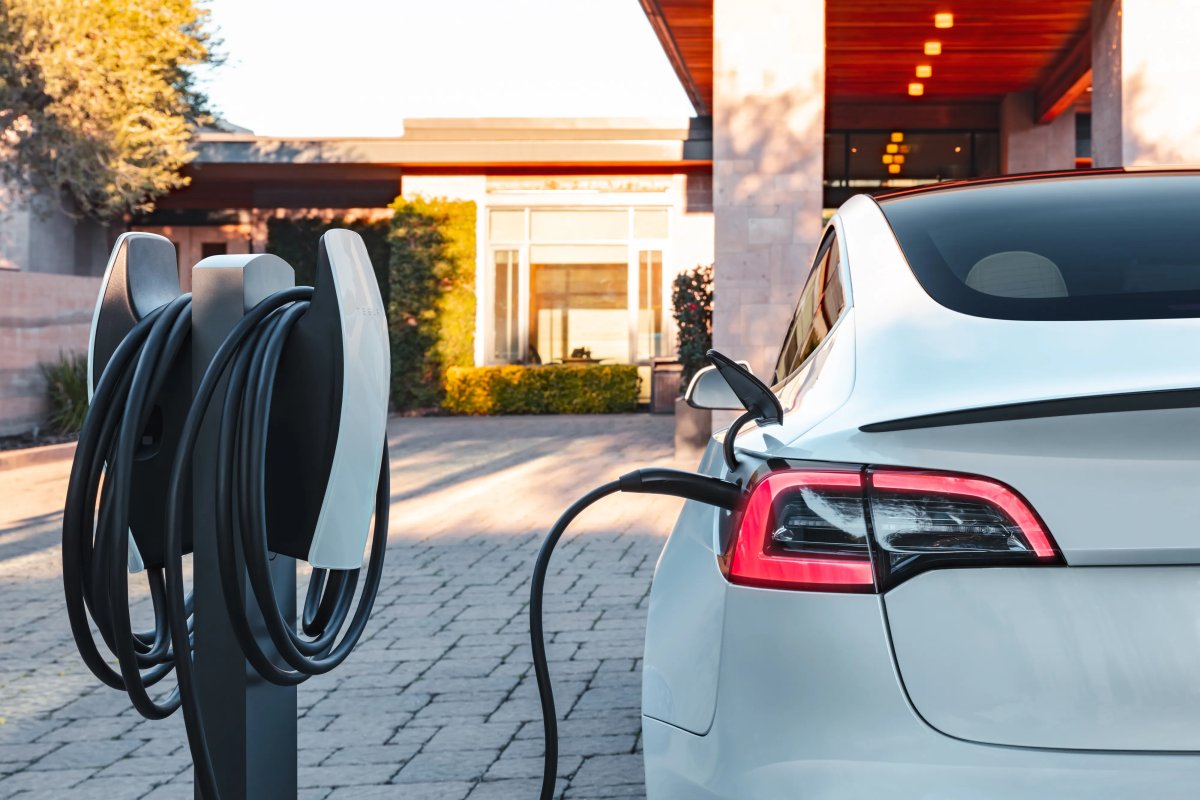
However, not all home charging setups are created equal. A dedicated Tesla Wall Connector is the ultimate standard for home charging, delivering up to 44 miles of range per hour of charge. If you do not want to hardwire a new unit, you can use a Mobile Connector plugged into a standard 240-volt outlet to regain roughly 21 miles per hour.
You can also plug that same Mobile Connector into a standard 120-volt household wall socket. This 12-amp draw will yield only about 3 or 4 miles of range per hour. This is often referred to as “trickle charging” and is generally best reserved for short-term use, such as in a vacation home or while waiting for your Wall Connector to be installed.
Charging Hardware
Circuit / Amperage
Estimated Speed (Model Y)
Best Use Case
Tesla Supercharger (V3/V4)
250kW (DC)
Up to 1,000 miles/hr (Peak)
Highway road trips
Wall Connector
240V / 48A
~44 miles per hour
The gold standard for daily home charging
Mobile Connector (Dryer Outlet)
240V / 24A
~21 miles per hour
A highly capable, affordable home alternative
Mobile Connector (Standard Outlet)
120V / 12A
~3 to 4 miles per hour
Short commutes.
While Supercharging on a road trip takes longer than a gas pump, requiring roughly 15 to 25 minutes to fill from 10 percent to 80 percent, this time is almost always paired with natural bathroom breaks or food stops. This makes the actual time delay completely negligible for most families on the road.
Cost Comparisons
Ultimately, charging an electric vehicle is significantly cheaper than filling a gas car, especially when taking advantage of cheap residential electricity rates. Because utility rates and gas prices vary so heavily by state and country, the best way to understand your personal savings is to crunch the numbers yourself.
Driving Scenario
Tesla Model Y Cost
Gas SUV Cost (30 MPG)
Total EV Savings
Monthly Commuting
$45.00
$167.40
$122.40 / month
200-Mile Road Trip
$19.60
$27.70
$8.10 / stop
Typically, the simplest way to get to this number is to find your price per kWh, which is listed on your electric bill, and divide it by the number of miles a Tesla Model Y can drive per kWh (3.57). For example, if your electricity rate is $0.20, you’ll divide $0.20 by 3.57, which gives you about 5.6 cents per mile.
Similarly, for gasoline, you’ll take the cost of gasoline per gallon, let’s say, $4.00, and divide that by the number of gallons your vehicle achieves per mile. If your vehicle gets 30 MPG, then you’ll divide $4 by 30, giving you a cost of 13.3 cents per mile.
You can then multiply these costs per mile by the number of miles you drive per month or year. The average person in the US drives about 12,000 miles per year, giving you a total cost of $672 for the Model Y and $1,596 for a similar gas car.