
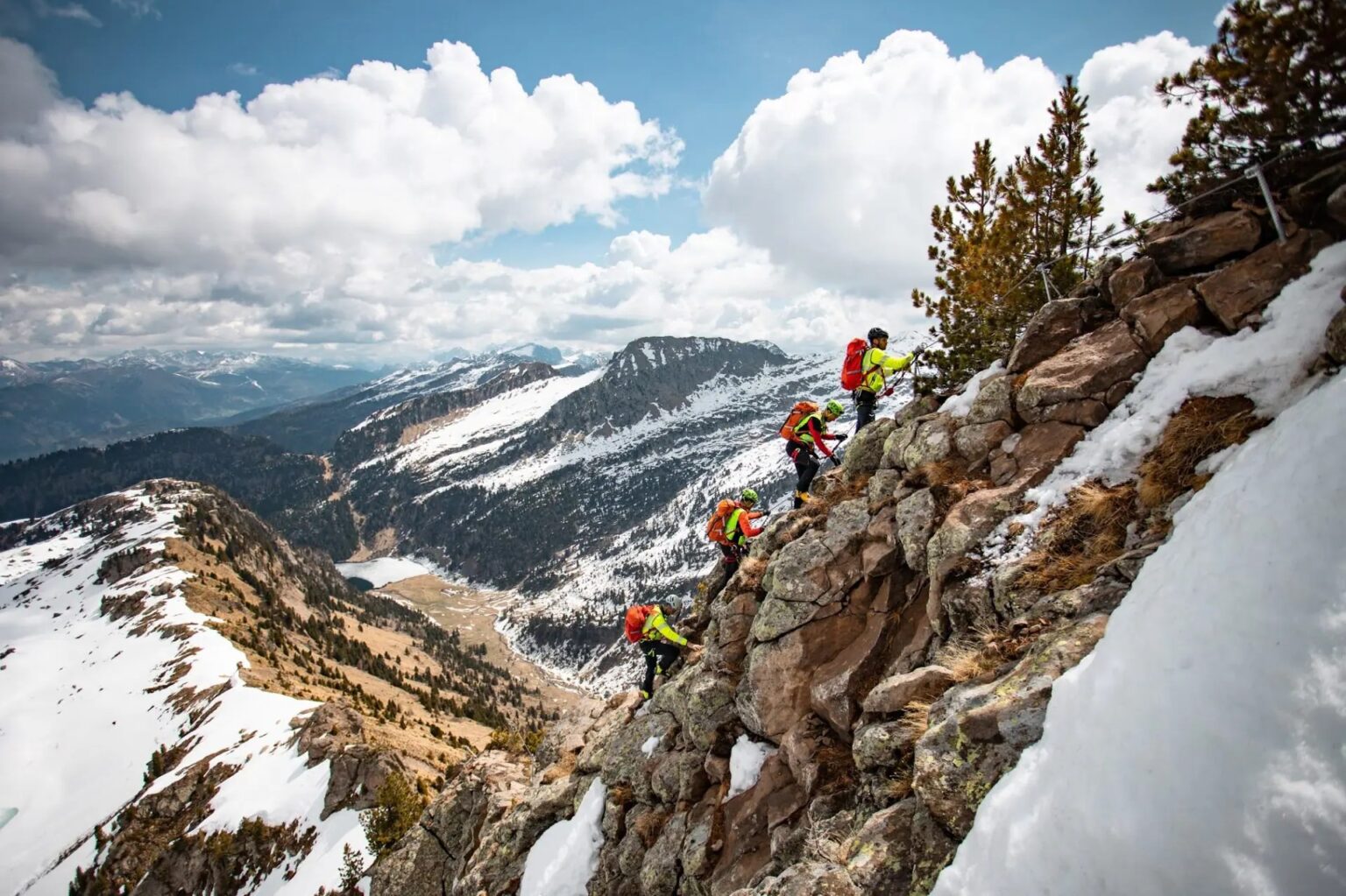
 CNSAS did more than 13,000 rescues in 2025. | Image: CNSAS
Italy’s mountain rescue service had one of its busiest and deadliest years on record in 2025 — a trend that was already visible in summer, when rescue teams reported reaching levels of exhaustion. The Corpo Nazionale Soccorso Alpino e Speleologico (CNSAS) released its 2025 report last week, providing a detailed overview of the 13,037 rescue operations conducted across the country during the calendar year.
With 13,037 rescues in 2025, rescue teams faces on average 35 missions a day — a staggering number. The 2025 number represents an increase of 8.1% from 2024, when 12,063 missions were recorded. More concerning, however, is the rise in fatalities: 528 deaths, up from 466 the previous year — a significant 13.3% increase — or 1.4 deaths a day. In the summer, CNSAS president Maurizio Dellantonio told Corriere della Sera that rescue teams were “beyond all limits.” That strain appears to have carried into the winter season.
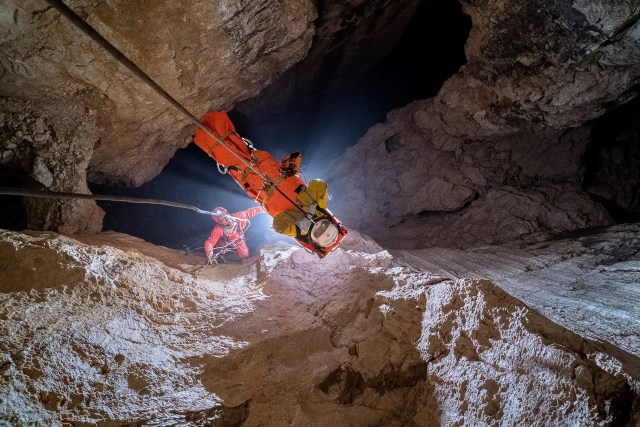 13,000 rescues in 2025 equates to more than 35 rescues a day — a staggering number. | Image: CNSAS
The majority of incidents were caused by falls and slips, which accounted for 45% of all rescue missions. A further 14.1% were linked to illness or medical episodes, 8.1% to physical incapacity, and 2.6% to adverse weather. Only 0.7% of callouts were avalanche-related, while 28.5% were attributed to other, unspecified causes.
Most incidents occurred in summer, with July and August alone accounting for more than a third of all callouts — 13.6% and 17.9% respectively. As a result, hiking remains by far the most dangerous activity in terms of total rescues, responsible for 43.6% of all operations. Skiing accounted for 7.4%, with ski touring adding a further 1.9%, keeping winter sports with nearly one in 10 rescues in the top contributing activities, despite the shorter season. In addition, winter incidents tend to be more complex and resource-intensive, particularly those involving avalanches or remote alpine terrain.
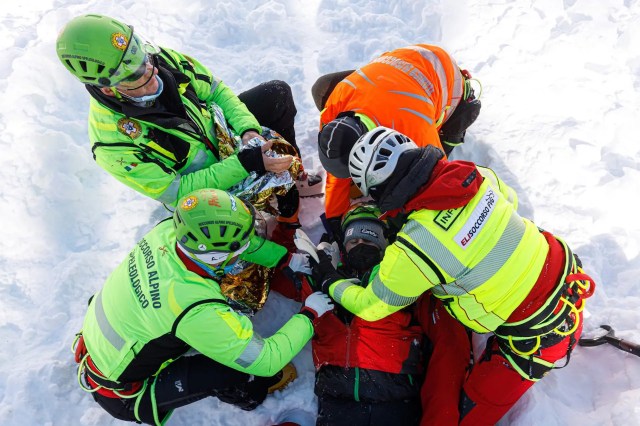 Avalanches accounted for 91 rescue mission in 2025. | Image: CNSAS
The scale of the rescue response in terms of man power is equally staggering. Nearly 47,000 rescuers were deployed throughout 2025, contributing more than 204,000 person-hours across 35,000 operation days. These included helicopter rescue technicians, doctors, paramedics, and avalanche dog units.
Helicopters were used 4,700 times, showing how common place and critical rapid aerial response has become in modern mountain rescue.
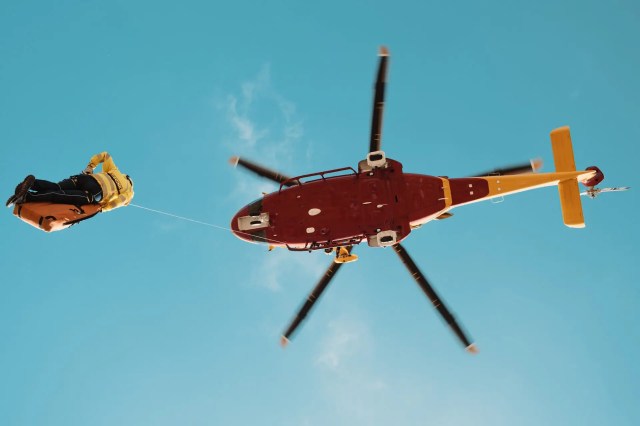 CNSAS conducted 4,700 helicopter rescues. | Image: CNSAS
Demographically, the data aligns with long-standing Alpine trends. The most frequently rescued age group was 50–60 years old, followed by 20–30-year-olds. Nearly 70% of those rescued were male, and more than 90% were not members of alpine clubs, suggesting that most incidents involve recreational users rather than highly trained mountaineers.
According to Dellantonio, around 60% of summer victims were inexperienced hikers, often wearing inappropriate footwear or underestimating route difficulty. Others suffered dehydration, fatigue, or poor planning. The remaining 40% involved experienced mountaineers and mountain bikers, many of whom had pushed beyond their limits or taken on excessive risk.
Specific avalanche rescue data will be released later in the year as part of the hydrological reporting cycle. However, preliminary data suggests a similar pattern emerging in the 2025–26 ski season. With three weeks still remaining for the hydrological year, Italy has already recorded 40 avalanche fatalities — nearly double the 10-year average of 21.6.
As the Alps continue to see growing year-round visitation, the burden on rescue services is only increasing. While most days in the mountains still end with a chairlift ride or après-ski drink, the 2025 data shows that for thousands, things do not go according to plan.
The best way to support these dedicated and overworked rescue teams is to become a member in an alpine club, which helps support CNSAS operations for as little as €25 ($29) per year. In many regions, rescue costs — including helicopter evacuations — are still publicly covered. However, in areas such as Veneto, Trentino-Alto Adige/Südtirol, and Valle d’Aosta, non-emergency rescues can now incur charges ranging from €750–1,000 ($880–1,173), depending on the circumstances. Supporting them is a simple way of giving back to those who show up without fail when things go wrong in the mountains.
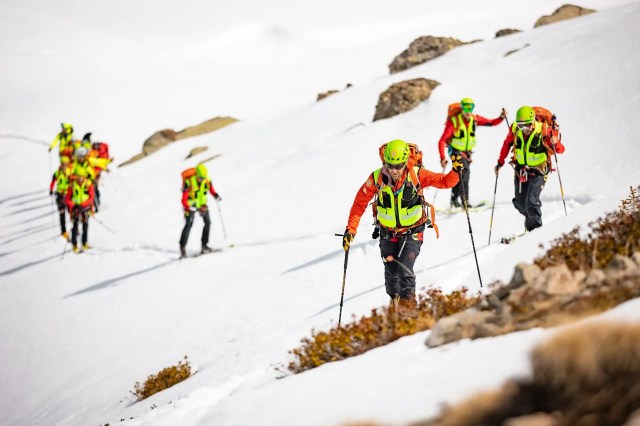 CNSAS did more than 13,000 rescues in 2025. | Image: CNSAS