When Vice President JD Vance visited Hungary this past week, he spoke at and praised Mathias Corvinus Collegium, an educational institution set up to create a new conservative elite in step with the Russia-friendly and MAGA-aligned views of Prime Minister Viktor Orban.
Mr. Vance’s laudatory remarks on Wednesday about the 10-year-old college, known as M.C.C., as a bastion of free thinking and common sense, however, stuck in the craw of Zalan Alkonyi, one of its researchers focused on Russia.
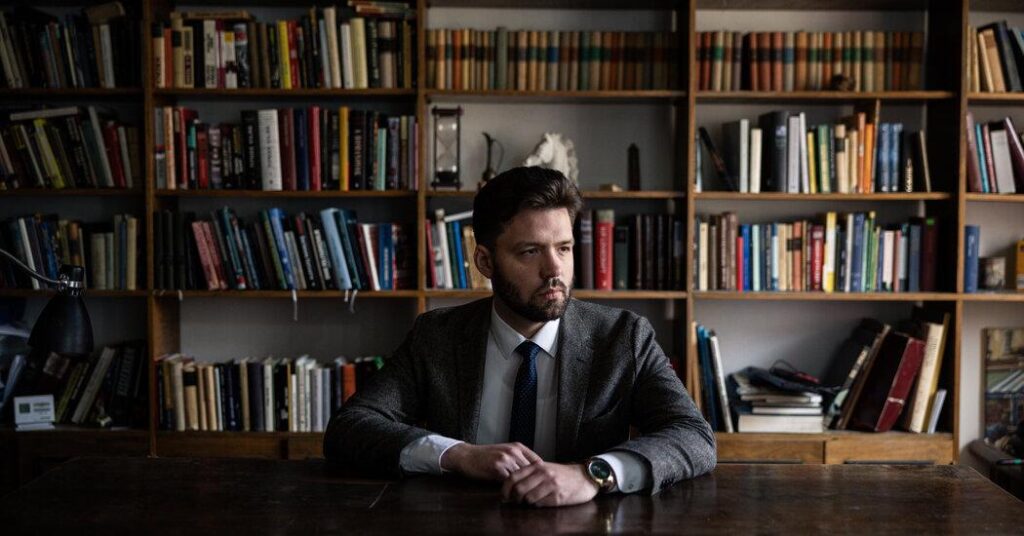
The college, Mr. Alkonyi said in an interview at his book-filled home in Budapest, has many serious scholars, but it puts pressure on them to speak and publish in support of the government’s line.
The chairman of the college’s board of trustees is Balazs Orban, who is not related to the prime minister but does serve as his political director.
“For years I had to practice severe self-censorship on Russia and the Russian policy of the Hungarian government,” said Mr. Alkonyi, 28.
He recounted feeling pressure to support, or at least not contradict, Mr. Orban’s view that Ukraine, not Russia, was the main threat to European security and that the European Union had been foolish in helping Kyiv resist Russian attack.
With Hungary about to hold a general election that could end Mr. Orban’s 16 years in power — an outcome that neither Washington nor Moscow wants — Mr. Alkonyi is among a growing list of defectors from institutions that the governing Fidesz party for years counted as loyal allies.
The latest of these was Viktor Norman Virag, a former senior member of the National Bureau of Investigation, who on Wednesday told Partizan, an opposition media outlet, that 80 percent of his work involved “meeting political expectations,” which in one case meant dropping a case against a Russian suspected of being a cybercriminal.
Others who have broken ranks with the government include Szilveszter Palinkas, a captain in the military who was featured on recruiting posters and attended a military academy in Britain at the same time as Mr. Orban’s son, Gaspar.
Another defector was Zombor Berezvai, who recently quit as chief economist at the Hungarian Competition Authority, a state institution under the control of the government. Explaining his departure, he told Partizan that he had been prevented from investigating businesses tied to Fidesz.
Their decisions to abandon ship came as Fidesz slumped in the polls behind Tisza, an upstart opposition party led by Peter Magyar, himself a former Orban loyalist who split with the governing party in 2024.
The polls could well be wrong, as they were in the United States in 2016, but the mere prospect of change has loosened bonds that were based less on ideological affinity with Mr. Orban than on dependence on Fidesz-controlled institutions for steady work and career advancement.
SockPuppet-47 on
That’s a excellent sign.
Gold_Afternoon_Fix on
But you all still did – no integrity and no longer of any value to a society about to shrug off the yoke of oppression.

3 Comments
Text:
When Vice President JD Vance visited Hungary this past week, he spoke at and praised Mathias Corvinus Collegium, an educational institution set up to create a new conservative elite in step with the Russia-friendly and MAGA-aligned views of Prime Minister Viktor Orban.
Mr. Vance’s laudatory remarks on Wednesday about the 10-year-old college, known as M.C.C., as a bastion of free thinking and common sense, however, stuck in the craw of Zalan Alkonyi, one of its researchers focused on Russia.
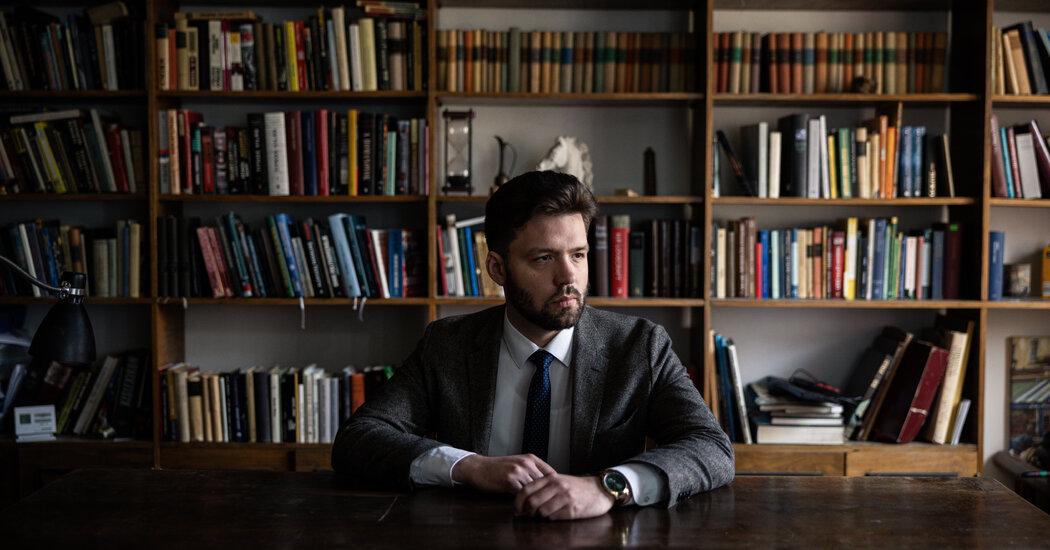
The college, Mr. Alkonyi said in an interview at his book-filled home in Budapest, has many serious scholars, but it puts pressure on them to speak and publish in support of the government’s line.
The chairman of the college’s board of trustees is Balazs Orban, who is not related to the prime minister but does serve as his political director.
“For years I had to practice severe self-censorship on Russia and the Russian policy of the Hungarian government,” said Mr. Alkonyi, 28.
He recounted feeling pressure to support, or at least not contradict, Mr. Orban’s view that Ukraine, not Russia, was the main threat to European security and that the European Union had been foolish in helping Kyiv resist Russian attack.
With Hungary about to hold a general election that could end Mr. Orban’s 16 years in power — an outcome that neither Washington nor Moscow wants — Mr. Alkonyi is among a growing list of defectors from institutions that the governing Fidesz party for years counted as loyal allies.
The latest of these was Viktor Norman Virag, a former senior member of the National Bureau of Investigation, who on Wednesday told Partizan, an opposition media outlet, that 80 percent of his work involved “meeting political expectations,” which in one case meant dropping a case against a Russian suspected of being a cybercriminal.
Others who have broken ranks with the government include Szilveszter Palinkas, a captain in the military who was featured on recruiting posters and attended a military academy in Britain at the same time as Mr. Orban’s son, Gaspar.
Another defector was Zombor Berezvai, who recently quit as chief economist at the Hungarian Competition Authority, a state institution under the control of the government. Explaining his departure, he told Partizan that he had been prevented from investigating businesses tied to Fidesz.
Their decisions to abandon ship came as Fidesz slumped in the polls behind Tisza, an upstart opposition party led by Peter Magyar, himself a former Orban loyalist who split with the governing party in 2024.
The polls could well be wrong, as they were in the United States in 2016, but the mere prospect of change has loosened bonds that were based less on ideological affinity with Mr. Orban than on dependence on Fidesz-controlled institutions for steady work and career advancement.
That’s a excellent sign.
But you all still did – no integrity and no longer of any value to a society about to shrug off the yoke of oppression.