
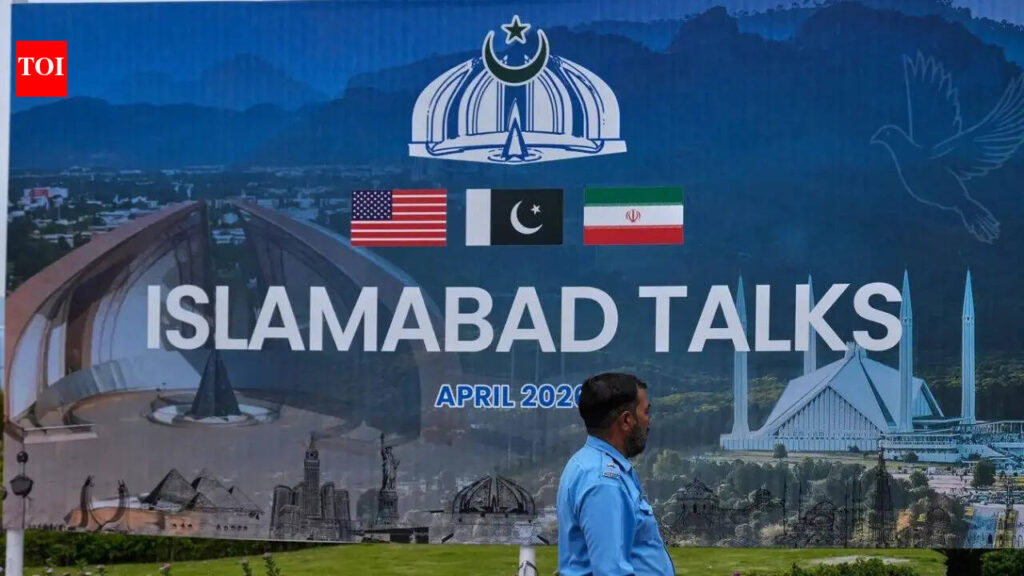
In Islamabad, Vice President JD Vance on Saturday became the most senior US official to hold direct talks with Iranian counterparts since the 1979 Islamic Revolution, just days after the US and Israel paused a conflict that had shaken the Middle East and global markets.
The White House said discussions stretched past midnight, while Iranian media accused Washington of making “excessive demands,” particularly regarding the Strait of Hormuz, a route that carries about one-fifth of the world’s oil.
US President Donald Trump said “deep negotiations” were underway but struck a defiant tone, insisting the US had already secured victory by targeting Iran’s leadership and military infrastructure. “Whether we make a deal or not makes no difference to me. The reason is because we’ve won,” he said.
A Pakistani official told AFP the talks were “progressing in the right direction,” describing the atmosphere as “cordial” despite underlying tensions.
In a break from past practice, US and Iranian officials are engaging directly in Islamabad, rather than relying on intermediaries. Iran had pushed for Vance’s presence, given his senior role and earlier scepticism about the war.
Tehran had previously been negotiating its nuclear programme in February with US envoy Steve Witkoff and Jared Kushner, before the US and Israel launched strikes that killed Iran’s long-time supreme leader Ali Khamenei.
Both Witkoff and Kushner are part of the current US delegation, while Iran’s 70-member team is led by Parliament Speaker Mohammad Bagher Qalibaf and includes Foreign Minister Abbas Araghchi.
After the outbreak of hostilities, Iran leveraged its position by tightening control over the Strait of Hormuz, sending global oil prices higher and adding political pressure on Washington.
The US military said two Navy warships had transited the strait to begin clearing mines and ensure safe passage for tankers. Iran denied the claim and warned of retaliation, with the IRGC Navy stating that any military vessels attempting to pass through the waterway would be “dealt with severely,” adding that safe passage during the ceasefire applied only to civilian ships under specific conditions.
Trump acknowledged the US would seek to reopen the strait, even though it imports relatively little oil from the Gulf, saying the move was necessary for global stability.
Iran has demanded the unfreezing of sanctioned assets and an end to Israel’s campaign against Hezbollah in Lebanon—conditions Washington has signalled will not be addressed in the Islamabad talks.
Despite the diplomatic engagement, mistrust remains high. Qalibaf said Iran’s past negotiations with the US had been marked by “failure and broken promises,” while Vance stressed Washington’s willingness to negotiate “in good faith,” warning against any attempt by Iran to “play” the US.
Analysts say the size and seniority of Iran’s delegation signal serious intent to reach an agreement.
Meanwhile, Israel has maintained that its ceasefire with Iran does not extend to Lebanon, where strikes against Hezbollah continue. Lebanese authorities say the death toll from Israeli attacks has crossed 2,000.
Israeli Prime Minister Benjamin Netanyahu said he seeks a lasting peace deal with Lebanon, though Israel has ruled out a ceasefire with Hezbollah for now.
Security has been tightened across Islamabad as Pakistan hosts the high-stakes negotiations, reflecting both regional sensitivities and its interest in shaping the diplomatic outcome.
Key takeaways:
- US-Iran talks enter Day 2 in Islamabad with direct high-level engagement
- Trump claims US victory, downplays importance of deal outcome
- Strait of Hormuz tensions rise amid US mine-clearing claim, Iran denial
- Iran pushes demands on sanctions relief; US rules out Lebanon issue
- Deep mistrust persists despite “cordial” atmosphere and ongoing talks