
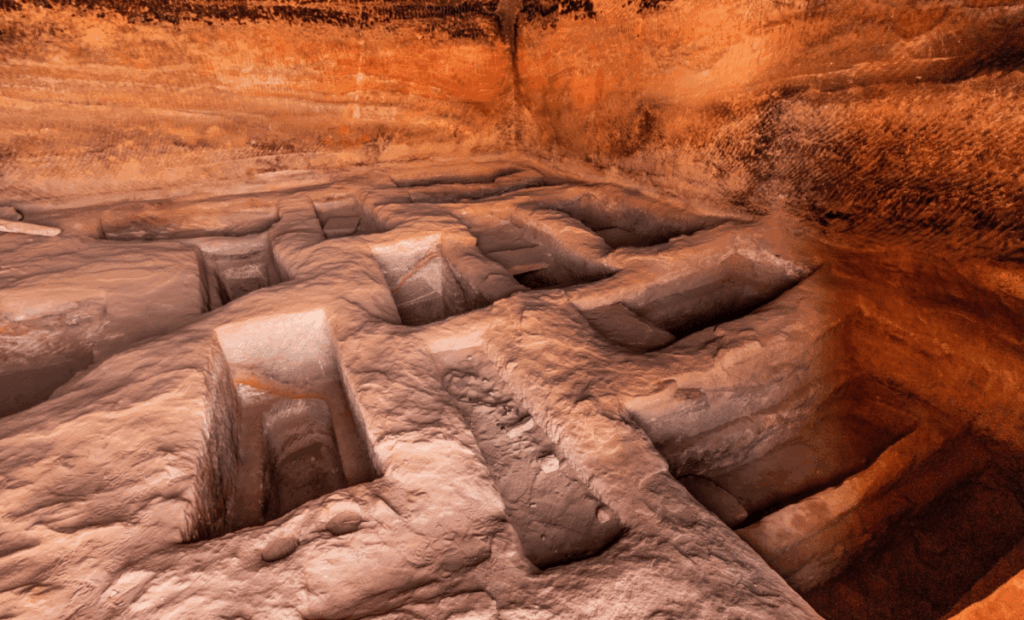
A sealed world carved into stone has just been brought back to light in Egypt, where newly opened rock-cut tombs are revealing a far more intimate and complex vision of ancient life than historians expected. Beneath layers of rock and time, archaeologists uncovered not just burial spaces but traces of personal stories, daily objects, and evolving traditions, findings confirmed by the Ministry of Tourism and Antiquities that could reshape how we understand the relationship between life and death in ancient Egyptian society.
A Hidden Necropolis Emerges From The Rock
Archaeologists working at the site have revealed a series of carefully carved tombs embedded deep within natural rock formations, suggesting a level of planning and craftsmanship that goes far beyond simple burial use. These tombs are not isolated chambers but part of a broader necropolis, hinting at an organized and possibly hierarchical community that once thrived in the region. Intricate passageways connect burial spaces, and the layout points to a deliberate architectural vision rather than ad hoc excavation.
Inside, researchers found a mix of human remains, burial goods, and artifacts that reflect both spiritual beliefs and aspects of daily life. Pottery, tools, and decorative items indicate that these tombs were not only places of rest but also symbolic environments designed to accompany the deceased into the afterlife. The preservation of certain materials suggests stable environmental conditions, allowing experts to study objects in remarkable detail.
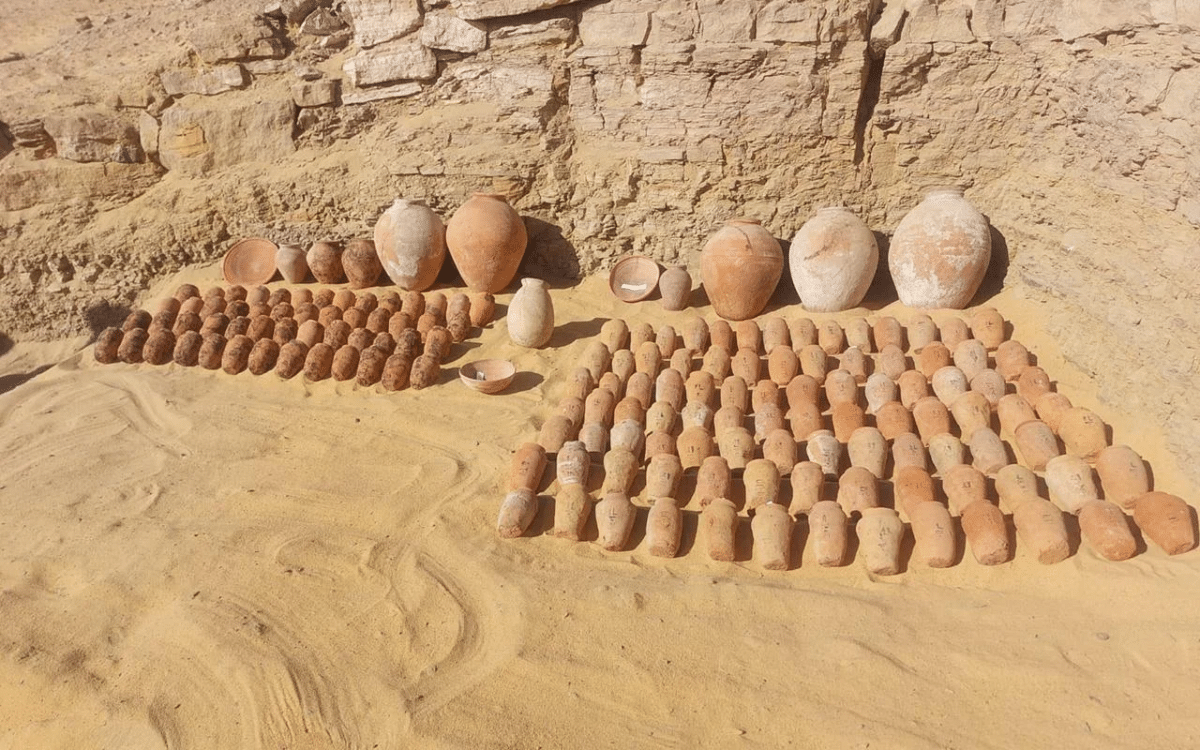 Intact pottery recovered from the complex.
 Credit: Egyptian Ministry of Tourism and Antiquities
Surprising Artifacts Challenge Previous Assumptions
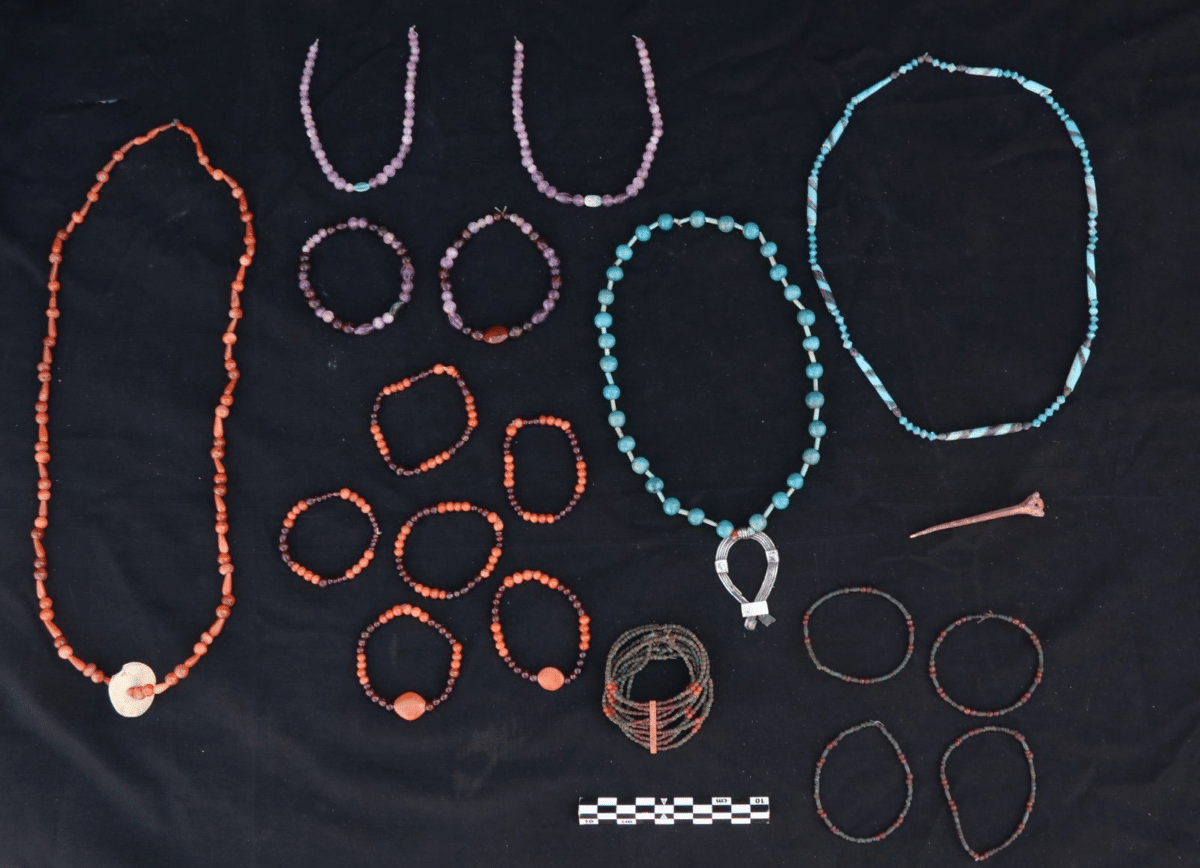
What sets this discovery apart is the unexpected variety of objects found within the tombs. Instead of purely ceremonial items, archaeologists uncovered everyday tools and personal belongings, raising new questions about how ancient Egyptians viewed death and the afterlife. These findings suggest a more intimate connection between life and burial practices, where personal identity may have played a larger role than previously believed.
Some artifacts appear to have been reused or repurposed, pointing to evolving traditions or limited resources within the community. This challenges the long-held assumption that burial customs followed rigid, uniform rules across regions. Instead, the evidence hints at local adaptations and a dynamic cultural landscape shaped by changing circumstances.
The presence of multiple burial phases within the same tombs also indicates that these spaces were revisited over generations, reinforcing the idea of long-term communal significance rather than one-time use.
 Credit: Egyptian Ministry of Tourism and Antiquities
The Broader Impact Of the Discovery
According to the Ministry of Tourism and Antiquities, the discovery offers valuable insight into regional variations in burial practices and social organization. The site provides a rare opportunity to examine how different layers of society interacted with death, memory, and ritual over time.
Researchers emphasize that such findings are essential for reconstructing a more nuanced picture of ancient Egyptian civilization. Rather than focusing solely on monumental structures like pyramids and temples, discoveries like this highlight the lives of ordinary people and their cultural expressions.
“This discovery confirms the extraordinary complexity of the city’s archaeological heritage, which continues to emerge even in contexts affected by urban transformation,” said Daniela Porro, Special Superintendent of Rome.
A Window Into Daily Life And Death In Ancient Egypt
Beyond the scientific data, the tombs tell a human story. The arrangement of objects, the positioning of remains, and the architectural choices all reflect beliefs, relationships, and identities that once defined this community. Each chamber acts as a snapshot of a moment in time, preserved beneath layers of rock and history.
The discovery also raises new questions about how widespread such burial practices were and whether similar sites remain hidden across Egypt. As excavation continues, researchers expect to uncover further details that could reshape current understanding of ancient societies in the region.
This site stands as a reminder that even in well-studied regions, the past still holds secrets capable of transforming historical narratives.