
Picture: Ukrainian Armed Forces, 14th UAV Regt
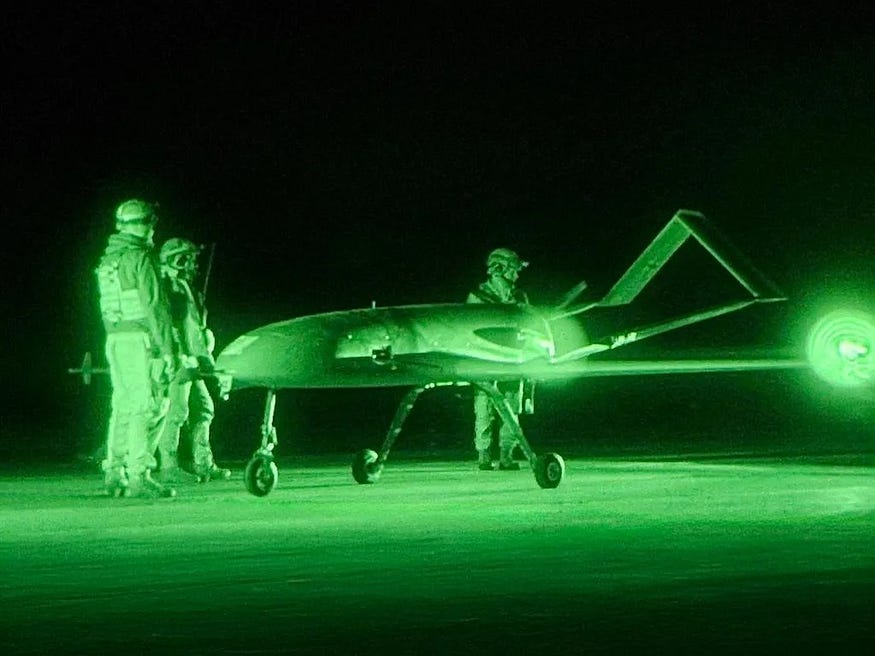
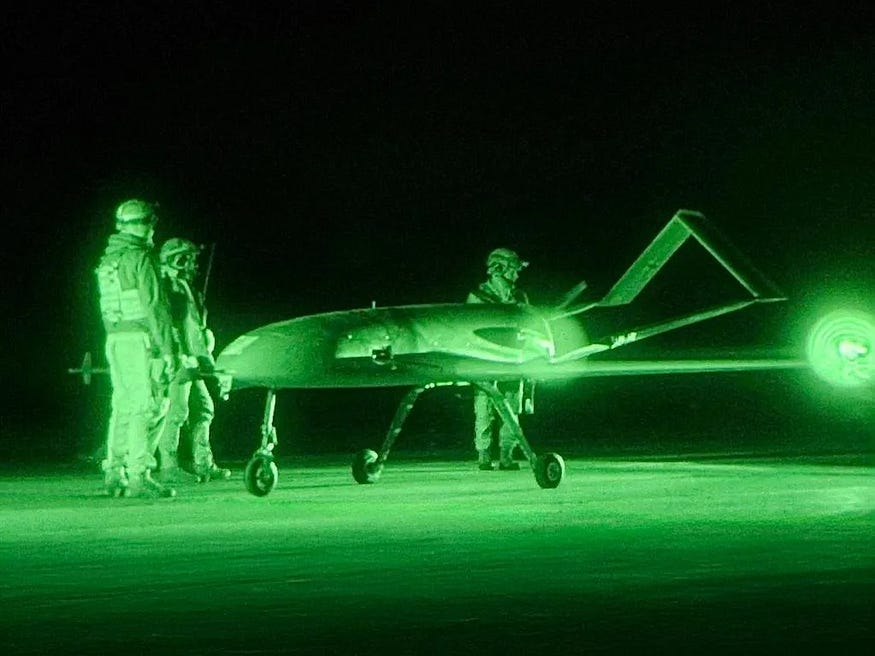
In March 2026, Ukraine’s strategic air campaign targeting Russian energy infrastructure — oil-related facilities in particular — reached a new peak. By some estimates, Ukraine launched more long-range drone strikes than Russia that month, employing over 7,000 systems, some reaching as deep as 1,500 kilometers into Russian territory.
The veracity of these figures is difficult to confirm. Still, the campaign’s results speak for themselves, likely crossing thresholds earlier phases did not reach: cumulative damage to Russian energy infrastructure now appears to be outpacing Russia’s capacity to repair and replace it.
This post assesses what Ukraine’s deep-strike campaign has achieved in recent months, how Ukraine got there, and what the implications might be.
The damage
Ukraine’s long-range drone campaign against Russian oil infrastructure has escalated sharply since January 2026. Early strikes targeted the Ilsky refinery in Krasnodar and the Almetyevsk oil processing unit in Tatarstan. The campaign intensified in late March and early April, hitting a broader set of targets: the Baltic export terminals at Ust-Luga and Primorsk, the Yaroslavl refinery near Moscow, the Lukoil-Nizhegorodnefteorgsintez refinery in Kstovo (which supplies roughly 30% of Moscow-region gasoline), and — most recently — the Sheskharis terminal and the Caspian Pipeline Consortium facility in Novorossiysk.
The cumulative impact has been substantial. Russian oil exports fell 43% in the week of 22–29 March, from 4.07 to 2.32 million barrels per day, costing an estimated $1 billion in lost revenue for that week alone. Reuters estimates strikes on refineries have reduced Russian refining capacity by approximately 17%, or 1.1 million barrels per day. At peak disruption, roughly 40% of Russian export capacity was offline, though this figure reflects the combined effects of the Druzhba pipeline closure, tanker seizures, and drone strikes.
Independent verification of specific damage figures remains difficult. That said, the intensity and success of Ukraine’s deep-strike campaign have very likely reached levels not seen since the start of the war.
How we got here
The success of Ukraine’s deep-strike drone campaign is not accidental. It reflects sustained planning and shaping efforts, compounded by industrial bottlenecks on the Russian side.
First, in late 2024, Zelensky made conventional long-range drones and mini cruise missiles a major priority in Ukraine’s defense industrial policy. Production ramped up through 2025, and Ukraine may have reached critical mass by early 2026. Ukraine’s inability to shift a meaningful share of production toward heavier and more capable missile systems remains a constraint. Still, shortfalls in individual system capabilities have likely been partially offset by deploying ever-larger numbers of lighter systems en masse against Russian facilities.
Second, Ukraine has pursued a highly effective suppression of enemy air defenses (SEAD) campaign, systematically degrading Russia’s integrated air and missile defense capabilities. Analysts from Tochnyi, in a highly recommended report, indicate that between June 2025 and March 2026, Ukraine conducted confirmed engagements against 237 air defense-related targets, including launcher units and radars, and 196 radar and electronic warfare systems, in each case very likely severely damaging or destroying them.
The consequences of these air defense suppression strikes are non-linear. Given Russia’s vast geographic expanse, overlapping air defense coverage is difficult to maintain, and individual losses can lead to the total loss of control over an area, immediately multiplying the attack vectors available to Ukraine. Russia’s apparent unwillingness to redeploy assets from the dense air and missile defense ring around Moscow — likely out of concern about bringing the war’s realities closer to the regime’s doorstep — is compounding the problem.
Third, Russia’s already overstretched war economy likely finds it difficult to mobilize the resources — in raw materials and manpower — needed to meaningfully increase air defense production, at least not without directly affecting output in other areas. Technical constraints further limit Russia’s ability to quickly repair infrastructure damage, particularly when strikes have damaged more advanced components. Contacts in the Norwegian oil industry have told me that while Chinese technology provides some relief, it cannot fully replace the lack of spare parts from Western suppliers.
Implications for the war
The strike campaign alone does not win Ukraine the war, nor does it eliminate Russia’s economic potential. Russia’s refining capacity remains among the largest in the world, with excess capacity to buffer the domestic fuel supply. Gasoline prices have risen, and export bans have been imposed intermittently, but fuel availability has not collapsed. Some manufacturing and processing capacity is also being dispersed eastward, beyond the reach of Ukrainian long-range drones and cruise missiles.
These points are valid, but these efforts cannot shield Russia’s war-industrial system from the blow. Dispersal is slow, costly, and logistically inefficient; it does not restore destroyed capacity and introduces supply chain friction that compounds production shortfalls. Capital expenditure on new facilities also reduces fiscal resources available for the primary war effort. Surplus capacity was already being drawn down before the deep-strike campaign intensified in 2026. Most critically, export infrastructure cannot be relocated. Primorsk, Ust-Luga, and Novorossiysk are fixed assets that will remain as vulnerable as they are central to Russia’s economy.
The cumulative effects of these constraints are real, bearing meaningfully on Russia’s budget and planning even if they fall short of collapsing its capacity to wage war. In this regard, the analogy to the Allied strategic bombing campaign against the Nazi German war economy in World War II, which I have drawn previously, remains as valid as ever.
The success of Ukraine’s effort cannot be judged solely by the absolute reduction in output achieved. It must be judged against what remains of Russian capacity relative to where it would be without the campaign. Nazi German war-industrial output continued to rise through mid-1944, yet remained significantly below what it would have been absent Allied bombing. Similarly, Russian oil-related revenues have not collapsed, but are measurably lower than they would otherwise be, and the Russian state’s fiscal planning around oil income has been materially undermined.
Parallels and contrasts to the Iran War
There is an instructive parallel and contrast to draw between Ukraine’s use of airpower against Russia and that of the United States and Israel against Iran. In both cases, actors have attempted a strategic air campaign to bring the adversary to its knees.
In the American and Israeli case, this involved counterleadership and counterforce strikes targeting fielded forces, command and control, and production facilities, intended to achieve swift effects. The campaign succeeded in part, notably in degrading Iranian launch capacity and likely reducing Iranian missile and drone production, but fell short of the decisive results American and Israeli planners likely had anticipated. Iranian warfighting capacity had been significantly diminished by the time the ceasefire took effect, but it had not been broken. In that sense, the strategic air campaign failed in its primary purpose: translating the use of force into a decisive political outcome.
In the Ukrainian case, the strategic interdiction campaign has been ongoing since 2024. The results have not been decisive, but the instrumentality of the effort — the link between military action and political aims — is considerably clearer. The effects are latent rather than decisive, yet they constitute one of the most effective tools available to Ukraine for degrading Russian capacity and generating coercive leverage.
This contrast offers a broader insight into the utility of strategic airpower, including in the missile age. Strategic airpower need not be decisive to matter. In the vast majority of cases, it cannot produce decisive effects in the first place. Rather than outright dismissing its utility on those grounds, however, as has become fashionable, analysts would do better to recognize and account for the latent, war-shaping effects that strategic airpower can produce.