
Kyle Patrick Camilleri
Sunday, 12 April 2026, 09:30
Last update: about 2 hours ago

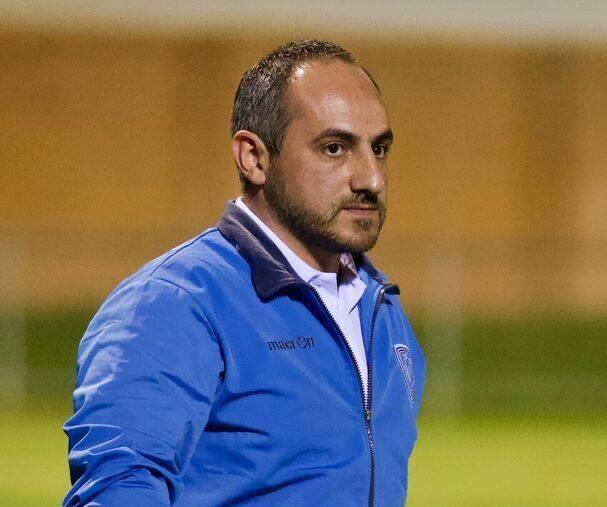
Football coach Ramon Falzon believes that Malta must better protect its homegrown players. He believes that Malta must strengthen its homegrown player quota, or if not, at least commission a study to see how to best empower local talent.
Ramon Falzon – who has recently returned to Malta after spending more than a decade in Australia, where he earned multiple titles and accolades in the Australian National Premier League – told The Malta Independent on Sunday that if Malta wants to improve its standard of football and move up the FIFA international rankings, then serious action must be taken sooner rather than later.
He doesn’t believe that the Maltese football system is doing enough to empower and protect homegrown Maltese players. Falzon told this newsroom that “with the way we’re going, in 10 years’ time, there is no more national team – there won’t be players; or if there are, the number of players with Maltese surnames will be minimal”.
A few days ago Malta lost the chance of being promoted to the Nations League C after losing 5-0 on aggregate to Luxembourg, a result that once again exposed Malta’s weaknesses.
As a football coach in Australia, Falzon hovered between A-League youth teams, coaching in the Australian national team set-up, coaching the Western Australian (WA) Men’s State Team, and being a first team head coach within Australia’s National Premier Leagues (NPL). He is a three-time recipient of the NPL’s Ron Tindall Coach of the Year award (2018, 2019, 2021) for his successes with Perth Azzurri SC. He has just returned to Malta, citing personal reasons.
Recalling his time in Australian club football and as part of the Socceroos’ coaching set-up, Falzon noted that in the years after the 2010 World Cup, in which Australia crashed out in the group stage, Australians decided to “improve their own people”. First, only Australian coaches were allowed into the national team set-up; then they got “very protective of their own” players.
In the early 2010s, clubs within Australia’s NPL went from being allowed to field a full team of foreigners to implementing a quota to allow room for just three foreign (non-Australian) players per each club’s squad roster. This quota is still in place, as is a requirement for each squad to feature six youth players (three U23 players and three U20s).
“We knew that, initially, the level was going to drop,” Falzon said on this decision to effectively make all NPL teams almost fully Australian. The rationale behind this radical shift, according to Falzon, was that “until we go through that short-term pain of having the level drop – and we need to upskill our own – we’re not going to see the long-term gain”.
“Australia made that sacrifice of probably a whole World Cup cycle to implement these rules and purposefully drop the level to start protecting their own and start playing their own,” Falzon said. “From there, the level started going up.”
At the 2014 World Cup, Australia were defeated in all three of their group matches, although they faced a particularly tough “group of death” that included the 2010 finalists, Spain and the Netherlands, along with Chile. The defending world champions, Spain, also bounced out of the tournament in this group stage.
Australia has qualified for every FIFA World Cup since 2006. They reached the Round of 16 on two of those occasions, in 2006 and 2022 respectively. Each time, Australia was eliminated by the eventual world champions.
Just a couple of years ago, the Australian FA took this protectionist approach to another level. After observing the level of Australian goalkeepers to be declining, it decided that all goalkeepers in professional Australian football must be Australian. Falzon admitted that this measure “is a bit extreme” since it forbids immigrant goalies from playing at a professional level.
“It is extreme, but we have to protect our own talent. How much are we protecting our own in Malta?” Falzon added.
He doesn’t believe that Malta should directly apply such extreme quotas into its own football systems. He believes that if altering this quota isn’t the way to go, a study should at least be commissioned to spot the ideal way forward to better empower Maltese talent.
At the moment, the Premier League stipulates that clubs can have as many as eight non-homegrown players on the pitch at any single time and not more than 14 non-homegrown players registered (or 16, with an additional two if they are loaned out) to their squad list of 28 players. In addition, up to 11 non-homegrown players can be selected on a club’s team sheet – up from nine – but the number of non-homegrown players cannot exceed the number of homegrown players.
In the summer of 2023, the Malta Football Association eased its restrictions on non-homegrown players playing for Premier League clubs, increased the size of squad lists from 24 to 28 players, and allowed for local clubs to field a minimum of three homegrown players at any given time (down from four).
At the time of writing, Australia is ranked as the 27th best footballing country in the world and is just months away from participating in the 2026 FIFA World Cup. Meanwhile, Malta is ranked 162nd, among the likes of Eswatini, Grenada, Vanuatu, and South Sudan in FIFA’s official men’s world rankings. In women’s football, Australia is ranked 15th globally and Malta is ranked 89th.
‘Not much difference in raw talent’ between Malta and Australia, Maltese youth players being let down
Despite the stark difference in world rankings, Falzon, after watching youth level football (namely U15s) in both countries, told this newsroom that “there isn’t much difference in the actual raw talent” or in the level of football at that age. In this regard, he noted that “we’re definitely letting our own players down in Malta from 15 upwards”.
Falzon highlighted three main differences between football played in Australia and Malta; he said that “standards are a big one” and also mentioned game intensity and the professionalism of the set-ups.
Through his experience in club football and the Australian national team’s set-up, Falzon said that if professionalism improves during the week, week in, week out, then “performance is going to be elevated on gameday”. He added that skill gaps begin opening up once the intensity and quality of the game lifts, and that Malta partially lags behind other countries because of the more defensive style of football typically played locally.
Falzon said that in Australian club football, the NPL is the highest-level league in the established club system. He mentioned that the well-known A-League is a closed league without promotion or relegation which operates outside this traditional spectrum of club football, and this closed league approach is “slowly killing” the A-League.
In Australia, Falzon faced sides managed by the likes of current Australian national team coach, Tony Popovic, and UEFA Europa League winner, Ange Postecoglou.
He noted that in Australia, the game is tactically different – it is quicker and much more intense. Meanwhile, Maltese football is more defensive-minded by comparison.
“If you’re going through the motions – being more defensive and slowing down the game – when you compete at international level, it becomes very hard because you’re not regularly practising and playing to actually get to that [desired] level,” Falzon said.
Falzon stated that when he was coaching in Australia, winning wasn’t enough – playing good attacking football was a must. He recalled how in one match, while he was managing Perth Azzurri, due to many injuries in his squad, he opted to set his team up to play very conservatively in a big game, in hopes of stealing a result. Despite sneaking a 1-0 win, “no one at the club was happy, not even the club president”, Falzon said.
“If in Australia I take a defensive approach game after game, my own supporters are going to start abusing me – even if I win every game. It’s not only about winning, it’s about the way we play,” Falzon said.
Gap to competitive countries will widen if serious action not taken
Falzon remarked that if Malta, as a nation, is doing some improvements to bolster the level of its most popular sport, football, “there is still a huge gap to close”.
“Until we start taking it seriously, every year that goes by, [the gap] gets bigger. Till we take it seriously and get the right structures and expertise, it’s going to be enormously difficult,” he said.
During this interview, it was mentioned that among the 48 countries set to play in this summer’s FIFA World Cup is Curaçao, a Dutch island nation off the northern coast of Venezuela. Curaçao has a population of around 156,000 people yet are ranked in FIFA’s top 85.
While contrasting Curaçao’s FIFA World Cup qualification to Malta’s recent attempts to emerge from the UEFA Nations League’s lowest tier, League D, Falzon noted that Iceland is a better example of a small island state succeeding in world football, since it also competes in UEFA. Iceland had participated in the 2018 FIFA World Cup, just two years after shockingly debuting in the UEFA European Championship and upsetting England in the Round of 16.
Falzon added that “the biggest shift that needs to happen in Malta is mental”. He observed that while Australia abides by a culture of no excuses, “in Malta, we love excuses”.
“We need to understand that change and improvement won’t start to happen overnight, but if we want to show improvement in 2-3 years’ time, we need to start changing today because it takes time to get there,” he said.
Regarding the general playing environments, one change he proposed is ensuring that all footballs used in club football, including in youth games, are inflated to the right PSI before all matches. This would deter instances where youth players – whose bodies are still developing – are forced to head hard, overly inflated match balls.
He also advocated for grass pitches to be used in Malta, saying that a recent youth game he watched locally “was played on artificial turf that was probably done 10+ years ago” and that “the surface is no good, but the kids have to keep playing on it”.
‘If they can grow grass in Perth, they can grow grass here’
Football pitches consisting of natural grass are not commonplace in the Maltese islands. On this, Falzon stated that “if they can grow grass in Perth, they can grow grass here”, brandishing claims that the Maltese climate is not suitable for natural grass pitches as just an excuse.
Not one of the three pitches where topflight Maltese football is played consist of natural grass. The Centenary Stadium has artificial turf, while the Tony Bezzina Stadium and the Ta’ Qali National Stadium both incorporate hybrid pitches with reinforced natural turf. The grand majority of football pitches in Malta utilise artificial turf with small black rubber bits all across.
Falzon recounted his amazement when he first arrived in Perth, Australia and saw natural grass pitches “everywhere” – despite the fact that Perth has “much harsher” summers. Summer temperatures frequently exceed 40°C, Falzon said, and with a depleted ozone layer over the southern region, people in Perth must go for an annual check-up for skin cancer due to their higher risk conditions.
“If you don’t water the pitch for one day [in Perth], the sun burns it all,” Falzon said, “Perth is worse than Malta to grow a natural surface, but they do it – to them, it’s a non-negotiable.”
Hence, he argues that if Perth can choose to maintain natural grass pitches for the good of the sport, then this can be done in Malta if authorities are willing.