
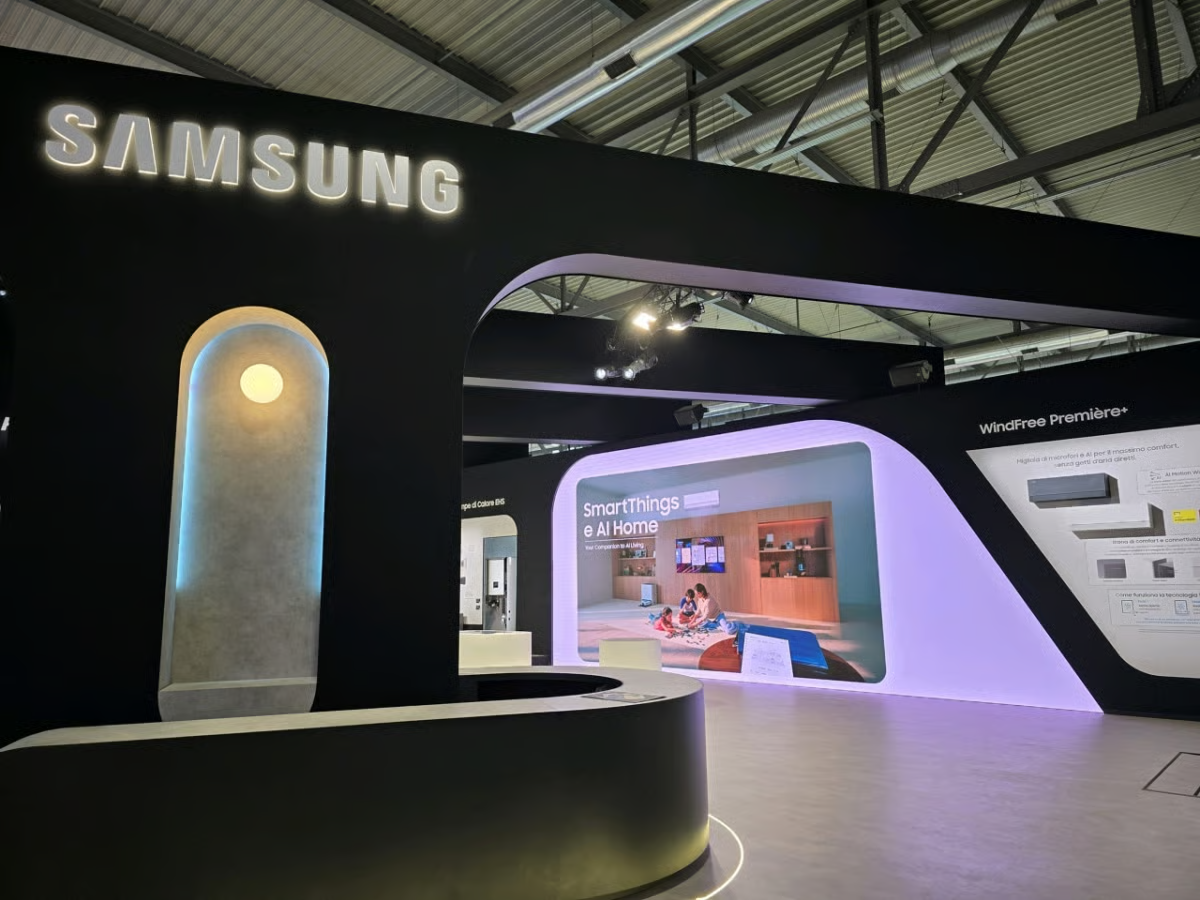
 View of Samsung Electronics’ exhibition space featuring HVAC and smart home products at MCE 2026, held in Milan in March. (Samsung Electronics)
 Samsung and LG are pouring billions into Europe’s heat pump market, snapping up established firms to position themselves ahead of binding EU decarbonization deadlines even as the sector recovers from a two-year sales slump.
Heat pumps, which use electricity to extract warmth from outdoor air rather than burning gas or oil, are central to the EU’s push to phase out fossil fuel boilers. Both Korean electronics giants unveiled their post-acquisition product lineups at MCE 2026, Europe’s largest heating and cooling trade show, held in Milan in late March.
It was Samsung’s first joint exhibition with FlaektGroup, the German climate control specialist it acquired in November for 1.5 billion euros ($1.8 billion). LG showcased systems integrating technology from OSO, a Norwegian hot water solutions firm it bought last July for an undisclosed sum.
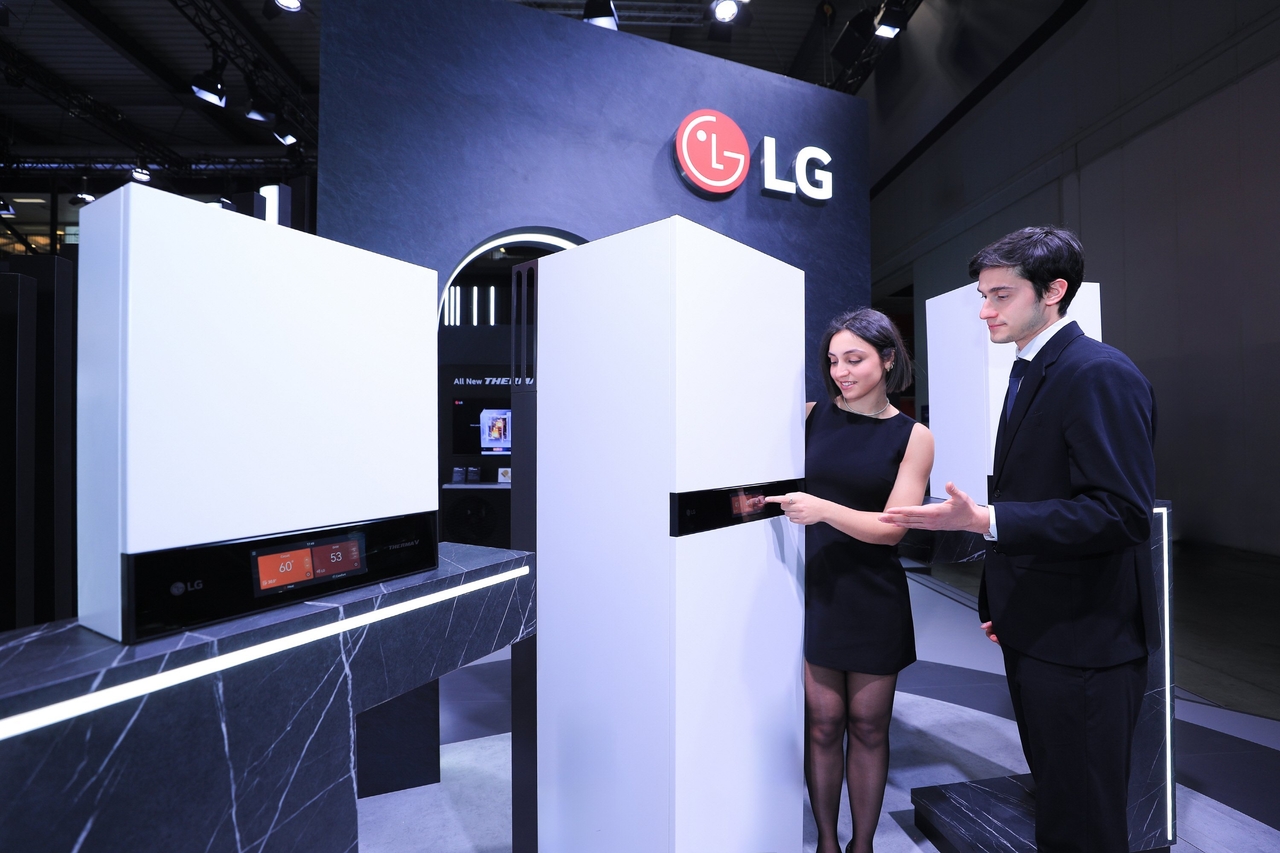 Visitors examine LG Electronics’ new Therma V air-to-water heat pump indoor units at MCE 2026 in Milan last month. (LG Electronics)
 The acquisitions come at a contrarian moment. European heat pump sales dropped 22 percent in 2024, falling for a second consecutive year after a boom triggered by the 2022 energy crisis, according to the European Heat Pump Association. But the first half of 2025 showed a 9 percent rebound, per the International Institute of Refrigeration, and the long-term regulatory picture leaves little doubt about the direction of travel.
The EU’s revised Energy Performance of Buildings Directive requires all new public buildings to meet zero-emission standards from 2028 and all new buildings from 2030. Member states must also plan complete phase-outs of fossil fuel boilers by 2040. Separately, tightening regulations on fluorinated greenhouse gases will force manufacturers to adopt refrigerants with a lower climate impact in heat pumps from 2027.
BRG Building Solutions projects the European heat pump market will double from 1.2 million units in 2024 to 2.4 million by 2030.
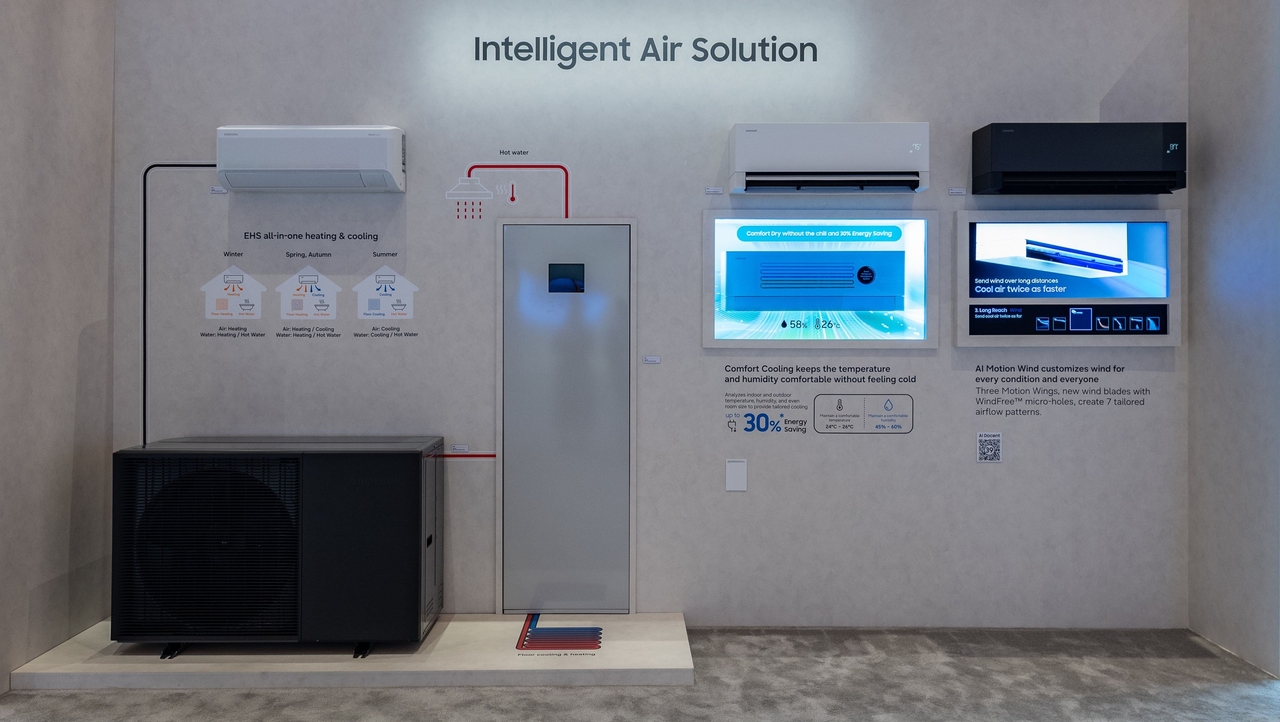 Samsung Electronics’ EHS All-in-One heat pump system, which provides heating, cooling, floor heating and hot water from a single outdoor unit, on display at CES 2026. (Samsung Electronics)
 Those looming refrigerant rules are already shaping product strategy. Samsung’s new EHS All-in-One system, launched in Europe this year, uses R32, a refrigerant whose warming effect is roughly 68 percent lower than the industry-standard R410A.
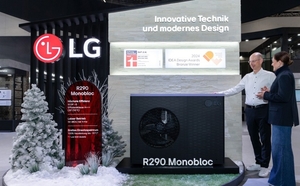
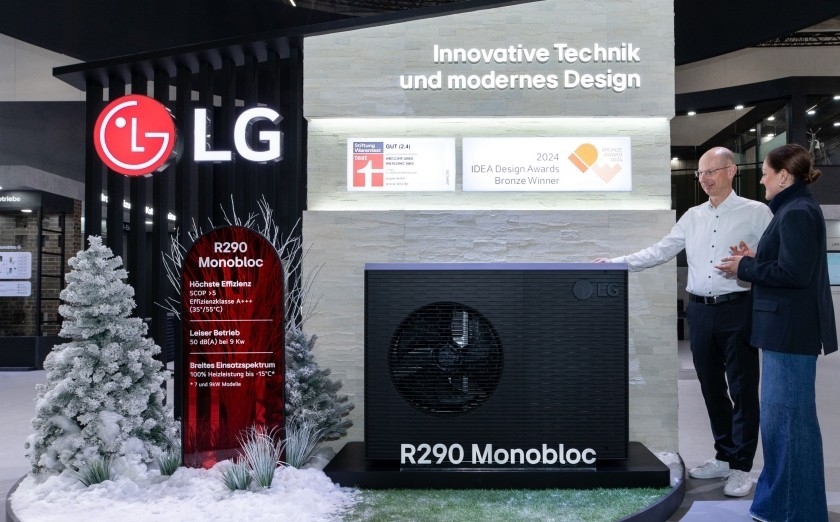 LG Electronics displayed its Therma V R290 Monobloc heat pump, which uses a natural refrigerant with a near-zero global warming potential, at the ISH 2025 HVAC trade show in Frankfurt. (LG Electronics)
 LG went further with its Therma V R290 Monobloc, which runs on propane-based R290, a natural refrigerant with a near-zero climate footprint. LG also debuted a compact combo unit with a built-in water tank designed for space-constrained European apartments.
Commercial traction is following. Samsung has secured a contract to supply heat pump systems for a large residential redevelopment in Cornwall, England, while LG is providing units for housing projects in Eindhoven and Ridderkerk in the Netherlands.
The heating and cooling push also serves a second purpose. Samsung’s FlaektGroup supplies cooling solutions for hyperscale AI data center projects, including Stargate, and LG has agreed to provide cooling systems for Microsoft data centers. The core engineering behind residential heat pumps, from compressors to heat exchangers, is shared with data center cooling equipment, giving both companies a dual revenue path from their acquisitions.
By Moon Joon-hyun (mjh@heraldcorp.com)