
PHOTO FEATURE: The Norwegian flag is waving again outside new and renovated government buildings in downtown Oslo. Norway’s government complex was severely damaged by a right-wing extremist’s bomb on July 22, 2011, but now six ministries and the prime minister’s office have moved back, the rest will follow, and official opening ceremonies were planned for Monday.
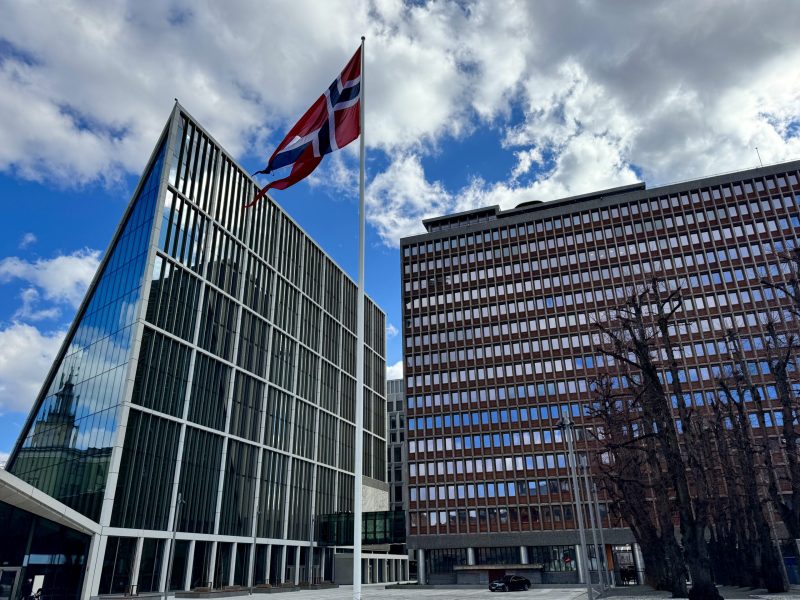
At left is the new A-blokka, widely viewed as the most spectacular of the new buildings with a soaring interior lobby featuring wood and art. It will house the Ministry of Climate and Environment and the Ministry of Trade, Industry and Fisheries, along with parts of the Ministry of Digitalisation and Public Governance.
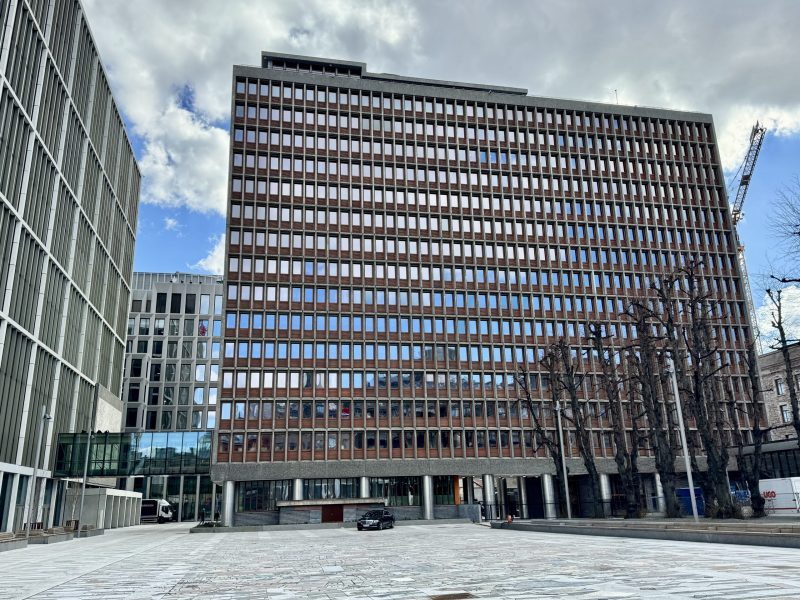
At right is the restored Høyblokka, which formerly housed the Office of the Prime Minister and the justice ministry. It was severely damaged but remained standing and was even opened up for the public to visit two years after the blast.
Now the renamed Ministry of Justice and Public Security/Preparedness has moved back in, but the prime minister’s office will no longer be located at the top of the building. It has instead moved into the new, lower building glimpsed in the middle of the above photo, along with the Ministry of Foreign Affairs and the Ministry of Culture and Equality. It’s believed to be especially well-secured both above and below ground level, but that hasn’t been officially confirmed.
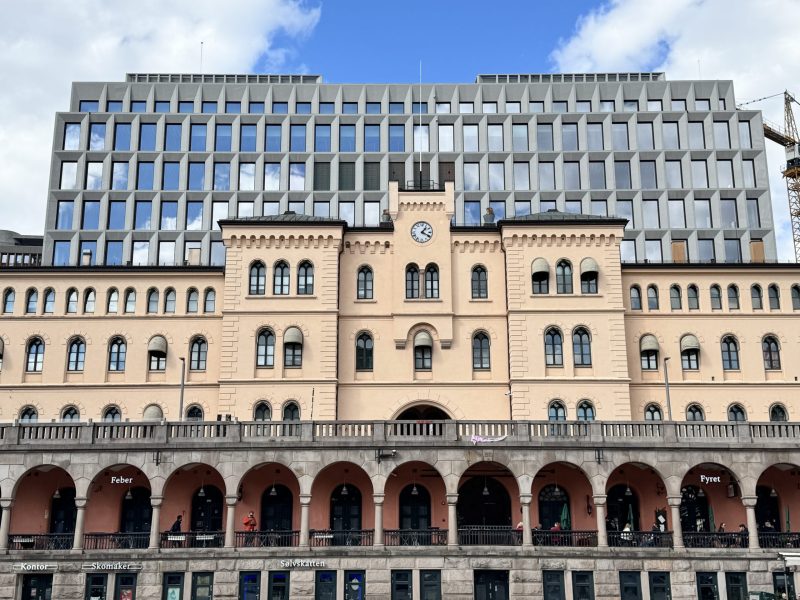
The new Office of the Prime Minister is shown here from behind, towering over Oslo’s former police station and jail, which in turn rises over the historic arcade at the large public square known as Youngstorget. The square is also home to the Labour Party’s headquarters and often used for large public rallies and other events. The clock on the old police station was for years frozen at the time of the bomb blast on a Friday afternoon in late summer, but it’s working again now, too.
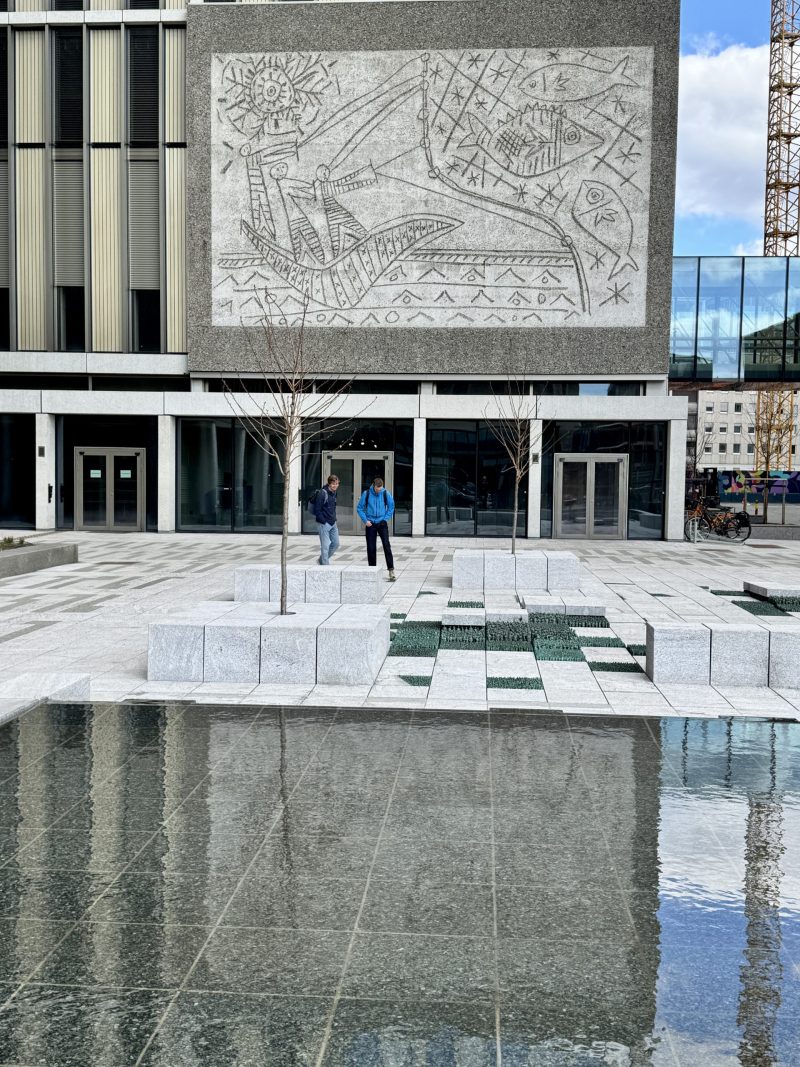
It was important for many involved in the rebuilding of the government complex to retain its artwork and this reflection pool tied to its highest building. That included the above work by Pablo Picasso and Carl Nesjar that formerly adorned the so-called Y-blokka, which was controversially torn down. Now the Picasso is back, and mounted on the brand new A-blokka.
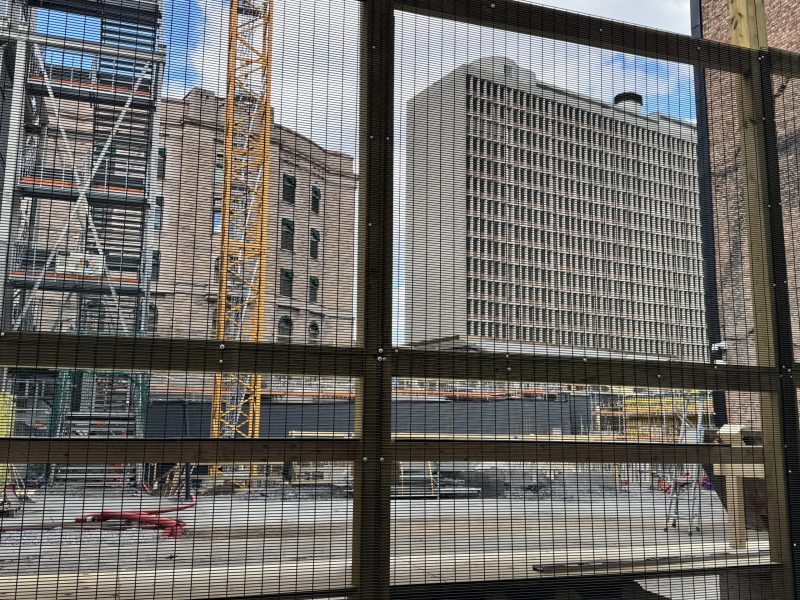
More construction looms, like here in the area behind the historic Ministry of Finance building at left. It survived the blast but is due for interior renovations of its own. The second phase of the project will include more ministerial offices behind the finance ministry. A total of around 4,100 government workers will be located in the complex known as regjeringskvartal when finished in in 2029.
Karianne Tung leads the relatively new ministry now in charge of digitalization and public governance that will have space in both A-blokka and Høyblokka. She claims the new government headquarters “will be secure … in an area of the city with wide public access … and important functions for our country and important landmarks for people in Norway.” They will include a national memorial and “learning center” about the terrorist attack (still under construction) to serve as an “important reminder about why the government headquarters had to be rebuilt.”
The entire project has endured 15 years of national trauma, the lengthy legal action against the terrorist (now serving Norway’s longest possible jail term), massive public debate over whether government ministries should be assembled once again at the same spot, and the huge costs involved. Decision-making was difficult for all involved after the terrorist attack that killed eight people and injured hundreds at the downtown site, plus 69 more in the terrorist’s subsequent massacre at a summer camp for Labour Party youth. Several of its survivors are now government ministers.
Prime Minister Jonas Gahr Støre, who was foreign minister in the earlier Labour Party government that was attacked, seemed relieved that more than 14 years of working from provisional offices spread all over Oslo were over. He was due to speak outdoors at the noon event at the site on Monday, keys to the new ministries would be ceremoniously handed out and there would be some entertainment. The public was welcome, but all would need to go through a security check and any large purses or backpacks would be searched.
“This is an historic event that deserves to be marked,” Støre said when referring to the grand re-opening ceremonies planned for Monday. “We are taking this area of the city back.”
ALL PHOTOS: NewsinEnglish.no/Morten Møst
TEXT: NewsinEnglish.no/Nina Berglund