
Brussels – Saba:
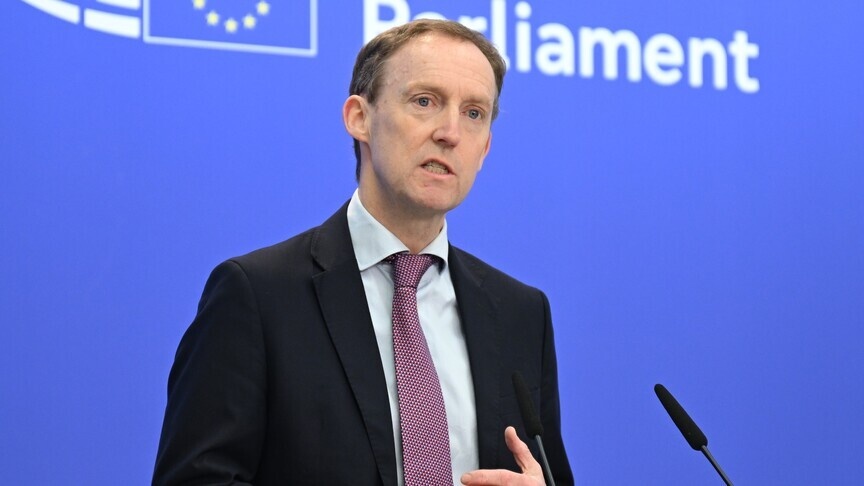
European Parliament member Barry Andrews described the European Union’s stance on Israeli policies as “weak and regrettable” on Sunday. He argued that the EU is paying the price for failing to utilize available pressure tactics against Israel, which has exacerbated the repercussions of crises and escalations in the Middle East, such as inflation, rising energy costs, and irregular migration.
Andrews explained to Anadolu Agency that one of the most prominent tools of pressure is suspending the partnership agreement with Israel. He pointed out that EU foreign ministers decided in June 2025 that Article 2 of the agreement, which links its continuation to respect for human rights, had been violated, but no practical action has followed.
He added: “What are we going to do about the death penalty (for Palestinian prisoners)? What about the ongoing settler violence in the West Bank? What about the restrictions on aid entering Gaza? No steps are being taken, and that’s why I describe the situation as weak.”
The Israeli Knesset’s approval on March 30 of a controversial bill imposing the death penalty on Palestinian prisoners sparked widespread outrage and a wave of anger worldwide.
More than 9,300 Palestinians, including 350 children and 73 women, are currently held in Israeli prisons. According to Palestinian human rights organizations, they suffer from torture, starvation, and medical neglect, which has led to the deaths of dozens. The MEP pointed out that the European Union could activate the rarely used “Blocking Statute” mechanism to protect European companies from external pressures, particularly those related to US policies toward Israel.
He explained that this mechanism could prevent European companies from complying with external pressures, such as US boycott and sanctions laws, which could affect their operations.
Andrews noted that Stripe, an electronic payment services company, for example, suspended its dealings with the UN Special Rapporteur on the situation of human rights in the Palestinian territories occupied since 1967, Francesca Albanese, due to external pressures, considering such cases to be examples of the effects of external pressure.
He added that “current Israeli policies, including restrictions on NGOs and the ban on UNRWA, raise questions about Israel’s adherence to these standards,” calling for a review of this situation and perhaps its reversal. On October 28, 2024, the Israeli Knesset definitively and by a large majority approved two laws that prevent UNRWA from carrying out any activities in occupied Palestine, withdraw privileges and facilities from it, and prevent any official contact with it.
The Israeli entity claims that “UNRWA staff participated in the Hamas attack on October 7, 2023,” a claim the agency denies. The United Nations affirms UNRWA’s commitment to neutrality and its determination to continue its work, rejecting the Israeli blockade.
Andrews noted that European focus on Gaza has significantly declined, even before the recent escalation with Iran.
He said, “The European Parliament hasn’t held a debate on Gaza since December 2025, indicating that it has fallen off the agenda.” He added that recent developments have further diminished its importance, as is the case with Lebanon.
He believes that attempts to influence European policy are now being made through small steps, given the difficulty of making major decisions.
Andrews pointed out that the lack of a firm European stance towards American and Israeli policies has had economic and social repercussions within Europe.
He said, “If we had taken a stronger position earlier, we wouldn’t be facing this level of inflation, rising energy costs, and irregular migration.” He emphasized that “Europe’s inaction in responding to developments in the Middle East has contributed to the exacerbation of the economic challenges it faces today.”
He concluded by saying, “We are paying the price for our inaction and incompetence in dealing with the violence and escalation in the region.”